Siding repair is essential for protecting your home from the elements and preserving its curb appeal. Promptly addressing issues like cracks, holes, or rot prevents moisture intrusion, pest infestation, and costly structural damage. Your siding is a critical part of the building envelope—the system that sheds water, controls air movement, and manages vapor.
Quick Answer: What You Need to Know About Siding Repair
Your home’s siding is its first line of defense against rain, wind, and sun. When compromised, water can seep behind damaged panels, leading to mold, insulation problems, and structural decay. Damaged siding also creates gaps that let conditioned air escape, driving up utility bills.
How Siding Works in the Building Envelope
What Happens If You Delay Repairs
This guide walks you through identifying damage, deciding between repair and replacement, and performing repairs safely. We also cover preventative maintenance to extend your siding’s lifespan.

Your home’s siding faces a constant assault from the elements, impacts, and time. Understanding the specific vulnerabilities of your siding material and the common types of damage is the first step toward an effective and lasting siding repair. A thorough inspection can reveal not just the obvious problems, but also the underlying causes that must be addressed.
Material-by-Material Overview
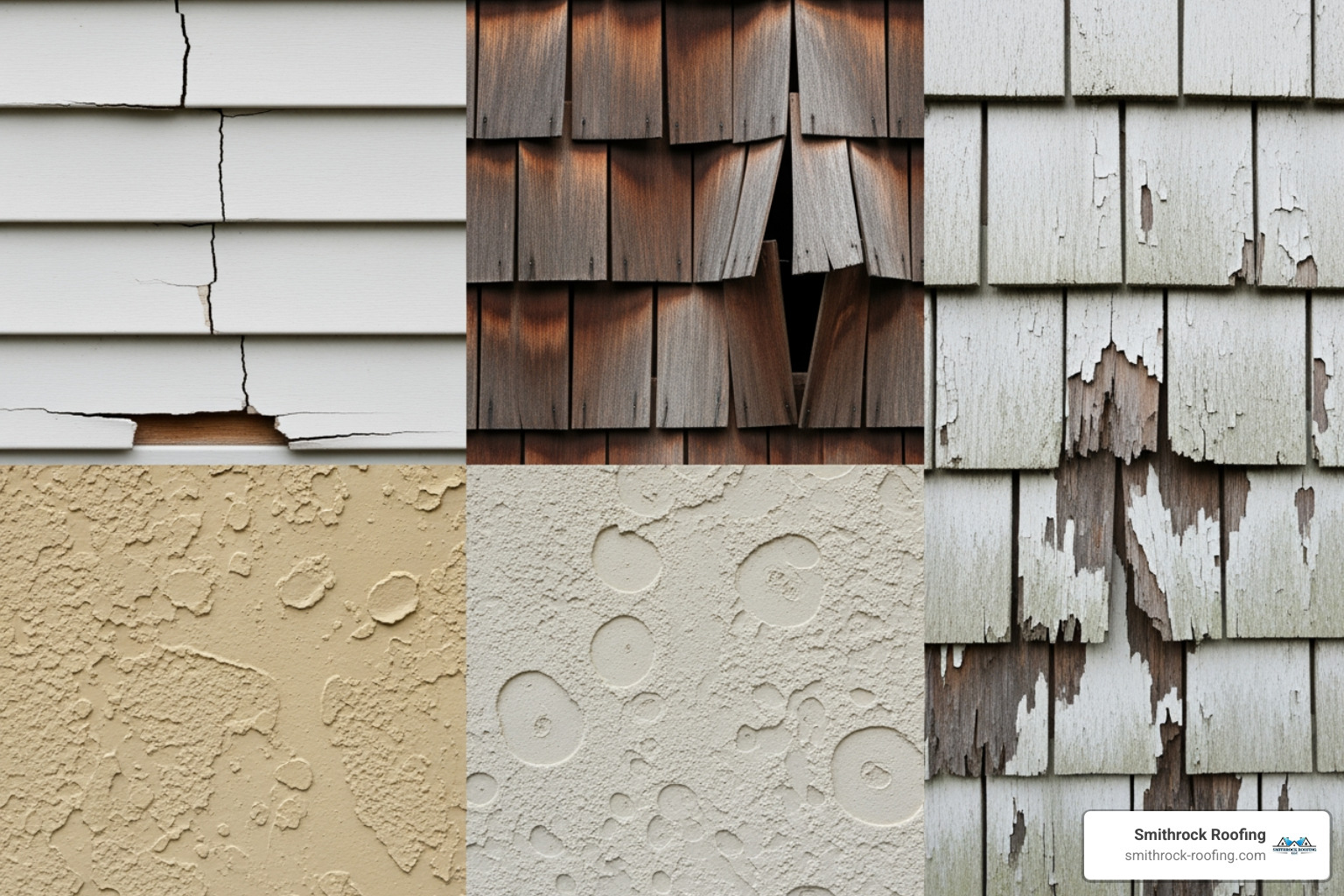
Common Types of Damage
Underlying Root Causes
How to Perform an Exterior Assessment
For more details on material options, visit our page on siding materials.
Signs of Water Damage Behind Your Siding
If you’re weighing different siding options, see our comparison on Vinyl vs. Hardie Board vs. Everlast Siding in Winston Salem: Which is Best?.
When you find damaged siding, the key question is whether to repair the affected areas or undertake a full replacement. The right choice depends on the scope of the damage, the age and material of your siding, the availability of matching products, and whether the underlying root causes can be corrected with a simple repair.
A single cracked vinyl panel from a lawnmower impact or a few isolated holes from a removed satellite dish are typically straightforward siding repair jobs. However, widespread issues like warping across multiple walls, extensive dry rot, or pervasive fading often signal that the siding has reached the end of its service life and replacement is the more prudent long-term solution.
Age and Scope Considerations
Material matching can be a significant challenge, especially for siding that is 10+ years old. Colors fade differently due to UV exposure, and manufacturers frequently discontinue specific product lines, colors, and textures. Creative solutions, like harvesting intact panels from a less-visible wall (e.g., behind dense shrubbery) to use for repairs on a prominent wall, can sometimes work.
Financial Considerations: The Cost-Benefit Analysis
It’s crucial to weigh the short-term costs against the long-term benefits. A repair is almost always cheaper upfront. However, a full replacement, while a significant investment, can offer a substantial return. It provides the opportunity to install modern, high-performance water-resistive barriers, add exterior insulation to improve energy efficiency, install a ventilated rainscreen for superior moisture management, and correct any and all flashing details. A new siding job can dramatically boost curb appeal and resale value, comes with a new manufacturer warranty, and often reduces long-term maintenance costs. If you plan to stay in your home for many years, replacement can be the smarter financial decision over a series of costly and escalating repairs.
When to Repair
When to Replace
For more on material comparisons, check our guide on Vinyl vs. Hardie Board Siding.
Many common siding repair tasks are manageable for homeowners with basic DIY skills and the right tools. The keys to success are working methodically, prioritizing safety, and following manufacturer instructions to ensure a durable, watertight fix.
Safety and Tools
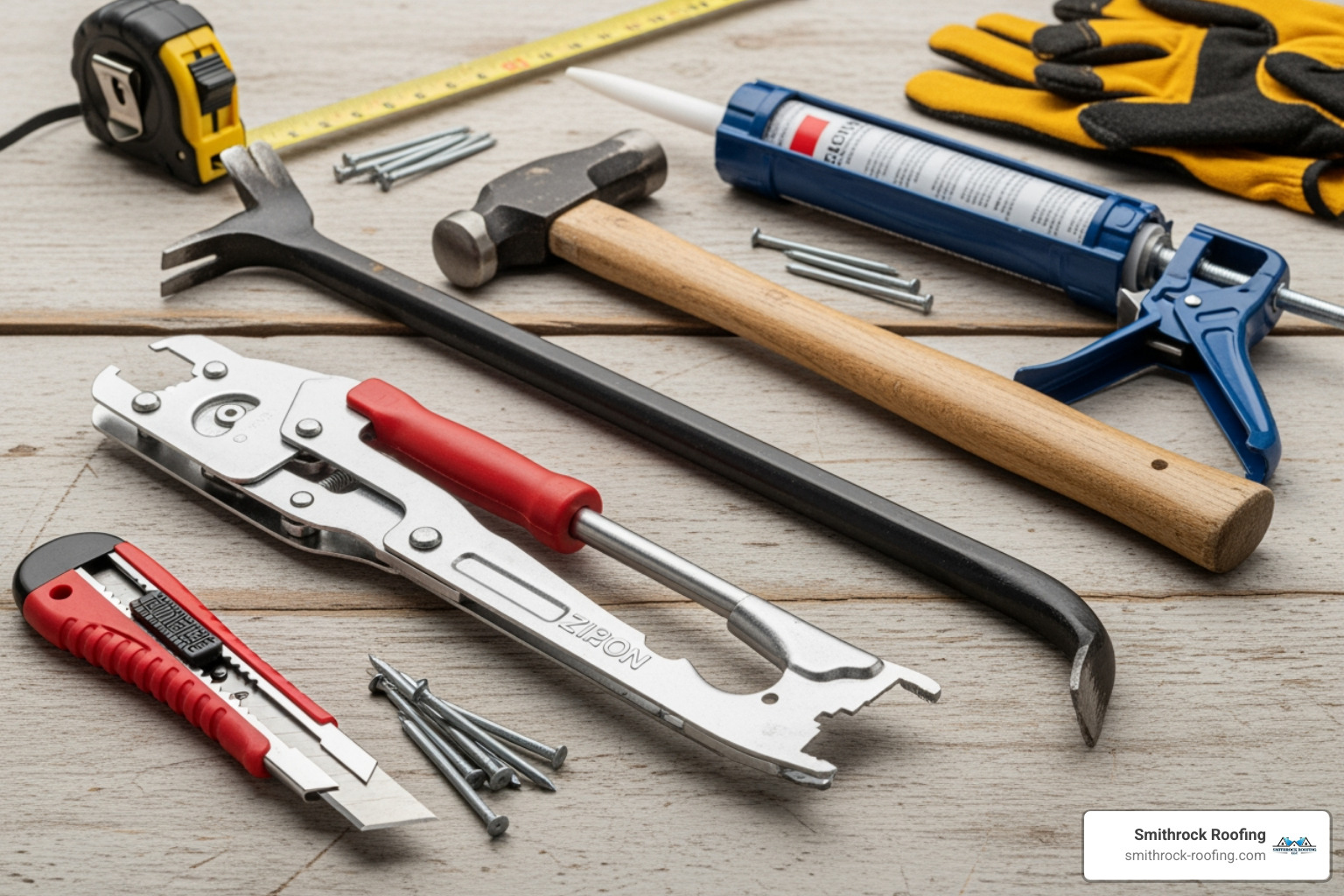
How to Perform a Vinyl Siding Repair
Patching Small Holes (1 inch or smaller):
Replacing a Full Panel:
For more information, visit our Vinyl Siding and Roofing page.
How to Handle a Wood Siding Repair
Patching with Epoxy:
Replacing a Board:
Fiber-Cement Siding Repair
For small chips, use a manufacturer-approved, cementitious patching compound. For full board replacement:
Engineered Wood Siding Repair
Repair procedures for engineered wood are very specific to the manufacturer. Always consult their technical documents. For small gouges, use an exterior-grade, non-hardening acrylic or siliconized acrylic caulk. For larger damage, a board replacement is often necessary. As with wood, it is absolutely critical to prime and paint all cut ends to prevent water from wicking into the wood-fiber core and causing swelling.
Metal Siding Repair
For small dents in aluminum or steel, you can sometimes drill a small hole, pull the dent out with a screw, and then fill the hole with a metal-compatible sealant. Larger dents may require panel replacement. Scratches on steel siding must be addressed immediately to prevent rust. Lightly sand the scratch, clean it, and apply a direct-to-metal primer and color-matched touch-up paint.
Temporary Solutions
For immediate protection while you plan a permanent fix, use high-quality, exterior-grade caulk for small cracks or waterproof flashing tape for larger holes. For extensive damage, you can secure heavy plastic sheeting over the area. Remember, these are short-term fixes to stop water intrusion; plan permanent repairs promptly.
For other siding options, see our Brick Veneer Vinyl Siding page.
After completing a siding repair, the goal is to prevent a recurrence. Proactive, routine maintenance is the most effective way to extend your siding’s life, maintain its appearance, and avoid future costly issues. A small amount of time invested each year can save you from major headaches down the road.
Regular Inspections: At least once a year (spring is ideal) and after any major storm, walk around your home and perform a detailed visual inspection. Look for gaps, loose or shifted panels, cracks, holes, failed caulk, and any signs of moisture staining. Catching these issues early is the key to a simple fix.
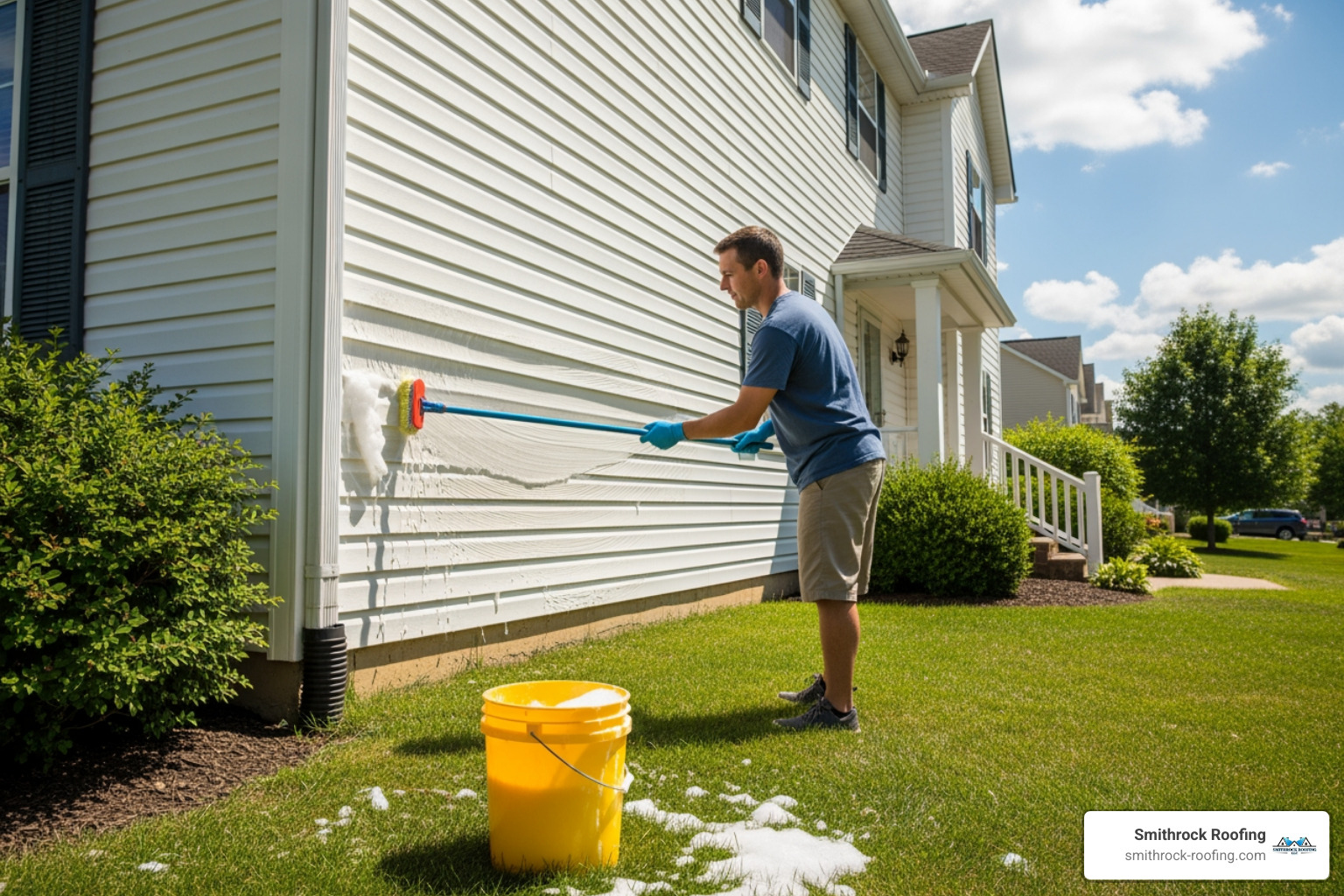
Keep It Clean: Dirt, grime, and mildew can trap moisture against the siding surface, accelerating its degradation. Wash your siding annually with a soft-bristle brush and a mild detergent solution. A low-pressure power washer can be used cautiously, always spraying at a downward angle to avoid forcing water up behind the panels.
Maintain Gutters: This is one of the most critical maintenance tasks. Clean your gutters and downspouts at least twice a year. Clogged gutters will overflow, sending a cascade of water down your siding, which can overwhelm the water-resistive barrier and lead to saturation and rot. Ensure downspouts discharge water several feet away from the foundation.
Manage Landscaping: Vegetation growing against or too close to your siding is a major problem. It traps moisture, blocks air circulation, and can physically abrade the siding surface. It also provides a convenient bridge for pests like ants and termites to reach your home. Maintain at least 12-18 inches of clear space between any shrubs or tree limbs and your siding. Remove any moisture-trapping vines.
Paint and Seal Wood: For homes with wood siding, the paint is its primary shield. Address any peeling, cracking, or checking paint immediately. Pay special attention to sealing the end grain of boards, which is like a straw that can wick up moisture.
Check Caulk: The flexible sealant around windows, doors, and fixtures is a critical part of your home’s water defense. Inspect it annually for signs of cracking, shrinking, or pulling away from the surface. Carefully remove any failed caulk and reapply a high-quality, exterior-grade sealant to maintain a watertight seal.
Protect Vulnerable Areas: Ensure critical flashing, like kickout flashing where a roofline meets a wall, is in place and functioning. These small metal pieces direct massive amounts of water away from the wall and into the gutter. Also, use splash blocks under downspouts to prevent backsplash onto the lower courses of siding.
Control Indoor Humidity: High indoor humidity in winter can be driven into wall cavities, where it can condense and cause hidden moisture problems. Use bathroom and kitchen exhaust fans, and ensure your attic and crawlspace are properly ventilated to manage interior moisture levels.
Keep Clearances: Siding needs to be kept clear of the ground and hard surfaces. Maintain the manufacturer-required clearance (typically 6-8 inches) between the bottom of your siding and the soil, and 1-2 inches from patios, decks, and roof surfaces. This prevents moisture from splashing up and wicking into the siding and wall structure.
By following these steps, you can keep your siding protected, looking its best, and functioning as the critical line of defense it is. For more information, explore our Category: Siding.
What types of contractors are best suited for siding repair?
For minor, straightforward fixes like patching a small hole, a skilled handyman may have the necessary skills. For larger projects involving multiple repairs or potential underlying issues, a general contractor or a dedicated siding contractor is a better choice. For significant damage, full replacement, or work with specialized materials like fiber-cement or engineered wood, always choose a dedicated siding contractor. They will have the specific tools, knowledge of manufacturer requirements, and experience to ensure the job is done right. Always verify licenses, liability insurance, and worker’s compensation coverage, and ask for references.
Can I just paint over cracked or damaged siding?
No. This is a common mistake that only hides the problem and can make it worse. Painting over a crack, hole, or soft spot traps moisture, accelerates rot, and conceals a critical warning sign. The substrate must always be repaired first. This means cleaning the area, removing any rot, patching or replacing the damaged material as needed, allowing it to dry thoroughly, and only then priming and painting.
How do I know if hidden damage exists behind my siding?
Look for subtle but clear warning signs. These include swelling or soft spots when you press on the siding, unexplained water stains or dark streaks on the exterior, persistent musty odors inside the home, or peeling paint and wallpaper on the interior side of an exterior wall. A professional may use a moisture meter to take readings or, with your permission, perform a targeted exploratory opening to confirm the condition of the sheathing and framing underneath.
When should I consider replacement over repair?
Consider replacement when you see widespread damage across multiple elevations, when your siding is at or beyond its expected service life, if you’re experiencing repeated failures due to systemic installation defects, or if an inspection confirms significant rot in the underlying sheathing or framing. Replacement is also the right choice if you want to make a major aesthetic upgrade or reduce future maintenance.
What are the most common installation mistakes?
How much does siding repair cost?
The cost of siding repair varies widely based on several factors. The primary drivers are the type of siding material, the extent and nature of the damage, and local labor rates. A simple vinyl patch might cost very little, while replacing several rotten wood clapboards could cost several hundred dollars. If underlying structural damage to the sheathing or framing is discovered, costs can increase significantly. Accessibility is also a factor; repairs on a third story will cost more than work at ground level. It’s best to get a detailed quote from a qualified contractor.
Does my homeowner’s insurance cover siding repair?
It depends on the cause of the damage. Homeowner’s insurance typically covers damage from “named perils” such as storms (wind, hail), fire, or impact (like a tree falling on the house). It generally does not cover damage resulting from neglect, lack of maintenance, normal wear and tear, rot, pests, or improper installation. If you believe the damage is from a covered event, document it thoroughly with photos and contact your insurance agent promptly to start the claims process.
Is pressure washing safe for all siding?
Use extreme caution. Excessive pressure can easily force water behind siding panels, where it can become trapped and lead to mold and rot. It can also etch wood, shatter old vinyl, or strip paint. If you do pressure wash, use the lowest pressure setting, a wide fan tip (40 degrees or more), and always keep the nozzle moving at a downward angle. Test in an inconspicuous area first. A soft brush and a garden hose are often a safer and equally effective alternative.
Can I repair vinyl siding in cold weather?
Yes, but with great care. Vinyl becomes very brittle in cold temperatures and can easily crack or shatter when cut, nailed, or manipulated with a zip tool. It’s best to work on a milder day if possible. If you must perform a repair in the cold, consider warming the replacement panels indoors first to make them more pliable. Also, check the temperature limitations for any adhesives or sealants you plan to use.
Do I need a permit for siding repairs?
Minor, like-for-like repairs (e.g., replacing a few damaged boards) typically do not require a building permit. However, full siding replacement or projects that involve altering the structure of the wall almost always do. Rules vary significantly by municipality, so it is essential to check with your local building department. Homeowner’s Associations (HOAs) may also have their own rules and approval processes.
What about asbestos-cement siding?
If your home was built before the 1980s and has rigid, shingle-like siding, it could be asbestos-cement. Do not cut, grind, drill, or otherwise disturb this material, as that can release hazardous asbestos fibers. Have a sample tested by a certified lab. If it is confirmed to contain asbestos, all work must be done by a licensed asbestos abatement professional who will follow strict regulations for handling and disposal.
How often should I inspect my siding?
Perform a thorough inspection at least annually and always after a severe storm. A good routine is to do a detailed check in the spring to identify any damage that occurred over the winter. Prioritize the walls that face prevailing winds and driving rain, as well as areas with complex geometry like roof-to-wall intersections.
What’s the best sealant for exterior joints?
Avoid cheap painter’s caulk. Use a high-quality, flexible, exterior-grade sealant that is compatible with your siding material. Polyurethane or silyl-modified polymer (SMP) sealants are excellent choices, offering great durability, flexibility, and adhesion. Always follow the siding manufacturer’s guidance on which joints to seal and which to leave open for drainage.
How can I tell if vinyl siding was installed too tightly?
The most obvious sign is buckling, warping, or wavy lines that appear on warm, sunny days. This indicates the panels don’t have enough room to expand. You should also be able to slide a panel back and forth horizontally by about 1/4 to 1/2 inch. If it’s rigid and unmovable, it was nailed too tightly.
For more guidance on choosing professionals, visit our Siding Contractors page.
Your home’s siding is its suit of armor, and maintaining it is crucial. We’ve covered how to identify damage, decide between repair and replacement, and perform common fixes for vinyl, wood, fiber-cement, engineered wood, and metal siding—along with the building-science principles that make repairs durable.
The most important takeaway is to act promptly. A small crack today can become a major structural problem if ignored. Equally important is addressing the underlying cause—improving flashing, WRB integration, clearances, and drainage—so repairs are not merely cosmetic.
Know your limits. Many repairs are achievable with careful planning and safety practices, but work involving high elevations, structural issues, complex flashing, lead paint, or silica dust is best left to experienced professionals. Whether you handle small fixes yourself or bring in experts for larger projects, the goal is the same: a dry, durable, and attractive exterior that protects your home for decades.
For comprehensive siding solutions and expert advice, trust the professionals at Smithrock Roofing. We proudly serve homeowners in Winston-Salem, King, Clemmons, Greensboro, High Point, and surrounding North Carolina communities. Our team is ready to ensure your home stands strong against the elements.

Smithrock Roofing © Copyright 2026 • All Rights Reserved • Privacy Policy • Maintained by Mongoose Digital Marketing