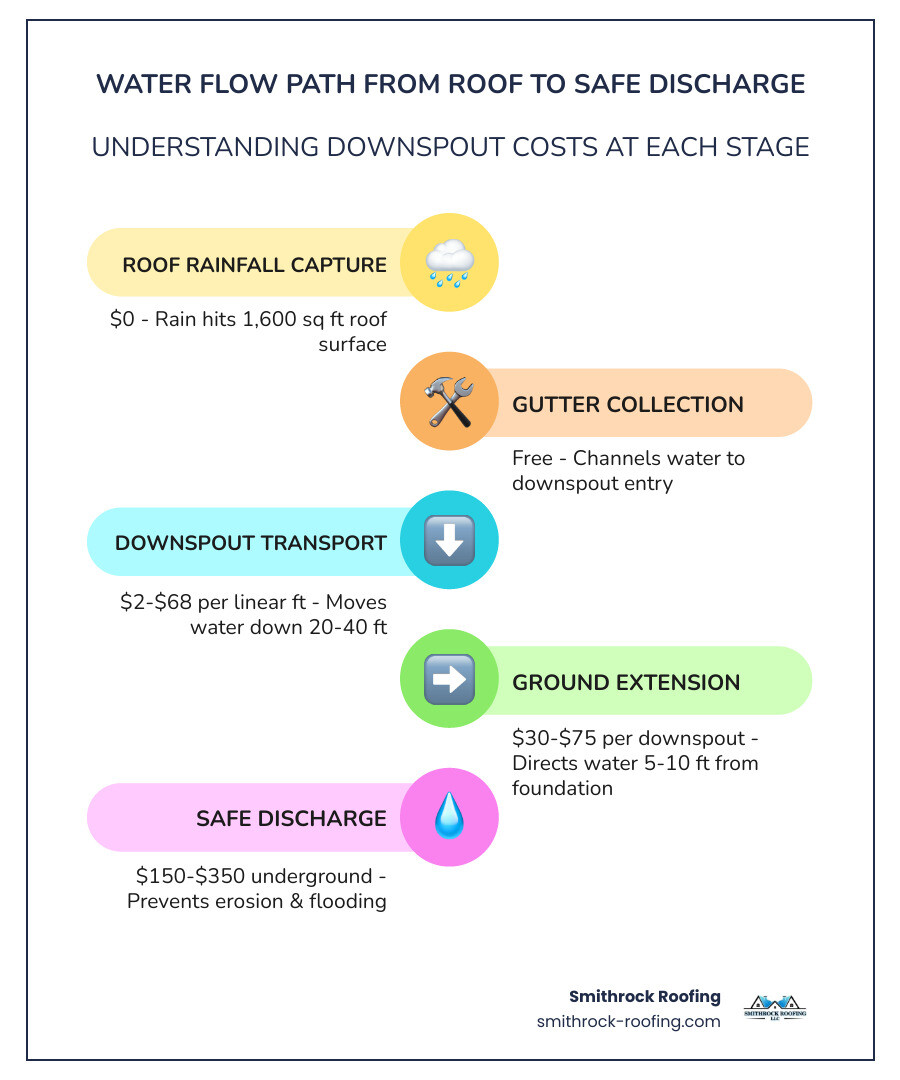
When homeowners notice water pooling near their foundation, damp basements, or gutters pulling away from the fascia, the immediate concern is the integrity of the home’s drainage system. Downspout installation is a critical component of residential water management, serving as the primary conduit for moving significant volumes of rainwater from the roof to a safe discharge point. While often overlooked, these vertical pipes play a direct role in protecting the structure, finishes, and soil conditions around your home. In the Piedmont Triad, where heavy seasonal rains and clay-rich soils are common, the efficiency of this system can be the difference between a dry crawlspace and a multi-thousand-dollar foundation repair.
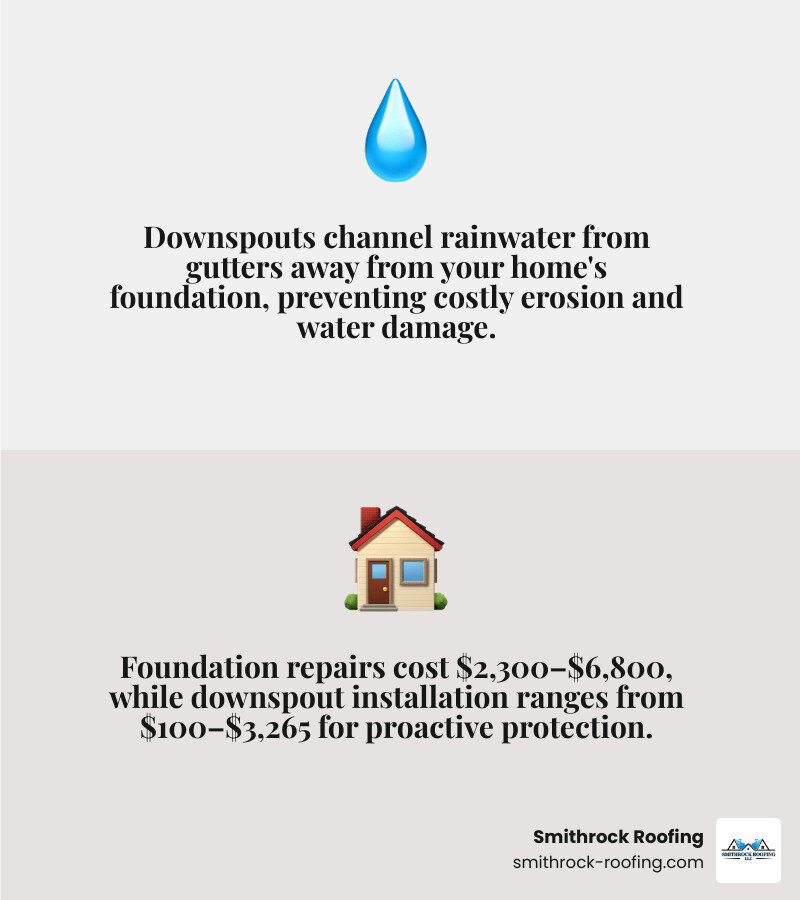
Downspouts are the final link in your roof’s water-management chain—carrying runoff collected by gutters down to grade and away from vulnerable areas like foundations, porches, walkways, and planting beds. When they fail or are poorly designed, the consequences can be widespread: chronic basement dampness, soil erosion that undermines hardscaping, staining and rot behind siding, and long-term foundation movement driven by repeated saturation and drying cycles. By contrast, a properly installed downspout system is one of the most strategic investments you can make in your home’s long-term performance because it helps control where water goes every time it rains. It is not merely about aesthetics; it is about hydraulic engineering and structural preservation.
This guide walks through the variables that drive the complexity of downspout installation so you can plan your project around durability, hydraulic capacity, local conditions, and architectural fit—without relying on guesswork. We will explore the science of water movement, the materials available to modern homeowners, and the specific challenges posed by the North Carolina climate.

The Engineering Behind Effective Drainage
A downspout is not just a pipe hanging on the wall; it is a designed drainage pathway that must match your roof area, local rainfall patterns, gutter size, and the way water behaves once it reaches the ground. When evaluating a gutter system in the Piedmont Triad—including Winston-Salem, Greensboro, and surrounding areas—several variables dictate the scope of a professional installation. It isn’t just about the length of the downspout; it’s also about the volume of water it must handle during a peak weather event.
- Catchment Area and Rainfall Intensity: The larger the roof plane, the more water is funneled into a single gutter run. In North Carolina, we often experience intense bursts of rain where several inches can fall in an hour. If the downspout diameter is too small, the water backs up into the gutter, causing it to overflow and potentially rot the fascia board.
- How quickly the roof sheds water: The pitch of your roof (its steepness) and the material (metal vs. asphalt shingle) affect the velocity of runoff. Steeper roofs require more robust downspout configurations to handle the rapid influx of water.
- How efficiently gutters can move water to outlets: This involves the gutter profile (K-style vs. half-round), the slope of the gutter itself, and the strategic placement of outlets to ensure no single downspout is overwhelmed.
- How safely and reliably downspouts can deliver that water to a discharge point: This includes the alignment of the pipe, the quality of the fastening system, the number of elbows used to navigate architectural features, and the final termination point.
- How the property manages that discharge: Grading, soil type (such as the heavy red clay found in High Point and Kernersville), and existing hardscaping all dictate where the water should be sent to prevent it from simply soaking back into the foundation.
Most standard downspouts come in 10-foot sections, but the route from the gutter outlet to the discharge point changes the technical requirements. Homes with deep eaves, complex trim, brick ledges, bump-outs, bay windows, or multiple roof tiers often require multiple elbows to “hug” the wall and keep the installation neat and stable. Each elbow and joint affects friction, debris hang-ups, and long-term maintenance. A good design minimizes unnecessary turns while still respecting architectural details. Furthermore, the use of “offset” elbows allows the downspout to transition from the gutter (which sits out on the fascia) back to the wall of the house smoothly.
Height and access are major variables. A one-story home may allow simple ladder work and straightforward fastening. Two- and three-story homes increase complexity due to access, staging, and the time required to work safely and precisely at height. In addition, taller downspouts experience more thermal expansion and contraction, more wind load, and greater potential for vibration if bracket spacing is insufficient. For multi-story homes, the weight of the water inside the downspout during a heavy downpour can be significant, requiring heavy-duty anchors to prevent the system from pulling away from the siding.
Other critical factors include:
- Outlet Placement and Gutter Performance: Even a perfectly installed downspout will struggle if water cannot reach it efficiently. Gutters need correct pitch so water flows toward outlets rather than pooling. Poor pitch or insufficient outlets can cause overflow that looks like “gutter failure” but is really a system-design issue. Professionals use levels and string lines to ensure the gutter is perfectly sloped toward the downspout.
- Elbow Geometry and Cleanouts: Tight turns near the bottom are common clog points, especially where roof granules, leaves, and small twigs accumulate. Where conditions warrant it, a design that anticipates maintenance—such as a cleanout section or improved debris management—can reduce recurring blockages. Using 3×4 inch downspouts instead of the standard 2×3 inch can also significantly reduce the frequency of clogs.
- Bracket Spacing and Structural Integrity: To prevent clatter during heavy North Carolina thunderstorms and to keep the downspout from flexing in wind, downspouts should be fastened at appropriate intervals (typically every 8 to 10 feet) using corrosion-resistant hardware suited to the wall material (wood trim, brick, vinyl siding, fiber cement). Secure fastening also helps protect siding by limiting movement and abrasion.
- Water Velocity and Discharge Control: Concentrated discharge can scour soil and mulch quickly. Managing velocity at the termination point—whether through a splash block, diffuser, extension, or underground connection—protects landscaping and reduces erosion. In some cases, a “bubbler” or pop-up emitter is used to distribute water evenly over a lawn.
- Property Grading and Hydrodynamics: If the yard slopes toward the home, the system must be designed to send water beyond the immediate perimeter so it does not cycle back toward the foundation. The goal is not simply “move water off the roof,” but “move water to a place where it can safely infiltrate or be conveyed away.”
- Accessibility and Site Constraints: Dense landscaping, narrow side yards, fences, decks, or steep terrain can increase labor time and limit design options. Installers must work around these constraints while keeping the downspout plumb, securely fastened, and properly terminated.
- Removal and Environmental Responsibility: Old components (especially aluminum and steel) can often be recycled. Responsible removal also includes verifying that underlying fascia and trim are sound before attaching new downspouts, since fastening into compromised wood can lead to repeat failures.
For a deeper dive into how these components work together, check out our page on gutter and downspout installation.

Material Science in Downspout Selection
Material choice influences service life, corrosion resistance, impact resistance, maintenance needs, and how well the downspouts match the home. In the Piedmont Triad region, homeowners often choose materials based on climate, architectural style, and how much maintenance they want to take on over time. The thickness of the material, known as the “gauge,” also plays a role in how well the downspout resists dents from hail or stray baseballs.
- Vinyl/PVC: Lightweight, rust-proof, and easy to handle, vinyl is common in some budget-friendly applications. However, UV exposure in the Southern sun can make it brittle over time, and impact damage (from ladders, hail, or yard equipment) is more likely than with metals. In climates with freeze–thaw cycles, brittleness increases the chance of cracking at joints. It is generally considered a shorter-term solution compared to metal.
- Aluminum: The most common residential choice because it balances corrosion resistance, weight, and compatibility with modern gutter systems. Aluminum is available in many factory colors and can be configured in ways that reduce unnecessary seams. It is widely used by professional gutter installation services because it performs well across most home styles and weather conditions. High-quality aluminum downspouts are typically .027 or .032 inches thick for maximum durability.
- Galvanized Steel: Strong and impact-resistant, steel is useful where durability is the top priority. The tradeoff is that scratches or wear through the protective coating can lead to rust over time, especially at cut edges and fastener points. It is often used in commercial settings or on homes where a rugged, industrial look is desired.
- Copper: A premium architectural option that can last for decades and develops a distinctive patina. Copper downspouts are often selected for historic homes or high-end designs where the drainage system is intended to be a visible design feature. Installation typically requires specialized fabrication methods, such as soldering joints, and careful detailing to avoid galvanic corrosion when paired with dissimilar metals.
- Zinc: Durable and visually distinctive, zinc is valued for longevity and a refined appearance. Like copper, it is often used in higher-end or design-forward applications and benefits from skilled installation. It is self-healing, meaning scratches will eventually disappear as the metal patinates.
When selecting any material, it is also important to consider compatibility with existing gutters, fasteners, and accessories. Mixing dissimilar metals (like aluminum and copper) without proper separation can accelerate corrosion through a process called electrolysis. A well-planned system uses compatible components from outlet to termination.
Size, Style, and Hydraulic Capacity
Downspouts must be sized to handle expected roof runoff without backing up the gutters. Overflow during heavy rain is sometimes blamed on “bad gutters,” but it is often the result of undersized downspouts, too few downspouts, poor outlet placement, or clogs. In areas that see intense thunderstorms, capacity and outlet strategy matter. A standard 2×3 inch downspout can handle about 600 square feet of roof area, while a 3×4 inch downspout can handle up to 1,200 square feet.
- Rectangular vs. Round: Rectangular downspouts are common on modern homes because they sit flush to the wall and integrate cleanly with standard K-style gutters. Round downspouts are often paired with half-round gutters and are popular in historic restorations or certain modern designs. Round pipes often have fewer internal edges, which can slightly reduce the chance of debris snagging.
- Sizing (2×3 vs. 3×4 vs. 4×5): Larger downspouts generally move more water and are less prone to clogging because they provide more cross-sectional area. Up-sizing can be especially helpful for large roof planes, steep pitches, or sections that collect water from multiple roof faces. In many cases, upgrading to 3×4 downspouts is the most cost-effective way to improve a gutter system’s performance.
- Downspout Count and Placement: Even large downspouts can be overwhelmed if too much roof area is directed to a single outlet. Proper placement distributes flow and reduces the chance of overflow at corners and end caps. A general rule is one downspout for every 30 to 40 feet of gutter run.
- Rain Chains: Rain chains can be an attractive alternative in controlled conditions, but they are more sensitive to wind and may not be appropriate where heavy rain, splash control, or strict drainage performance is required. They are best used on small porch roofs or as decorative accents rather than primary drainage for a large roof.
- Seamless vs. Sectional: Sectional downspouts create joints that can catch debris and require sealing over time. Seamless configurations reduce joints and can improve appearance, but feasibility depends on height, access, and fabrication. Most professional installers use 10-foot sections but ensure the joints are “crimped” in the direction of water flow to prevent leaks.
A well-designed downspout plan treats the system as a whole: roof collection, gutter conveyance, downspout discharge, and ground-level drainage management. When each link is sized and detailed correctly, the system becomes quieter, cleaner, and far more reliable over the long term.
Above-Ground vs. Underground Drainage Systems
Once water reaches the bottom of the downspout, performance depends on what happens next. A downspout that terminates at the foundation edge can still allow water to saturate backfill soil, seep into basements or crawlspaces, and erode landscaping. Choosing an above-ground or underground strategy is less about preference and more about site conditions, safety, maintenance expectations, and how reliably you need the system to move water away. In the Piedmont Triad, where many homes are built on slopes or have crawlspaces, this decision is paramount for long-term structural health.
Traditional Above-Ground Solutions
Traditional systems use splash blocks or flexible extensions to direct water away from the home. These solutions can work well when the yard naturally slopes away from the foundation and when the discharge point remains consistently positioned. They are the most common and cost-effective method, but they require regular monitoring to ensure they haven’t been displaced.
Key considerations for above-ground discharge include:
- Distance from the foundation: Many homes need water carried several feet away so it does not soak into the soil adjacent to the foundation. The exact distance depends on grading, soil type, and how water behaves during storms. In North Carolina clay, a minimum of 5 to 10 feet is often recommended to prevent the soil from swelling and putting pressure on foundation walls.
- Slope and surface conditions: If the ground is flat, compacted, or clay-heavy, water may not infiltrate quickly and can pond or flow back toward the house. Above-ground extensions rely entirely on gravity and clear pathways to be effective.
- Trip hazards and maintenance conflicts: Extensions can become obstacles for mowing, edging, foot traffic, or kids playing in the yard. In communities like Clemmons or Advance, homeowners often find that extensions get moved accidentally by lawn care crews, which can cause water to dump right where you do not want it.
- Splash and erosion control: High-velocity discharge can wash out mulch and soil. A splash block helps diffuse impact, but it must be placed correctly and kept clear of debris. Over time, the force of the water can create a “trench” in the lawn if not properly managed.
Above-ground approaches are also more visible, and they may be constrained by property lines or the need to avoid directing water toward neighboring lots or public sidewalks. For many, the aesthetic of a long plastic pipe running across the lawn is a significant drawback.
The Benefits of Underground Drainage
If you want a more permanent and low-visibility solution, an underground discharge system can be highly effective. These systems typically connect the downspout to buried rigid PVC or heavy-duty corrugated pipe that carries water to a more appropriate discharge location. This is often referred to as “burying the downspouts.”
Underground drainage can route water to a pop-up emitter, a dry well, a drainage swale, or an integrated system such as a French drain. The right endpoint depends on soil infiltration, available space, local regulations, and whether you are trying to solve surface water problems, subsurface water pressure, or both.
Benefits of an underground system include:
- Superior Foundation Protection: Moving roof runoff beyond the immediate foundation perimeter reduces hydrostatic pressure and helps prevent chronic dampness in basements and crawlspaces. By discharging water 20 or 30 feet away, you ensure the soil near the house remains stable.
- Cleaner Aesthetics and Usability: Eliminating long above-ground extensions improves curb appeal and reduces mowing and tripping issues. Typically, only a low-profile emitter is visible at the discharge point, which sits flush with the grass.
- Reduced Erosion and Landscape Damage: Buried systems can release water more gently at a controlled point, helping preserve mulch beds and preventing rutting during heavy rain. This is especially important for homes with expensive professional landscaping.
- More Predictable Performance: When properly pitched and installed, underground piping provides a consistent pathway that does not depend on remembering to reposition extensions. It is a “set it and forget it” solution for water management.
- Better Integration with Site Drainage: Underground routing can be planned alongside grading improvements and other drainage features so the property works as a system rather than a patchwork of fixes. It can also be combined with sump pump discharge lines.
Design and installation details matter. A buried system must be sloped correctly (at least 1/8 inch per foot), protected from crushing (using Schedule 40 PVC in high-traffic areas), and configured to reduce clogging. It is also vital to include a “debris filter” or “leaf eater” at the transition point to prevent leaves from entering the underground pipes, where they are much harder to remove. In addition, it is important to avoid creating a low point that holds water, which can freeze in winter or become a breeding ground for mosquitoes.
For more details on these “invisible” solutions, read our guide on burying gutter downspouts or our specific guide to buried downspout drainage.
Professional Installation vs. DIY: Safety, Precision, and Longevity
Downspout installation can look deceptively simple, but long-term reliability depends on safe access, correct detailing, and a system-level understanding of water movement. For some homeowners, basic replacements on a one-story home may feel approachable. However, the risks and the hidden failure points rise quickly as height, roof complexity, and drainage challenges increase. A professional installation ensures that the system is not only functional but also aesthetically integrated into the home’s exterior.
The Critical Importance of Ladder Safety
Ladder work is the most immediate risk. Falls remain a leading cause of home-improvement injuries, and downspout work often requires repetitive climbs, awkward reaching around corners, and handling long sections of material. Professionals typically use stabilizers and standoff brackets to prevent gutters from being crushed, and they follow safety practices designed for working at height—especially on uneven terrain and sloped lots common in places like Danbury or Pilot Mountain. Working on a ladder while trying to use a drill and hold a 10-foot pipe is a recipe for an accident for the untrained.
DIYers should also consider:
- Ground conditions: Soft soil, mulch, or sloped ground can destabilize ladders. Professionals know how to use leg levelers to ensure a secure base.
- Two-person handling: Long downspout sections can be difficult to control alone, especially in wind. A gust of wind can easily catch an aluminum pipe and knock a DIYer off balance.
- Power lines and obstructions: Routing near service drops, exterior lighting, and landscaping increases risk. Metal downspouts are excellent conductors of electricity.
Precision Detailing and the Building Envelope
Beyond safety, performance depends on precision. Downspouts must be plumb (perfectly vertical), securely fastened, and correctly connected to the gutter outlet. The connection at the outlet is a common failure point because small inaccuracies can cause leakage behind siding and trim. If water seeps behind the downspout, it can rot the fascia board and the structural framing of the house over time.
Key technical details that affect longevity include:
- Clean outlet cuts and secure attachment: If the outlet opening is rough or misaligned, it can create turbulence, catch debris, and leak. Professionals use specialized hole saws or punches to create a perfect fit. A strong mechanical connection (using zip screws or pop rivets) helps the system resist weight, vibration, and seasonal movement.
- Sealing strategy: Sealant is not a substitute for proper fit. The goal is a tight, well-supported connection with high-grade gutter sealant used as a secondary barrier where appropriate. Cheap silicone from a big-box store often fails within a year due to UV exposure.
- Fastener selection: Different wall materials require different anchors and screws. Using the wrong fasteners can lead to loosening, staining (rust streaks), or damage to the siding. For example, stainless steel screws are preferred for their corrosion resistance, while masonry anchors are required for brick or stone.
- Thermal movement: Metal expands and contracts with temperature changes. Proper bracket placement and thoughtful detailing allow the metal to move slightly without putting stress on the joints or the gutter itself.
- Water routing at the base: A downspout that ends in the wrong spot can undermine the entire system, even if everything above looks perfect. Professionals evaluate the grade of the land to ensure water flows away from the structure.
When you choose professional installation, you also benefit from:
- Specialized Tooling: Installers use the right tools for clean cuts, crimping, fastening, and reliable connections, which improves both durability and appearance. This includes offset snips, downspout crimpers, and high-reach equipment.
- Warranty and Accountability: Professional work is typically backed by labor and material warranties, which can be valuable if a joint loosens or a leak appears after severe weather. This provides peace of mind that a DIY project cannot offer.
- Systemic Evaluation: A professional looks beyond the downspout itself to identify gutter pitch issues, fascia damage, undersized components, or drainage problems at grade. They can spot potential issues before they become expensive repairs.
- Code and Best-Practice Awareness: While downspouts are often not heavily regulated compared to structural work, experienced installers understand common best practices for discharge, property protection, and neighborhood considerations. They also know how to avoid directing water onto a neighbor’s property, which can lead to legal disputes.
Learn more about the value of professional gutter installation services and why correct installation helps prevent expensive moisture-related repairs over time.
Frequently Asked Questions about Downspout Installation
How far should downspouts extend from the house?
The “Golden Rule” of residential drainage is a 5-foot minimum for homes with well-compacted soil and a positive grade. However, in areas with clay-heavy soil, which is prevalent throughout much of North Carolina, we recommend an extension of 10 feet whenever possible. Clay soil retains moisture and expands, putting immense hydrostatic pressure on your foundation walls. If water is discharged too close to the house, it simply cycles back through the soil, leading to foundation cracks, basement dampness, and mold growth. In some cases, even 10 feet isn’t enough if the yard slopes back toward the house; in those instances, a longer underground run is necessary.
What are the signs that I need a new downspout system?
Homeowners should perform a visual inspection during a rainstorm at least twice a year. Keep an eye out for these “red flags”:
- Peeling Paint and Siding Stains: Water splashing against your siding or trim will cause paint to bubble and peel. You may also notice dark stains or algae growth on the siding near downspout joints, indicating a leak.
- Foundation Cracks: If you see “stair-step” cracks in your brickwork or horizontal cracks in your basement walls, it is a sign that water is saturating the soil around your foundation and causing it to shift.
- Landscape Erosion: Deep ruts in your mulch, washed-out flower beds, or exposed tree roots near the corners of your home indicate that the water discharge is not being managed correctly and is acting like a fire hose on your yard.
- Recurring Clogs: If your downspouts clog frequently even after the gutters are cleaned, they may be undersized for the debris load or have internal obstructions like bird nests, balls, or accumulated shingle granules.
- Visible Corrosion: Especially common in older galvanized steel or thin-gauge aluminum systems, rust spots or pinhole leaks mean the material has reached the end of its functional life and can no longer contain the water flow.
How many downspouts does my home actually need?
The general industry standard is one downspout for every 20 to 40 feet of gutter. However, this is a baseline that must be adjusted for several factors. We calculate the “drainage footprint” of your roof, which takes into account the total square footage and the pitch. A very steep roof in Pfafftown will shed water much faster than a shallow roof, requiring more downspouts or larger diameters (like 3×4 inch) to prevent the gutters from overflowing. Additionally, the placement of downspouts should be strategically chosen to avoid discharging water onto walkways, driveways (where it can freeze and create ice patches), or toward a neighbor’s property.
Can I change the color of my downspouts to match my house?
Absolutely. Modern aluminum downspouts come in a wide variety of baked-on enamel finishes. Whether you want the downspouts to blend in with your siding or provide a sharp contrast that matches your trim, there are dozens of color options available. This allows the drainage system to become a seamless part of your home’s architectural design rather than an eyesore. Many homeowners choose to match the downspouts to the siding color and the gutters to the trim color for a truly integrated look.
Do I need gutter guards if I have large downspouts?
While larger downspouts (3×4 inch) can handle more debris without clogging, they do not eliminate the need for gutter maintenance. Gutter guards can help prevent the gutters themselves from filling with leaves, which ensures that water can actually reach the downspouts. If the gutter is full of debris, the size of the downspout doesn’t matter because the water will never make it into the pipe. Combining high-quality gutter guards with properly sized downspouts is the best way to create a low-maintenance drainage system.
Why is my downspout making a loud dripping noise?
Loud dripping or “clanging” noises are often caused by water hitting the bottom elbow of the downspout at a specific angle. This can be annoying, especially if the downspout is located near a bedroom window. Professionals can often fix this by adjusting the angle of the elbow, using a different material, or installing a small piece of artificial turf or a specialized “quiet drop” pad inside the elbow to dampen the sound of the water impact.
Conclusion: Protecting Your Most Valuable Asset
A high-quality downspout system is not just a finishing detail—it is a major part of how your home controls water. When gutters and downspouts are correctly sized, securely attached, and properly discharged, they help protect foundations, basements and crawlspaces, exterior finishes, and landscaping from avoidable moisture damage. In the long run, the cost of a professional downspout installation is a fraction of the cost of repairing a cracked foundation or remediating a mold-infested basement.
Across the Piedmont Triad—from the historic streets of Old Salem to growing neighborhoods in Kernersville and High Point—water problems often begin at the roofline and show up later as staining, erosion, musty odors, or structural movement. A proactive approach to downspout design and installation helps prevent these issues by ensuring water is captured, conveyed, and released where it can do the least harm. By understanding the science of drainage and the importance of material selection, you can make informed decisions that enhance your home’s value and longevity.
If you are planning an upgrade, focus on the fundamentals:
- Choose materials and finishes that suit the home and environment, prioritizing durability and corrosion resistance.
- Confirm gutter pitch, outlet placement, and downspout sizing to match your specific roof area and the rainfall intensity typical of North Carolina.
- Use secure fastening and thoughtful routing to reduce vibration, leaks, and maintenance headaches, ensuring the system stays attached even in high winds.
- Plan the discharge point—above-ground or underground—based on grading, soil type, and how water behaves on your property to ensure it stays away from the foundation.
Don’t wait for the next major storm to reveal weak points in your drainage system. A careful evaluation can identify small problems—like loose brackets, undersized downspouts, or poor discharge routing—before they cause significant moisture damage. Investing in a robust water management system today is an investment in the future of your home.
Contact us for expert gutter solutions at Smithrock Roofing today! Our team is dedicated to providing high-quality craftsmanship and effective drainage solutions for homeowners throughout the Piedmont Triad. Whether you need a simple repair or a complete underground drainage system, we have the expertise to keep your home dry and protected.