Why Home Window Upgrades Matter for Your Comfort and Wallet
Replacing old, inefficient windows with a home window upgrade is one of the most rewarding projects a homeowner can undertake, delivering immediate and long-lasting benefits that you can see and feel every day. Here’s a more detailed look at what you stand to gain:
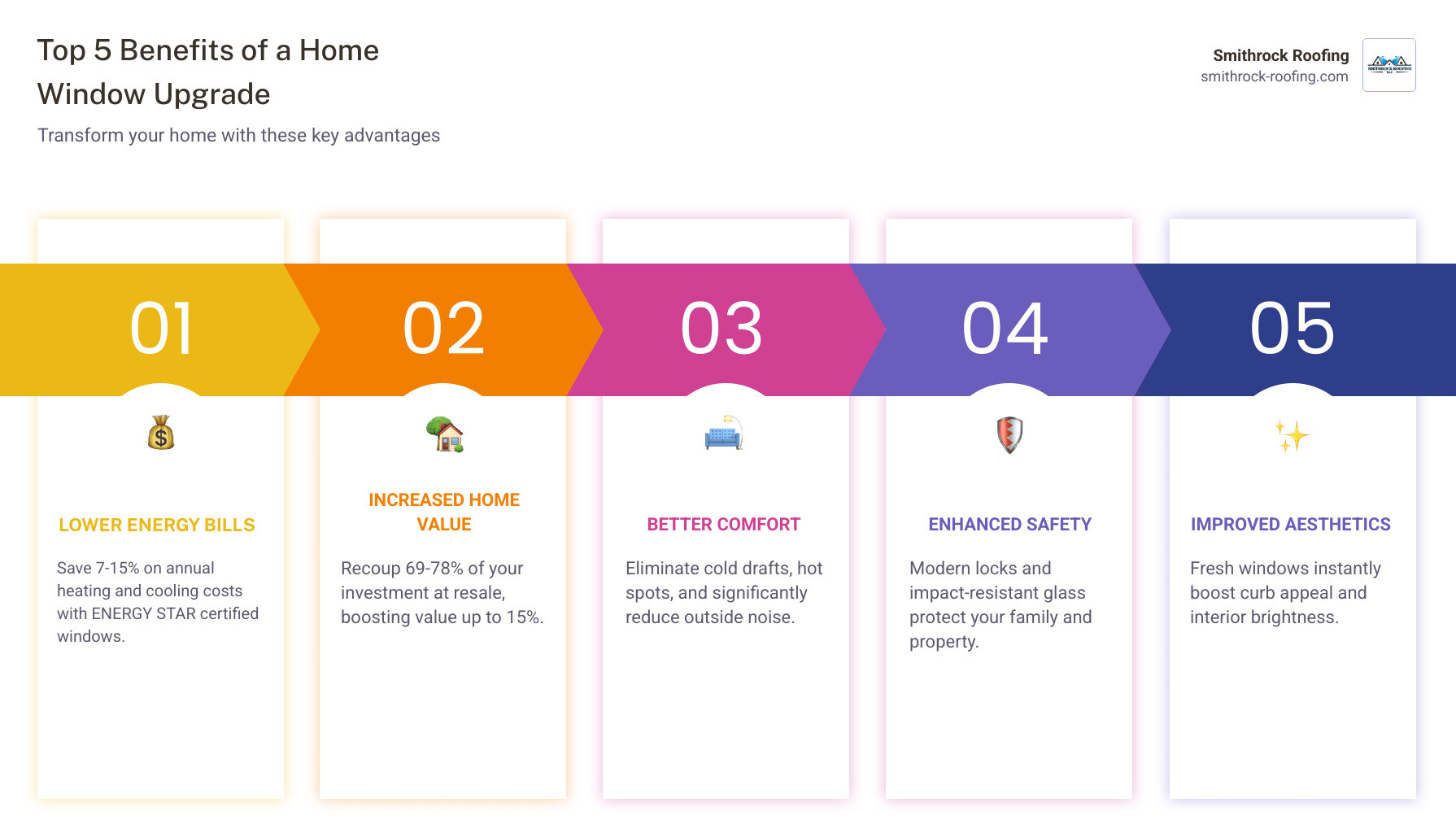
Top 5 Benefits of Window Replacement:
- Lower Energy Bills: This is often the most compelling reason for an upgrade. The U.S. Department of Energy estimates that replacing old windows with ENERGY STAR certified models can save homeowners 7-15% on annual heating and cooling costs. This translates to hundreds of dollars back in your pocket each year. These savings are achieved by reducing the workload on your HVAC system, which no longer has to run constantly to compensate for heat leaking out in the winter and seeping in during the summer.
- Increased Home Value: A home window upgrade is a sound financial investment that pays off at resale. National data shows homeowners can recoup about 69-78% of their investment. New windows are a powerful signal to potential buyers that a home is well-maintained, modern, and energy-efficient. This reduces their perceived risk of future expenses and makes your property more attractive in a competitive market.
- Better Year-Round Comfort: Old windows are a primary source of discomfort. In winter, you feel cold drafts even when the heat is on. In summer, you experience hot spots near windows where solar heat radiates into the room. A home window upgrade with modern, well-sealed units eliminates these issues, creating a stable and pleasant indoor environment. Furthermore, multi-pane windows with advanced glazing dramatically reduce outside noise, turning your home into a quieter, more peaceful sanctuary.
- Improved Safety and Security: Your family’s safety is paramount. Modern windows feature significantly improved locking mechanisms that are more robust and harder to force than older designs. Additionally, you can opt for advanced glass options like tempered glass, which shatters into small, dull pieces to prevent injury, or laminated glass, which has a polymer interlayer that holds the glass together even when broken, providing a strong barrier against intruders.
- Enhanced Aesthetics and Curb Appeal: Never underestimate the visual impact of new windows. They can instantly transform the look of your home, both inside and out. From the exterior, they create crisp, clean lines that boost curb appeal. From the interior, they can frame your views beautifully, increase the amount of natural light entering a room, and complement your design style, making your living spaces feel brighter and more open.
Windows play a surprisingly large role in your home’s energy use. Though they may cover only 8% of a home’s exterior surface area, they can be responsible for a staggering 45% of its heat loss in the winter and heat gain in the summer. Drafty, single-pane, or seal-failed windows are like open doors for energy waste, forcing your HVAC system to work overtime, increasing your energy bills, and making rooms uncomfortable.
Modern replacement windows are engineered systems that use advanced technology like multi-pane glass, low-emissivity (Low-E) coatings, inert gas fills like argon, and warm-edge spacers to boost comfort and slash energy waste. An upgrade can solve common window problems like condensation, rot, or poor operation while adding significant, long-term value to your property.
This guide walks you through everything you need to know about upgrading your windows, from choosing the right types and materials to understanding energy ratings and finding a qualified installer.

Why a Home Window Upgrade is a Smart Investment for Your Property
A home window upgrade is a strategic investment in your property’s comfort, efficiency, and value. While the decision is significant, the long-term benefits—a more comfortable home, reduced noise, and lower energy bills—are substantial. Old, inefficient windows are often the source of uncomfortable drafts, fluctuating indoor temperatures, and high heating and cooling costs. Recognizing these issues is the first step toward transforming your home into a more efficient, beautiful, and secure haven.

New windows offer a multitude of advantages. They increase energy efficiency, with ENERGY STAR certified models saving homeowners an average of 12% on energy bills. They also improve home aesthetics, refreshing your curb appeal with a wide array of styles and colors. Modern windows provide superior insulation for better comfort, reduce outside noise, and feature advanced locking mechanisms for increased safety. Built with durable materials, today’s windows resist warping and rot, requiring minimal maintenance over their long lifespan.
For more information on how our replacement windows can transform your property, visit our replacement windows for homes page.
Is It Time to Replace Your Windows?
Sometimes the need for a home window upgrade is obvious, but other times the signs are subtle. Here are key warning signs that it might be time for new windows in your Winston-Salem, King, or Clemmons home:
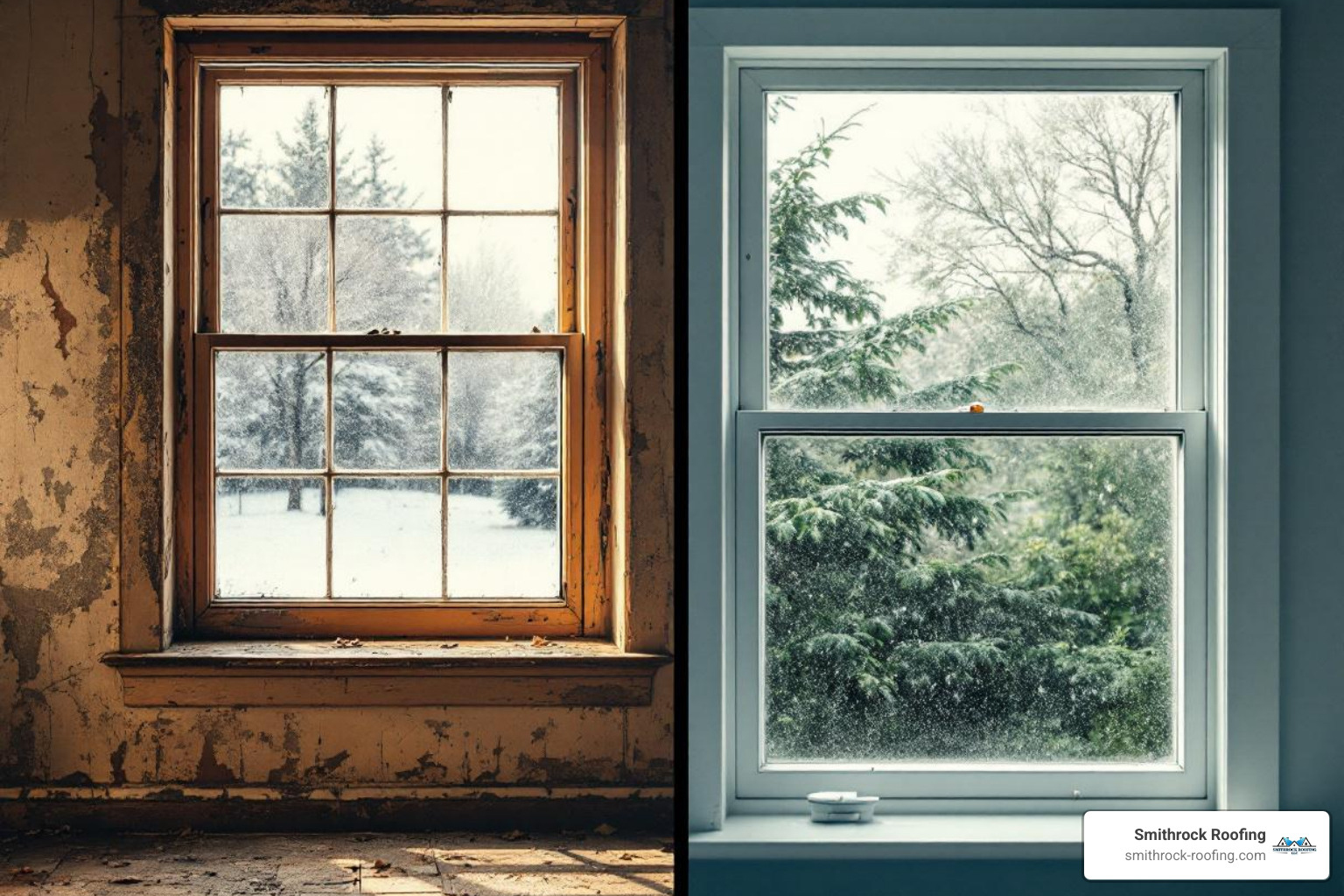
- Visible damage such as rot or warping: Inspect your window frames and sills closely. Wood frames may show soft spots, crumbling sections (dry rot), or a spongy texture (wet rot). Vinyl or fiberglass frames can become chalky or cracked with age. Warping can create gaps that let in air and moisture, compromising the window’s integrity.
- Windows are difficult to operate: Windows that are painted shut, won’t stay open without a prop, or are difficult to slide or crank are more than an inconvenience—they are a serious safety hazard in an emergency, such as a fire.
- Noticeable drafts near windows: On a windy day, stand near your closed windows. If you feel a distinct breeze, your seals have failed. You can also try the “incense test”: safely light a stick of incense and hold it near the edges of the window. If the smoke wavers or blows horizontally, you have an air leak.
- Single-pane glass: If your windows have only one layer of glass, they are a relic of a bygone era. Single-pane windows are extremely inefficient by modern standards, offering minimal insulation against temperature and almost no noise reduction.
- Condensation buildup between glass panes: Fog, moisture, or mineral deposits trapped between the panes of a double- or triple-glazed unit are a definitive sign of seal failure. The insulating gas (like argon) has escaped, and the window’s energy-efficient properties are gone. For more details, see our guide on replacing misted double glazed units. It’s important to distinguish this from condensation on the interior (a sign of high indoor humidity) or exterior (a sign the window is insulating well).
- Consistently high energy bills: If your heating and cooling costs seem to climb year after year despite a well-maintained HVAC system, your windows are a likely culprit, silently leaking the energy you’re paying for.
- Increased outside noise: If you can hear every car that drives by or your neighbor’s conversation, your windows are providing poor sound insulation. Modern windows with multiple panes, laminated glass, and different glass thicknesses can significantly reduce noise pollution, as measured by Sound Transmission Class (STC) and Outdoor-Indoor Transmission Class (OITC) ratings.
- Faded furniture or flooring: Do you notice that your carpets, curtains, or furniture near windows are faded? This is caused by harmful UV rays penetrating your home. Modern windows with Low-E coatings can block up to 99% of these damaging rays without reducing visible light, protecting your valuable interiors.
Deciding when to tackle this project can also be influenced by the seasons. To learn more about optimal timing, read our advice on the best time to replace windows.
Choosing Your Perfect Replacement Windows
Once you’ve decided a home window upgrade is right for you, the next step is choosing the perfect windows. This involves considering styles, frame materials, and glazing options that match your home’s aesthetic and your functional needs. We offer a wide selection, including Norandex eXtreme 3000S windows, to meet diverse preferences across Winston-Salem and beyond.
Consider your home’s architectural style and how you use each room. Do you need maximum ventilation in a kitchen, an unobstructed view in the living room, or added privacy in a bathroom? Your answers will help narrow the options. For a deeper dive, explore our Window Replacement Winston Salem Ultimate Guide.
A Guide to Different Window Types
Understanding window types is crucial for your home window upgrade:
- Double-hung windows: A classic American style with two vertically sliding sashes. This allows you to open the top and bottom for excellent air circulation and makes them easy to clean thanks to tilt-in features.
- Single-hung windows: Similar to double-hung, but only the bottom sash slides up. A cost-effective choice with a traditional look, often used on ground floors where exterior cleaning is simple.
- Casement windows: Hinged on the side like a door, these windows crank outward. They provide superior, unobstructed views and create an exceptionally tight seal when closed, making them the most energy-efficient operable window style.
- Picture windows: Large, fixed-pane windows that don’t open. They are designed to maximize natural light and provide expansive, unobstructed views, often used in living rooms or spaces with high ceilings.
- Awning windows: Hinged at the top, they open outward from the bottom. This design allows for ventilation even during a light rain, making them ideal for bathrooms and kitchens.
- Hopper windows: The inverse of awning windows, hoppers are hinged at the bottom and open inward from the top. They are a great choice for basements, providing secure ventilation.
- Sliding windows: Open horizontally by sliding one sash past another. They are a simple, durable, and cost-effective option for spaces where an outward-swinging window isn’t practical, such as facing a patio or walkway.
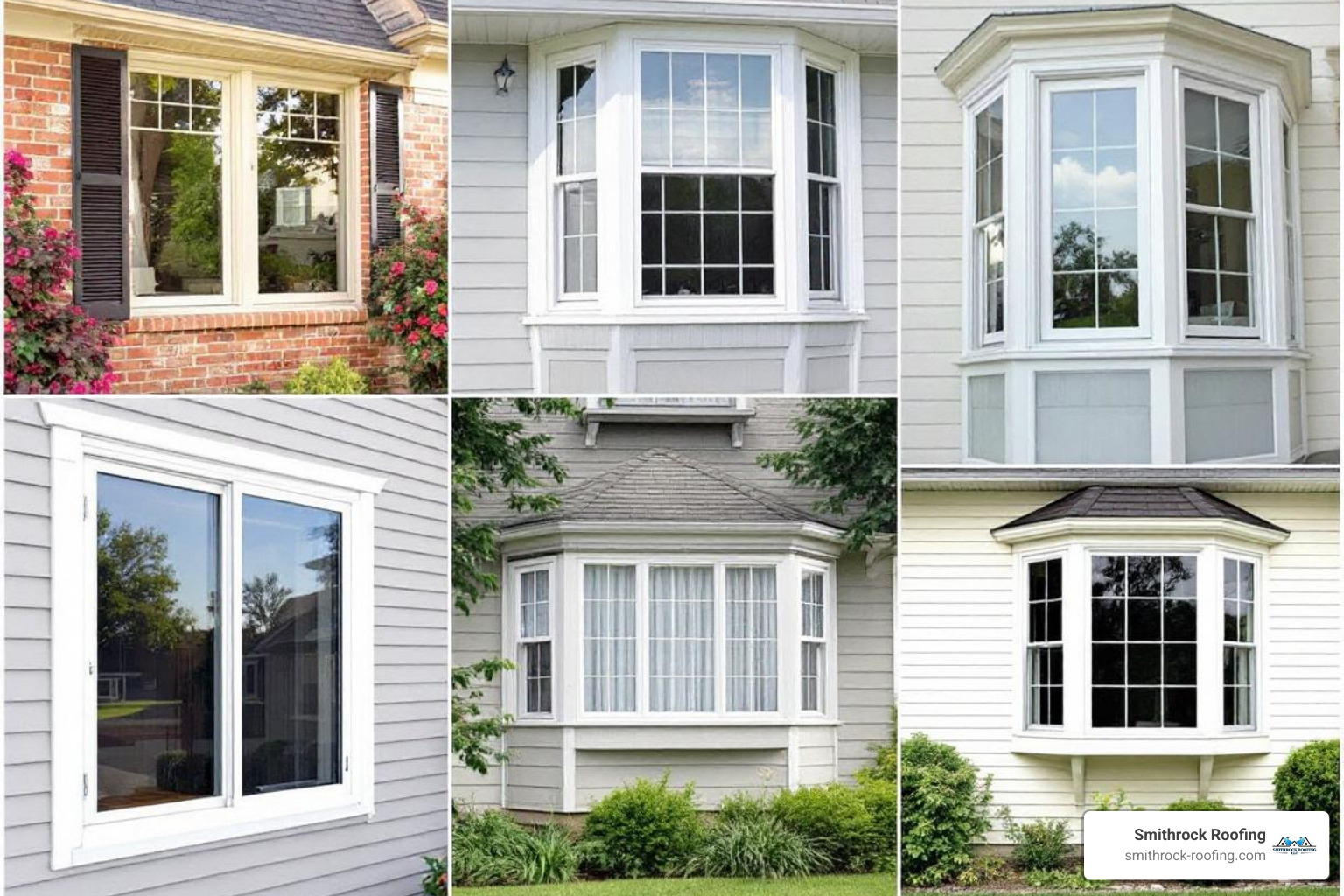
- Bay and bow windows: These project outward from the home, creating extra interior space, a panoramic view, and abundant light. Bay windows typically consist of three panels (a central picture window flanked by two smaller, operable windows), while bow windows use four or more panels to form a gentle curve.
- Garden windows: Essentially a small bay window, a garden window projects outward and typically has a glass top and shelves, creating a mini-greenhouse perfect for growing herbs and plants in your kitchen.
- Specialty and pass-through windows: Specialty windows come in custom shapes (circles, arches, octagons) to add architectural flair. Pass-through windows, often sliders or folding windows, are designed to connect an indoor kitchen with an outdoor patio for easy entertaining.
Learn more about our casement windows replacement Winston Salem services.
Comparing Window Materials: Wood, Fiberglass, Vinyl, and More
The frame material is the backbone of your window, impacting performance, maintenance, and aesthetics for your home window upgrade:
| Attribute | Vinyl | Wood | Fiberglass | Composite/Clad |
|---|
| Cost | Most budget-friendly | Higher upfront cost | Mid-to-high range | Highest cost |
| Maintenance | Very low; no painting or staining | High; requires regular painting or sealing to prevent rot | Low; highly durable finish, minimal upkeep | Low; exterior cladding protects the interior wood |
| Durability | Good; resistant to moisture, rot, and insects | Good; if well-maintained, but susceptible to rot/pests | Excellent; extremely strong, resists warping, cracking | Excellent; combines the best traits of multiple materials |
| Energy Eff. | Very good; multi-chambered frames provide excellent insulation | Good; natural insulator, but can expand/contract with temp changes | Excellent; stable, strong, and highly insulating | Excellent; superior insulation and stability |
| Aesthetics | Wide range of colors, can mimic wood | Classic, natural beauty; highly customizable | Can mimic wood, sleek modern profiles | Wood interior with a durable, maintenance-free exterior |
| Longevity | 20-40 years | 30-50+ years (with maintenance) | 50+ years | 40-50+ years |
- Vinyl advantages: As the most popular and budget-friendly choice, vinyl windows offer excellent value. Modern premium vinyl is far superior to older versions, featuring multi-chambered frames for better insulation and fusion-welded corners for strength. They are low-maintenance, energy-efficient, and available in many styles and colors. Explore our vinyl windows Winston Salem options.
- Wood advantages: For timeless beauty and a classic look, nothing beats wood. It’s a natural insulator and can be painted or stained to perfectly match your home’s decor. While it requires regular maintenance to prevent rot and insect damage, well-maintained wood windows can last for generations. They are a favorite for historic homes and offer a strong return on investment, averaging 69.5% nationally.
- Fiberglass advantages: Known for ultimate strength and durability, fiberglass is made from strands of glass heated and pulled through a die in a process called pultrusion. It resists warping, cracking, and swelling in extreme temperatures because it expands and contracts at nearly the same rate as glass itself. This stability makes it highly energy-efficient and low-maintenance.
- Composite and Clad advantages: These materials offer the best of both worlds. Wood-clad windows feature a beautiful wood interior with a durable, low-maintenance exterior shell of vinyl or aluminum, protecting the wood from the elements. Composite windows are made from a blend of materials, such as wood fibers and polymers, to create a frame that is strong, efficient, and low-maintenance.
For insights into costs, consult our window frame replacement cost guide.
What is the Difference Between Single-Hung and Double-Hung Windows?
While visually similar, these windows have key operational differences that are important for your home window upgrade:
- Sash operation: In a single-hung window, only the bottom sash moves up and down. The top sash is fixed. In a double-hung window, both the top and bottom sashes are operable, allowing you to move them independently.
- Ventilation: Double-hung windows offer superior ventilation. By opening the top sash a few inches and the bottom sash a few inches, you create a natural convection current that pulls cool, fresh air in through the bottom while pushing warm, stale air out through the top.
- Cleaning: This is a major differentiator. Modern double-hung windows almost always feature a tilt-in feature for both sashes. This allows you to clean both sides of the glass safely from inside your home—a huge convenience for upper-floor windows.
- Cost and Safety: Single-hung windows are generally less expensive due to their simpler design. However, the fixed top sash can be seen as a minor security advantage by some. For families with small children, opening only the top sash of a double-hung window can provide ventilation without creating a potential fall risk.
For those interested in this classic aesthetic, we have more information on sash window costs.
For any home window upgrade, energy efficiency is a top priority. Modern windows are engineered systems designed to keep your home comfortable and reduce energy use. Understanding a window’s performance means learning to read its NFRC label and knowing what the ratings mean for your climate.
For a comprehensive overview, check out our energy efficient window upgrades guide.
The Role of ENERGY STAR Certification
Choosing ENERGY STAR certified windows is the simplest way to ensure energy savings from your home window upgrade.
- What the ENERGY STAR label means: This label from the U.S. Environmental Protection Agency (EPA) signifies that a product meets strict energy performance standards tailored to your climate. It’s a shortcut to identifying efficient products.
- Independent certification: To earn the label, windows must be independently tested, certified, and verified by the National Fenestration Rating Council (NFRC).
- Climate zone map: The U.S. is divided into four climate zones. The ENERGY STAR label ensures the windows you choose are optimized for your local weather. Winston-Salem, NC, is in the South-Central climate zone. As of 2023, ENERGY STAR Version 7.0 has established even more stringent requirements, demanding better insulation and solar heat control.
Installing ENERGY STAR certified windows can lower energy bills by an average of 12% nationwide compared to non-certified products. For more insights, check out our guide on the best windows for insulation.
The NFRC label provides four key metrics to help you compare window performance. For a mixed climate like North Carolina, you need a balance.
- U-Factor (Insulation): This measures how well a window prevents heat from escaping. The range is typically 0.20 to 1.20. The lower the U-Factor, the better the insulation. In colder climates, a low U-Factor is critical. For the South-Central zone, ENERGY STAR requires a U-Factor of ≤ 0.32.
- Solar Heat Gain Coefficient (SHGC): This measures how well a window blocks heat from the sun. The range is 0 to 1. The lower the SHGC, the less solar heat it transmits. In hot climates, a low SHGC keeps your home cooler and reduces air conditioning costs. For the South-Central zone, ENERGY STAR requires an SHGC of ≤ 0.25.
- Visible Transmittance (VT): This measures how much visible light comes through the window. The range is 0 to 1. The higher the VT, the more natural light you get. A high VT can reduce your need for artificial lighting. Modern Low-E coatings are designed to block heat (low SHGC) without significantly reducing visible light (high VT).
- Air Leakage (AL): This measures how much air passes through a window’s joints. The range is typically 0.1 to 0.3. The lower the AL, the more airtight the window. A rating of ≤ 0.3 is required for ENERGY STAR certification, but high-quality windows often have ratings of 0.1 or lower.
Explore our page on insulated windows for more information.
How Advanced Features Impact Efficiency
Several key technologies work together to achieve the performance ratings on the NFRC label for your home window upgrade:
- Low-E Glass: Low-emissivity (Low-E) glass has a microscopically thin, transparent metallic coating that reflects heat. In winter, it reflects your home’s heat back into the room. In summer, it reflects the sun’s infrared heat back outside. There are two main types: soft-coat Low-E (applied in a vacuum chamber, offering the highest performance) and hard-coat Low-E (applied when the glass is molten, more durable but less efficient). Most high-performance residential windows use soft-coat Low-E.
- Gas Fills (Argon & Krypton): To improve insulation, manufacturers fill the space between glass panes with a dense, inert gas. Argon is the most common and cost-effective option. Krypton is denser and provides even better insulation, making it ideal for narrower gaps in triple-pane windows, though it comes at a higher cost.
- Warm-Edge Spacer Systems: Spacers hold the panes of glass apart. Traditional metal spacers conduct heat, creating a thermal bridge that reduces efficiency and can cause condensation. Modern “warm-edge” spacers use materials like stainless steel, foam, or thermoplastic to minimize heat transfer. This improves the window’s overall U-Factor and helps prevent condensation from forming on the interior glass edge.
- UV Protection: A major side benefit of Low-E coatings is that they block a significant portion of the sun’s harmful ultraviolet (UV) radiation—up to 99% in some cases. This helps protect your furniture, carpets, artwork, and wood floors from fading over time.
For more technical information, refer to industry resources like the Department of Energy’s guide on Window Types and Technologies.
The Installation Process and Finding a Pro
A home window upgrade is only as good as its installation. You can buy the most expensive, energy-efficient window on the market, but if it’s installed improperly, it will leak air and water, negating its benefits. Choosing a skilled, professional installer is just as important as selecting the right windows. Proper installation ensures an airtight and watertight seal, maximizing performance, preventing costly moisture damage, and ensuring your warranty remains valid.
Pocket/Insert vs. Full-Frame Replacement: Which is Right for You?
There are two primary methods for a home window upgrade, and the right choice depends on the condition of your existing window frames.
We specialize in precise, professional window installation and can help you determine which method is the right long-term solution for your home.
How to Find a Reputable Window Installer
Finding the right contractor for your home window upgrade in the Winston-Salem area is crucial. Here’s what we recommend:
- Get Multiple, Detailed Bids: Obtain itemized bids from at least three contractors. A professional bid will clearly separate labor and material costs and specify the exact window models and installation methods to be used.
- Check for Certifications: Look for installers with certifications from industry programs like Installation Masters or manufacturer-specific training. This demonstrates a commitment to best practices.
- Read Reviews and Ask for References: Online reviews on Google and other platforms provide valuable insights. More importantly, ask for local references you can contact. A confident installer will be happy to share them.
- Verify Insurance and Licensing: Ensure any contractor you hire is fully licensed and carries both general liability insurance and workers’ compensation. Ask to see the certificates. This protects you from liability for accidents or property damage.
- Review the Contract in Detail: Do not sign a contract you don’t understand. It should include a clear scope of work, payment schedule, projected start and end dates, details on cleanup and debris disposal, and warranty information.
- Confirm Lead-Safe Certification for Older Homes: If your home was built before 1978, federal law requires that any contractor disturbing painted surfaces must be an EPA Lead-Safe Certified Firm. They must use specific practices to contain dust and protect your family from lead poisoning. You can verify a firm’s certification on the EPA’s website.
For all your window installation needs, visit our window installation and replacement page.
Understanding Window and Installation Warranties
Warranties protect your home window upgrade investment, but they often come in two parts. It’s essential to understand what each one covers.
- Manufacturer’s Product Warranty (10 years to Lifetime): This covers the window itself. It typically includes defects in materials and workmanship. A strong warranty will cover the insulated glass unit against seal failure (fogging) for at least 20 years, and the frame and hardware for a similar period. Be aware that “lifetime” warranties are often prorated and may only apply to the original homeowner. Ask if the warranty is transferable, as this can be a selling point if you move.
- Installer’s Workmanship Warranty (1-5+ years): This separate warranty covers the installation itself. It is crucial because most window problems, like drafts or leaks, stem from improper installation, not product defects. A reputable installer will stand behind their work with a clear, written labor warranty for at least one to two years, with longer terms indicating greater confidence.
- Reading the Fine Print: Always read the warranty documents to understand exclusions. Coverage may be voided by improper cleaning, unapproved modifications (like painting a vinyl frame a dark color), or damage from settlement or natural disasters.
We stand behind our work. For more information on our services, visit our window and door replacement page.
The Financials: Costs, Savings, and Value
A home window upgrade is a significant financial decision that offers a strong, multi-faceted return on investment. Understanding the costs, savings, and value enhancement is crucial for any homeowner. We aim to provide clarity to help you make an informed decision for your property in the Winston-Salem area.
To get a general idea of what to expect, you can consult our Winston Salem window cost guide.
The Financial Payback of a Home Window Upgrade
The financial benefits of new windows extend far beyond the initial purchase:
- Cost Savings on Energy Bills: This is the most immediate and tangible return. With ENERGY STAR certified windows reducing household energy bills by an average of 12% (and up to 15% or more), the savings are substantial. For example, if your annual heating and cooling costs are $2,500, a 12% reduction saves you $300 per year. Over the 20-year lifespan of the windows, that’s a $6,000 return, not even accounting for future increases in energy prices.
- Return on Investment (ROI) at Resale: New windows are a highly desirable feature for homebuyers. According to the annual Remodeling Cost vs. Value Report, a vinyl window replacement project recoups approximately 69-78% of its cost upon resale, making it one of the highest-ROI exterior improvements. This high value comes from the combined appeal of improved aesthetics, comfort, and the promise of lower energy bills for the new owner.
- How New Windows Increase Home Value: Beyond direct ROI calculations, new windows enhance curb appeal and signal to potential buyers that the home is well-maintained and energy-efficient. This can make your home stand out in the market, potentially leading to a faster sale and a higher selling price. It removes a major item from a buyer’s list of potential future expenses and worries.
- Realtor Perceptions: Realtors consistently rank new, energy-efficient windows as a key selling point. They understand that features signaling a move-in ready, low-maintenance, and cost-effective home are highly persuasive to buyers. This can directly add to the equity and perceived value of your property.
For a deeper dive into the financial aspects, explore our cost to replace windows guide.
Are There Tax Credits or Rebates Available?
Yes, various financial incentives can significantly reduce the net cost of your home window upgrade. It’s wise to research these before you buy.
- Federal Tax Credits for Energy Efficiency: The Inflation Reduction Act of 2022 significantly enhanced the Energy Efficient Home Improvement Credit. Homeowners can claim a tax credit equal to 30% of the product cost for qualifying window and door upgrades. For windows, this credit is capped at $600 per year. To qualify, the windows must meet the highest ENERGY STAR “Most Efficient” certification requirements, which are stricter than the standard ENERGY STAR rating. Be sure to save the manufacturer’s certification statement for your tax records.
- State and Local Incentives: While North Carolina does not currently offer a statewide energy efficiency tax credit for windows, some local municipalities or non-profits may have specific programs. It’s always worth checking for local initiatives.
- Utility Company Rebates: Many local utility companies, such as Duke Energy, offer rebates to customers who upgrade to high-efficiency windows and improve their home’s insulation. These programs encourage energy conservation and can provide several hundred dollars back on your project.
- Checking Program Requirements: Always verify the specific eligibility criteria for any program. Requirements are typically tied to specific U-Factor and SHGC ratings. A great resource is the ENERGY STAR Rebate Finder, where you can enter your zip code to find local deals and offers.
Frequently Asked Questions about Home Window Upgrades
Here are some common questions homeowners have when considering a home window upgrade.
Should I replace all my windows at once?
This is a common dilemma that depends on your budget and priorities:
- Cost-Effectiveness: Replacing multiple windows at once is almost always more cost-effective on a per-window basis. Contractors can offer better pricing on larger projects due to economies of scale in ordering, delivery, and labor setup. Our research suggests replacing at least 8-12 windows can significantly reduce installation costs per unit.
- Consistent Performance and Aesthetics: Replacing all windows at the same time ensures a uniform look and consistent energy performance throughout your home. This avoids a patchwork appearance and guarantees that your entire home benefits from improved comfort and efficiency.
- Phasing the Project: If a full replacement isn’t in the budget, phasing your home window upgrade is a perfectly valid strategy. Prioritize the windows that are in the worst condition (e.g., rotted or leaking) or are located in the rooms you use most often. You could also phase by side of the house, starting with the one that gets the most intense sun or wind.
How long does a typical window installation take?
The timeline for a home window upgrade varies, but we can provide a general estimate:
- Factors Affecting Timeline: The duration depends on the number of windows, their size and type, the installation method (pocket vs. full-frame), and the condition of your existing frames and walls.
- Average Time Per Window: A skilled, efficient installation crew can typically replace a standard-sized window in about 45-60 minutes. Therefore, a team can often install 8-12 windows in a single day under normal conditions.
- Full Project Duration: For an average home with 10-15 windows, a complete project might take 1-3 days from start to final cleanup. We provide a clear, detailed timeline estimate after assessing your specific project.
What is the difference between replacement windows and new-construction windows?
These terms describe two different product types designed for different applications:
- New-Construction Windows: These windows have a nailing fin (or flange) on the exterior frame. This fin is used to nail the window directly to the home’s sheathing, creating a secure and weatherproof seal. They are used when the wall studs are exposed, as in a new home build or a major remodel where siding is removed.
- Replacement Windows: These windows are designed to fit into an existing window opening without the need for a nailing fin. They are installed within the existing frame (in a pocket installation) or into the rough opening after the old frame is removed (in a full-frame installation). They are the correct choice for a typical home window upgrade.
While it may seem like a way to save money, DIY window installation is not recommended for most homeowners. A window is a complex system, and a precise, level, and plumb installation is critical for its performance. Mistakes can lead to air and water leaks, structural damage, voided manufacturer warranties, and a loss of all potential energy savings. The specialized tools and expertise required for proper flashing and sealing are best left to experienced professionals.
How should I maintain my new windows to ensure their longevity?
Modern windows are low-maintenance, but some simple care will keep them looking and performing their best:
- Cleaning: Clean the glass with a simple vinegar-and-water solution or a commercial glass cleaner and a soft, lint-free cloth. For frames (vinyl, fiberglass), use a mild soap and water solution. Avoid abrasive cleaners or solvents.
- Tracks and Hardware: Regularly vacuum out the window tracks to remove dirt and debris that can impede operation. Lightly lubricate moving parts like locks and hinges with a silicone-based spray once a year.
- Inspections: Once a year, inspect the caulk around the exterior of the window. If it’s cracked or peeling, remove the old caulk and apply a fresh bead of high-quality exterior sealant to maintain a watertight seal.
What precautions are needed for homes built before 1978?
If your home was built before 1978, specific safety precautions are legally required for a home window upgrade:
- Lead Paint Risks: Homes from this era are presumed to contain lead-based paint. Sanding, cutting, or disturbing this paint during renovation can release hazardous lead dust, which is especially dangerous to children and pregnant women.
- EPA’s Renovation, Repair and Painting (RRP) Rule: This federal rule requires that contractors working in pre-1978 homes be an EPA-certified firm and use lead-safe work practices. This is not optional; it is the law.
- Importance of Hiring a Lead-Safe Certified Firm: It is crucial to hire a contractor who can show you their EPA certification. This ensures the team is trained to contain the work area with plastic sheeting, minimize dust creation, and perform a thorough cleanup with HEPA vacuums to protect your family. For more information, refer to the EPA’s lead safety guide.
Conclusion: Your Best Investment in Home Comfort and Value
A home window upgrade is one of the most impactful and rewarding improvements you can make to your property. The benefits are comprehensive and long-lasting, from immediate financial savings on your energy bills to a significant return on investment at resale. More than that, it transforms your daily life by creating a more comfortable, quiet, and secure indoor environment. Your windows play a colossal role in your home’s performance and livability, and investing in them is an investment in your quality of life.
Making the right choice involves a thoughtful balance of style, material, and energy-efficient features tailored to your home and climate. However, the quality of the product is only half the equation. Partnering with a professional, reputable installer who understands the nuances of full-frame versus pocket installations, follows lead-safe practices, and provides a solid workmanship warranty is absolutely critical to realizing the full potential of your investment. A home window upgrade is a valuable, long-term enhancement to your property’s future, boosting both its functionality and its market value.
For expert guidance and professional installation across Winston-Salem, King, Clemmons, Lewisville, Pilot Mountain, East Bend, Mt. Airy, Kernersville, Siloam, Danbury, High Point, Trinity, Pfafftown, Tobaccoville, Greensboro, Walnut Cove, Belews Creek, Rural Hall, Pinnacle, Bethania, Advance, Wallburg, Horneytown, Union Cross, and Midway, trust the experienced team at Smithrock Roofing. We are committed to helping you transform your home with high-quality windows and impeccable craftsmanship.
Ready to start your window replacement project and experience the difference? Contact us today for a no-obligation consultation.