Selecting a 13 inch chimney cap is a critical decision for any homeowner with a standard masonry fireplace. While it may seem like a minor accessory, this hardware serves as the primary guardian of your chimney’s internal ecosystem. The 13-inch specification is one of the most common in North American residential architecture, typically corresponding to the outer dimensions of a standard clay flue tile, often manufactured to ASTM C315 standards. However, the “13-inch” label is often a category rather than a rigid measurement, encompassing a variety of adjustable and fixed-mount designs engineered to protect your home from water damage, wildlife intrusion, and fire hazards.
| Cap Type | Material | Fits Flue Tile (Outside) | Key Feature |
|---|---|---|---|
| HY-C Universal | Stainless Steel | Adjustable, 13″ x 13″ | Inside-anchoring system, 3/4″ mesh |
| HY-C Universal | Black Galvanized Steel | Adjustable, 13″ x 13″ | Powder-coated, 3/4″ mesh, 7-year warranty |
| Shelter SC1313 | Black Galvanized Steel | 11.5″ x 11.5″ to 13.5″ x 13.5″ | 24-gauge hood, outside mount design |
| Chimney Direct SS1313u | Stainless Steel | 12″ x 12″ to 14″ x 14″ | 18″ x 18″ lid, 8″ screen, set screws |
| Multi-Flue Stainless | Stainless Steel | 16″ x 28″ minimum crown | Custom mesh and flange options |
Historically, chimneys were often left open to the sky, but modern building science has demonstrated that an open flue is a significant liability. Rainwater is the primary enemy of masonry; when it enters an uncapped flue, it mixes with soot and creosote to form highly acidic compounds, such as sulfuric and hydrochloric acid. These acids eat away at mortar joints and clay liners through a process of chemical degradation. Over time, this leads to structural instability, efflorescence (white salt deposits), and expensive restoration projects that can cost thousands of dollars. Furthermore, an open chimney is an invitation to local fauna. From chimney swifts to raccoons, animals view your flue as a safe, warm nesting ground. Their presence not only introduces noise and odors but can also lead to dangerous blockages that trap carbon monoxide inside your living space, posing a lethal threat to the occupants.
In this comprehensive guide, we will explore the technical nuances of the 13-inch chimney cap. We will delve into the metallurgical differences between stainless steel and galvanized options, the physics of draft regulation, and the specific installation protocols required to ensure your cap remains secure during high-wind events. Whether you are a DIY enthusiast or looking to better understand the recommendations of your roofing contractor, this article provides the depth of information necessary to secure your chimney for the long term. We will also examine how regional weather patterns, such as the heavy rains and humidity found in the Piedmont region of North Carolina, necessitate specific material choices to prevent premature failure of the chimney system.
Similar topics to 13 inch chimney cap:
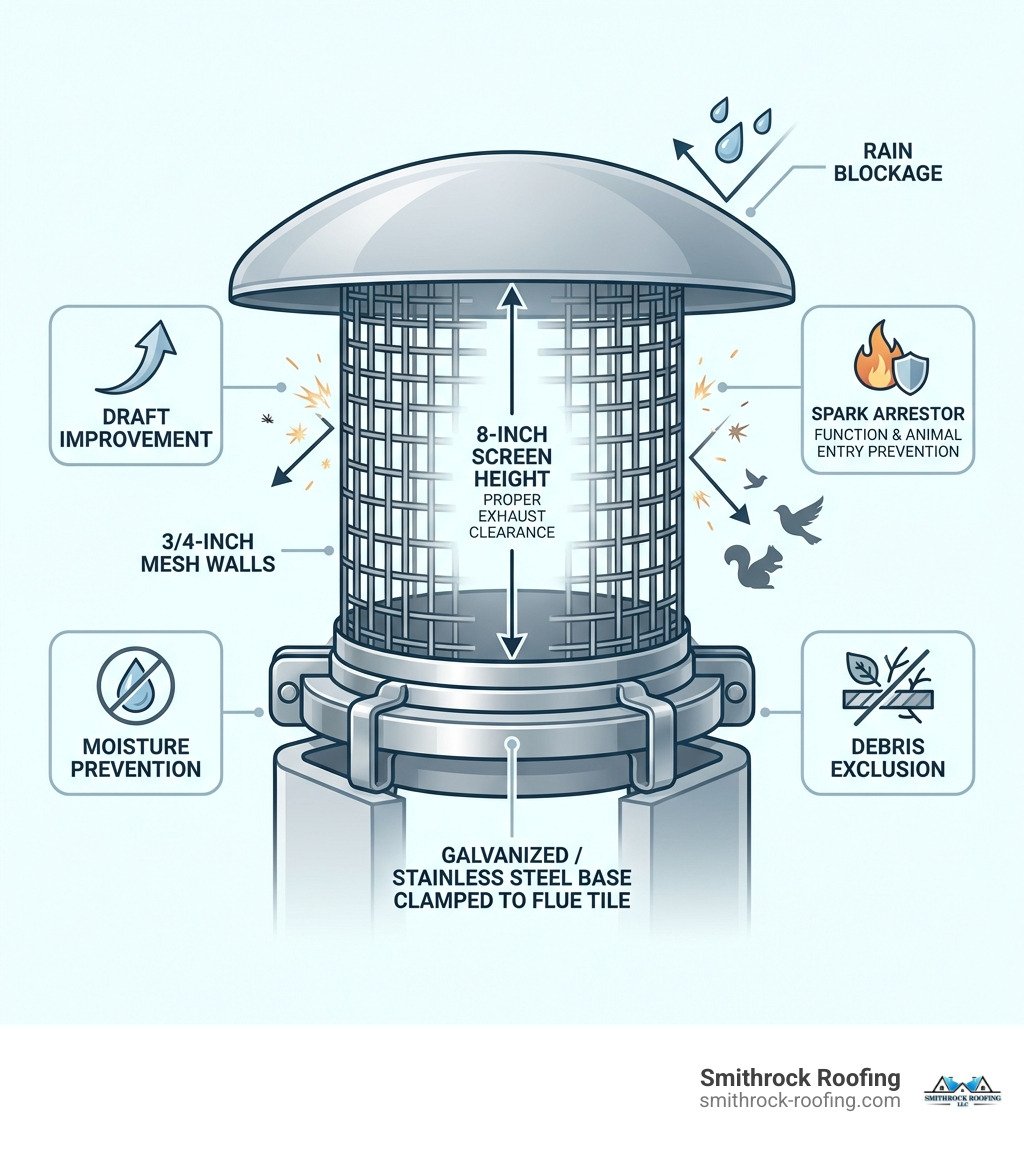
When we discuss a 13×13-chimney-cap, we are looking at a precision-engineered component designed to manage the complex thermodynamics of a venting system. The chimney-cap-purpose extends far beyond simply keeping rain out. It is a sophisticated tool for airflow management and fire safety. A standard 13-inch cap consists of three primary parts: the hood (or lid), the mesh (or screen), and the base (or mounting system). Each of these components must work in harmony to ensure the chimney functions as intended, maintaining the delicate balance between exhaust and intake.
The hood is the first line of defense. Its primary role is to deflect precipitation away from the flue opening. However, its shape is also aerodynamic. A well-designed hood helps to create a low-pressure zone above the flue, which can actually assist in pulling smoke and gases up and out of the chimney—a process known as the Venturi effect, based on Bernoulli’s principle. This is particularly important in areas prone to downdrafts, where wind can push smoke back into the home. By breaking the wind’s path and creating a consistent exit path for gases, the cap stabilizes the internal pressure of the flue, preventing the “puff-back” of soot into your living room.
The mesh walls serve as a spark arrestor. During a vigorous fire, lightweight embers and sparks can be carried upward by the rising heat. Without a mesh barrier, these sparks can exit the chimney and land on flammable roofing materials, such as asphalt shingles or cedar shakes, or nearby dry vegetation. The 3/4-inch mesh standard is designed to catch these embers while maintaining enough open area to prevent the restriction of exhaust gases. In some jurisdictions, particularly those at high risk for wildfires or in densely wooded areas, even tighter mesh (5/8-inch) is required by law to provide an even higher level of protection. This mesh also acts as a filter for larger debris, such as wind-blown leaves or twigs, which could otherwise fall into the flue and create a combustible blockage.
Furthermore, these caps are essential chimney covers to stop birds and other wildlife. Chimney swifts, for instance, are protected by the Migratory Bird Treaty Act of 1918, and once they nest in your chimney, you cannot legally remove them or disturb the nest until the birds migrate in the fall. A 13-inch cap prevents this legal and biological complication entirely. By sealing the entry point, you also prevent squirrels and raccoons from bringing nesting materials—twigs, leaves, and grass—into the flue. These materials are highly combustible and are a leading cause of secondary chimney fires. Additionally, animal droppings can carry pathogens like Histoplasma capsulatum, which can cause respiratory issues if the spores are circulated through the home’s air.
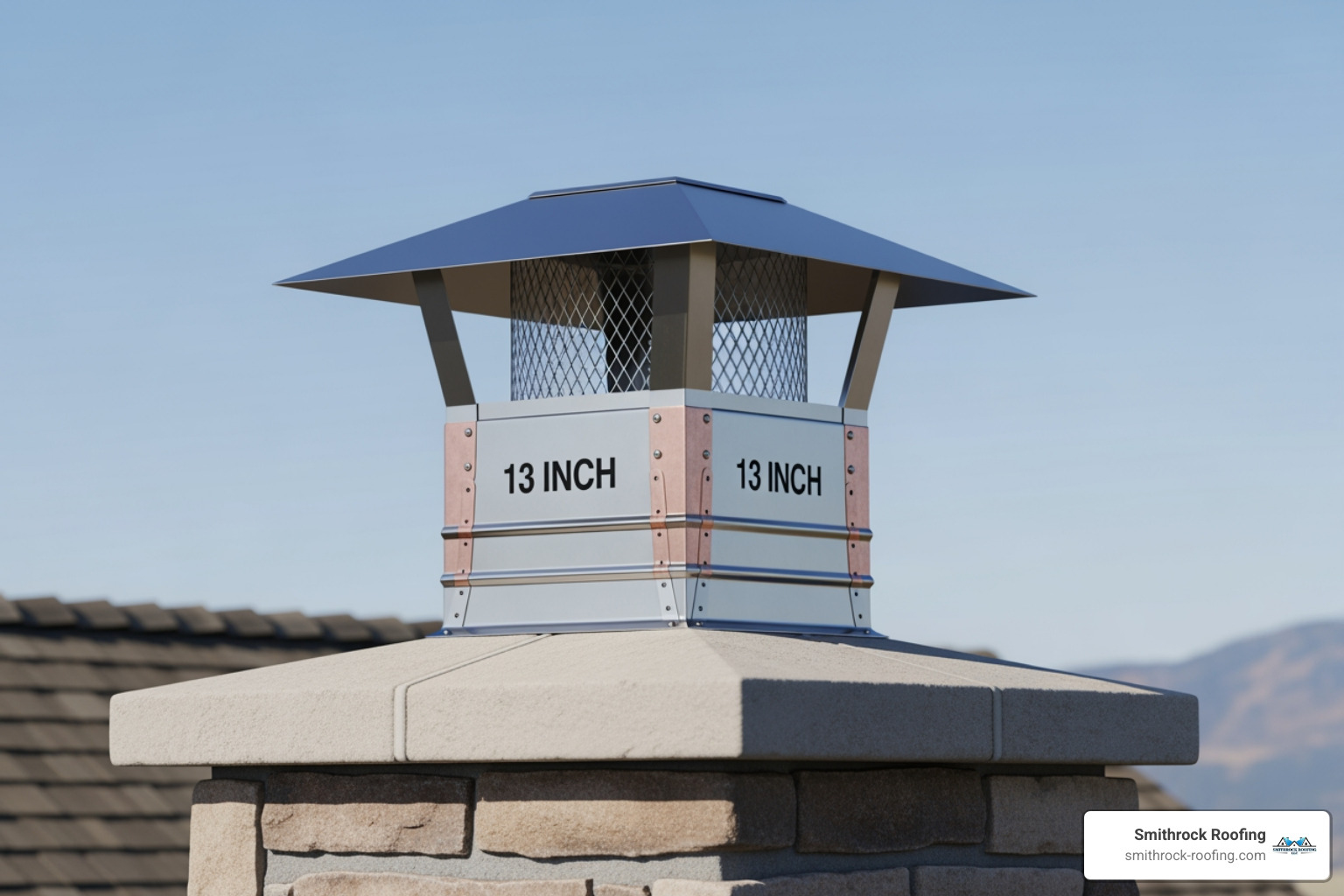
For homeowners seeking the highest level of performance, a stainless steel 13-inch chimney cap is the definitive choice. Stainless steel, specifically 304 or 316 grade, is prized for its exceptional resistance to corrosion. Chimney caps live in a brutal environment; they are subjected to extreme temperature fluctuations (from freezing winter nights to 1000°F during a fire), UV radiation, and the corrosive byproducts of combustion, such as sulfuric acid. While other metals might succumb to rust within a few seasons, stainless steel remains structurally sound for decades. 316-grade stainless steel is particularly recommended for coastal properties, as it contains molybdenum to resist chloride-induced pitting from salt air.
Most premium stainless steel caps, such as the Shelter 13-in W x 13-in L Stainless steel, utilize heavy-gauge construction. A 24-gauge hood provides the rigidity necessary to withstand heavy snow loads and high winds without denting or collapsing. The 18-gauge mesh is thick enough to resist warping from heat while remaining open enough for optimal venting. Because of this durability, many stainless steel caps come with lifetime warranties, making them a one-time investment for the life of the chimney. This longevity provides peace of mind, knowing that the critical barrier between your home and the elements will not fail prematurely.
A common concern among homeowners is whether a chimney cap will negatively impact the fireplace’s draft. In reality, a properly sized 13 inch chimney cap often improves efficiency. The draft is created by the temperature difference between the hot air inside the flue and the cooler air outside. If wind is allowed to blow directly into the flue, it cools the internal air and disrupts the upward flow. The cap acts as a buffer, maintaining a more consistent internal temperature and protecting the “column of heat” necessary for a strong draw.
When the draft is stabilized, the fire burns more completely and efficiently. This leads to a significant reduction in creosote accumulation. Creosote is a highly flammable, tar-like substance that forms when wood smoke doesn’t fully exit the chimney and condenses on the cooler walls of the flue. By ensuring a steady, strong draft, the cap helps carry that smoke out before it can condense. This not only makes the fireplace safer but also reduces the frequency of professional cleanings. For a deeper look at how different designs impact these physics, refer to our types-of-chimney-rain-caps-guide.
When selecting a 13-inch chimney cap, the material choice is the most significant factor in determining the product’s lifespan and maintenance requirements. Homeowners must weigh the environmental conditions of their specific region against the physical properties of the metals available. The choice often comes down to a balance between upfront cost and long-term durability.
| Feature | Stainless Steel | Galvanized Steel (Black) | Copper |
|---|---|---|---|
| Rust Resistance | Excellent (Highest) | Good (Coating dependent) | Excellent (Natural) |
| Durability | High (Lifetime) | Moderate (5-10 years) | High (Lifetime) |
| Aesthetic | Silver/Sleek | Matte Black | Classic/Patina |
| Maintenance | Minimal | Periodic Inspection | Minimal |
| Heat Tolerance | Very High | High | High |
Galvanized steel is a popular choice due to its initial resilience and lower price point. It is created by coating carbon steel with a layer of zinc to prevent oxidation. Most modern galvanized caps, like the 13 in. x 13 in. Galvanized Steel Fixed Chimney Cap in Black, are further protected by a high-temperature powder coating. This black finish is not just for aesthetics; it provides an additional barrier against the elements. However, galvanized steel has a finite lifespan. Eventually, the zinc coating will sacrifice itself to protect the steel (a process known as galvanic corrosion), and once the base metal is exposed, rust will spread rapidly. This is especially true in coastal areas or regions with high acid rain, where the chemical environment accelerates the corrosion process.
For those who desire a premium, historic look, copper chimney caps are an excellent alternative. Copper does not rust; instead, it undergoes a natural oxidation process that creates a beautiful verdigris patina. This patina actually serves as a protective layer for the metal underneath, sealing it from further atmospheric degradation. While copper is a softer metal than stainless steel, its longevity is comparable, often lasting 50 years or more. Copper caps are frequently chosen for high-end custom homes or historic restorations where the aesthetic of the roofline is a primary concern. If you are considering this high-end option, our copper chimney cap cost guide provides insights into the long-term value and architectural impact of this material.
The mesh of a chimney cap is its most regulated feature. The standard 3/4-inch expanded metal mesh is designed to balance two competing needs: airflow and containment. The openings must be large enough to allow the free passage of combustion byproducts, including soot particles and water vapor, but small enough to prevent birds and large embers from passing through. This balance is critical; if the mesh is too restrictive, it can cause back-drafting, while mesh that is too open fails its primary safety function.
In many Western states and specific high-risk fire zones in North Carolina, building codes may mandate a 5/8-inch mesh. This is often referred to as “California Mesh” or “Spark Arrestor Mesh.” The smaller openings are significantly more effective at catching tiny sparks that could ignite a wildfire. However, homeowners with smaller mesh must be more diligent about maintenance. The smaller the holes, the more likely they are to become clogged with soot or “ice over” in extreme winter conditions, which can lead to a dangerous backup of smoke into the home. Choosing the best types of chimney caps requires a careful check of local fire ordinances and NFPA 211 standards to ensure your home remains compliant and safe.
While functionality is paramount, the chimney cap is a visible part of your home’s silhouette. A black powder-coated finish is the industry standard because it effectively masks the inevitable soot staining that occurs over time. It provides a clean, finished look that complements most roofing colors, from charcoal shingles to red clay tiles. The powder coating process involves electrostatically applying a dry powder and then curing it under heat to create a hard, durable finish that is much tougher than conventional paint.
For homes with unique architectural styles, such as Tudor, Mediterranean, or French Provincial, a standard metal cap might feel out of place. In these instances, homeowners often look toward a stone chimney cap or a limestone chimney cap. These masonry caps are incredibly durable and offer a timeless, integrated look that matches the chimney’s structure. However, they do not typically include a spark arrestor mesh on their own. Often, a metal 13-inch cap is installed underneath or inside a decorative stone housing to provide the necessary safety features while maintaining the desired aesthetic. This hybrid approach offers the best of both worlds: the safety of a modern spark arrestor and the beauty of traditional masonry, ensuring the home is both protected and visually appealing.
Precision is the most important factor when purchasing a 13 inch chimney cap. A cap that is too small will not fit over the flue tile, while one that is too large may be unstable and prone to blowing off during a storm. To get an accurate measurement, you must access the chimney crown safely. You are measuring the outside dimensions of the clay flue liner (the part that extends upward from the flat masonry surface). Do not measure the inside of the flue, as the cap must sit on the exterior walls of the tile.
For a square or rectangular flue, measure the length and width of the outer edges. For a round flue, measure the outside diameter. It is also important to measure how far the flue tile extends above the chimney crown. Most flue-mount caps require at least 1 to 2 inches of exposed tile to provide a secure gripping surface for the mounting screws. If your flue tile is flush with the crown, you will need a different style of cap, such as a top-mount or a bracket-mounted model that anchors into the concrete crown itself.
Safety cannot be overstated when performing this task. If you are asking yourself, “do I need a contractor to replace a chimney cap?“, the answer depends on your roof’s pitch and your comfort with heights. Professional installers use specialized ladders, roof anchors, and fall-protection harnesses. If you choose to proceed as a DIY project, ensure you have a stable ladder, a helper on the ground, and clear weather conditions. Never attempt to work on a roof that is wet, icy, or excessively steep without proper safety equipment.
Most 13-inch caps are designed for a “flue-mount” installation, which is the most straightforward method for standard masonry chimneys. This method uses the existing clay tile as the anchor point.
For more information on the specific hardware used in these installations, see our chimney-cap-replacement-parts-complete-guide.
In some cases, a standard 13-inch flue-mount cap is not the right solution. If you have multiple flues located close together, a single large multi-flue cap is often more effective. These caps do not attach to the flue tiles themselves; instead, they are anchored directly into the masonry chimney crown. This requires a chimney chase cover installation or a large screen assembly that covers the entire top of the chimney.
Installation of a top-mount cap involves drilling into the concrete crown using a masonry bit and securing the unit with Tapcon screws or masonry anchors. It is vital to apply a thick bead of specialized chimney sealant under the mounting flange to prevent water from seeping into the chimney structure. If your chimney has a metal chase rather than a masonry crown, you may need to replace chimney chase cover entirely. For those with factory-built fireplaces, prefabricated chimney caps are designed to fit specific pipe diameters. To determine if your system requires this, read “is a prefab chimney chase cover right for you“.
Not all 13-inch flues are identical in shape or construction. While the 13×13 square flue is the most common, many homes feature rectangular or even oval flues that require specific chimney-cap-types. Understanding the nuances of your specific venting system is key to a successful installation. For example, older homes may have flues that have shifted or settled, resulting in a slightly irregular shape that a standard rigid cap cannot accommodate.
For flues that are irregularly shaped or have sustained damage to the outer edges of the tile, an “inside-mount” or “universal fit” cap is often the best solution. These models, frequently manufactured by brands like HY-C, utilize a spring-loaded leg system. Instead of screws that grip the outside of the tile, these legs are compressed and inserted into the flue, where they expand and grip the inner walls. This is an excellent option for flues that do not extend far enough above the crown to accommodate a standard mount, or for tiles that are too brittle to withstand the pressure of set screws.
If you are performing a fireplace cap installation for a round flue that measures approximately 13 inches in diameter, you must ensure the cap is specifically rated for round venting. Using a square cap on a round flue can leave gaps at the corners that allow small birds, bats, or large insects to enter. A dedicated round cap for fireplace use will feature a circular base that provides a 360-degree seal. For a full breakdown of these variations, see our chimney-cap-replacement-types-guide.
When dealing with a multi-flue chimney, the “13-inch” measurement might refer to the height of the mesh screen rather than the width of the base. In a multi-flue setup, the cap must be tall enough to clear the highest flue tile by at least 5 inches. If the cap is too low, it can cause “cross-talk” between flues, where smoke from one fireplace is pulled down into another room through an adjacent flue due to pressure differentials. This can lead to smoke damage and poor indoor air quality.
If you are currently planning a chimney liner installation cost analysis or need to cost to replace chimney liner, it is the ideal time to upgrade to a multi-flue cap. These larger units protect the entire chimney crown, which is the most vulnerable part of the masonry. By keeping the crown dry, you prevent the “freeze-thaw” cycle—where water enters small cracks, freezes, expands, and shatters the masonry—which is a common cause of chimney failure in the Piedmont region. A multi-flue cap acts as a roof for your entire chimney, significantly extending the life of the masonry structure.
A 13 inch chimney cap is a “set it and forget it” component for many, but it does require periodic attention to ensure it remains functional. We recommend a visual inspection at least once a year, typically in the autumn before you begin using your fireplace. For residents in the Winston-Salem area, professional services like chimney-cap-repair-winston-salem can provide a comprehensive safety check and cleaning.
Regular maintenance involves more than just looking at the cap. A professional chimney sweep will use a stiff brush to clear any soot from the mesh and ensure the mounting hardware remains tight. They will also check for “creosote glazing” which can occur if the fire is not burning hot enough. If the metal has become brittle or the mesh has holes, a full chimney-cap-replacement is the only safe course of action. Ignoring a damaged cap can lead to thousands of dollars in interior water damage or a devastating house fire.
While it is marketed as a 13 inch chimney cap, these units are designed with a range of adjustability. A standard 13×13 cap will typically fit any flue tile with outside dimensions between 11.5″ x 11.5″ and 13.5″ x 13.5″. The long set screws provided with the cap allow it to be centered and secured even if the tile is slightly smaller than the cap’s base. If your tile is exactly 13 inches, the fit will be perfect; if it is 12 inches, the screws will simply be tightened further to bridge the gap. Always ensure the screws are tightened evenly to keep the cap centered.
In many parts of North Carolina and across the United States, spark arrestors are a mandatory requirement for wood-burning fireplaces. The International Residential Code (IRC) specifies that spark arrestors must be accessible for cleaning and must have a screen area at least four times the net free area of the flue outlet. Most 13-inch caps are engineered to meet these specific ratios. However, always verify with your local building department, as some regions with high forest-fire risks have even stricter requirements regarding mesh size and material. Failure to comply with local codes can result in fines or issues with insurance claims in the event of a fire.
Your chimney cap should be cleaned as part of your annual chimney sweep. If you use your fireplace frequently (more than three times a week during winter), you may need to check the mesh mid-season. Burning unseasoned or “green” wood produces significantly more soot and creosote, which can clog a 13-inch cap much faster than burning dry, seasoned hardwood. A clogged cap is not only a fire risk but also significantly reduces the heating efficiency of your fireplace by restricting the necessary airflow for combustion.
Only if it is improperly sized, maintained, or installed. A 13-inch cap that is too short (lacks sufficient clearance between the flue and the lid) can restrict the exit of smoke, causing it to billow back into the room. Similarly, a cap that is clogged with debris, bird nests, or soot will cause smoke to back up. However, a clean, correctly installed cap will generally improve the draft by preventing wind-induced downdrafts and maintaining a stable internal temperature within the flue.
Yes, altitude can impact the draft of a chimney because the air is thinner at higher elevations. In mountainous regions, a chimney may require a taller flue or a specialized “high-wind” cap to maintain a proper draft. A standard 13-inch cap may need to be paired with a draft-inducing fan or a taller mesh screen to ensure that smoke is effectively pulled out of the home in lower-pressure environments.
While gas fireplaces produce less soot than wood-burning ones, a cap is still highly recommended. For gas systems, the cap prevents rain from rusting the firebox and keeps birds from nesting in the vent. Moisture is a byproduct of gas combustion, and a cap helps manage the venting of this water vapor while preventing external moisture from entering and causing corrosion of the gas components.
At Smithrock Roofing, we emphasize that the safety of your home is built on a foundation of small, well-maintained details. A high-quality 13 inch chimney cap is one of the most effective investments you can make to preserve the structural integrity of your chimney and the safety of your family. By preventing water damage, excluding dangerous wildlife, and containing hazardous sparks, this simple piece of hardware performs a vital service every day of the year. The cost of a premium stainless steel or copper cap is negligible when compared to the potential expense of rebuilding a collapsed chimney or repairing water-damaged ceilings and walls.
Whether you are located in Winston-Salem, Greensboro, or the surrounding areas of High Point and Clemmons, understanding the technical requirements of your chimneys is the first step toward responsible homeownership. Don’t wait for the tell-tale signs of a leak, the smell of damp soot, or the sound of animals in your walls to address your chimney’s needs. By choosing the right materials—whether it be the unmatched longevity of stainless steel or the classic architectural appeal of copper—and ensuring a professional installation, you can enjoy your fireplace with total peace of mind. Invest in quality protection today to avoid the costly restoration projects of tomorrow and ensure your home remains a safe, warm sanctuary for years to come.
Smithrock Roofing © Copyright 2026 • All Rights Reserved • Privacy Policy • Maintained by Mongoose Digital Marketing