Exploring the least expensive siding options doesn’t mean you have to compromise on protecting your home or enhancing its curb appeal. Whether you’re contending with outdated siding that’s causing high energy bills or simply aiming to refresh your home’s exterior without depleting your savings, understanding your affordable choices is the first step toward a smart, long-term investment.
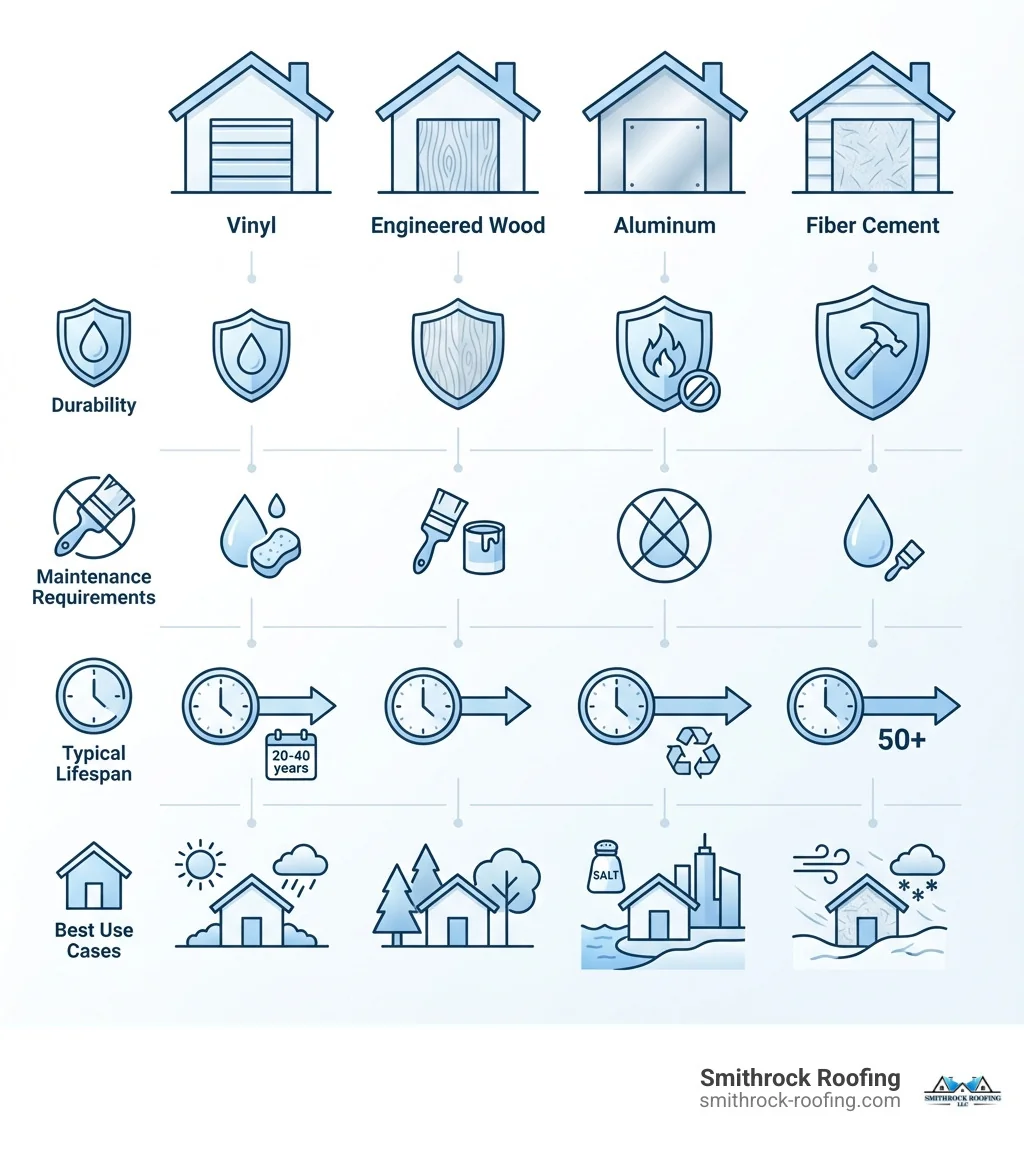
The most affordable and popular siding materials include:
The key to choosing truly economical siding isn’t just about finding the lowest initial price tag. It’s about understanding the total cost of ownership over the life of your home’s exterior.
Consider this: A siding material that costs less today might require frequent repainting every 5-10 years, constant repairs from impact damage, or a full replacement in just a decade or two. The costs of materials and labor for this upkeep can quickly surpass any initial savings. Meanwhile, a slightly more expensive option could last for 50 years or more with minimal maintenance, ultimately saving you a significant amount of money and hassle in the long run.
Your home’s protective barrier, its siding, does more than just look good from the curb. Quality siding is a critical shield against moisture, wind, pests, and extreme temperatures. It directly impacts your home’s energy efficiency, influencing heating and cooling costs and your family’s comfort. It also plays a major role in your home’s resale value; siding replacement projects consistently rank among the home improvements with the highest return on investment (ROI). And, of course, it creates that crucial first impression for visitors and potential buyers.
The good news is that you have several excellent, affordable options that deliver on all these fronts. Each material has its own unique profile of strengths, maintenance needs, and ideal applications. By understanding these differences, you can make a confident choice that fits both your budget and your home’s specific requirements. Let’s break down what makes siding truly economical and explore the top budget-friendly materials that can transform your home’s exterior.
Least expensive siding options further reading:
Choosing the right siding is a strategic decision that profoundly impacts your home’s long-term value, protection, and curb appeal. When considering the least expensive siding optionsit’s essential to look beyond the initial price per square foot and evaluate the key factors that influence the total investment over decades.
First is installation complexity and labor considerations. Lighter materials like vinyl and aluminum are generally quicker and easier to install, which can significantly reduce labor costs. Heavier or more specialized materials, such as fiber cement, require larger crews, specialized cutting tools, and more meticulous handling, increasing labor expenses. While a DIY approach might seem like the cheapest route, improper installation is a leading cause of siding failure. Common DIY mistakes, like nailing panels too tightly, inadequate flashing, or improper sealing, can lead to costly future problems like moisture intrusion, warping, and voided warranties. Professional installation by skilled contractors who understand each material’s nuances is a worthwhile investment in your home’s longevity.
Your home’s architectural style is also a significant factor. The siding should complement, not clash with, your home’s design. For example, the clean, simple lines of vinyl siding in a traditional clapboard or Dutch lap profile work beautifully on Ranch or Colonial homes. Engineered wood, with its deep textures, is perfect for achieving a rustic Craftsman or cozy cottage aesthetic. The smooth, monolithic appearance of fiber cement panels or stucco can enhance modern or contemporary homes. The goal is to improve curb appeal and maximize resale value, so choosing a material that harmonizes with your home’s character is crucial.
Local climate impact and weather resistance are paramount, especially in a state like North Carolina. Our region’s humid summers, potential for severe thunderstorms, and occasional freezing temperatures demand siding that can withstand these diverse elements. A material that performs well in a dry, mild climate might fail here. For coastal areas, aluminum and fiber cement are excellent choices for resisting salt air and high winds. For inland areas, vinyl’s resistance to moisture and pests is a major benefit, while engineered wood must be perfectly installed and maintained to handle the humidity. We help clients select options proven to be resilient against moisture, sun exposure, and wind, ensuring year-round protection.
Warranty coverage is a critical indicator of long-term value. A strong warranty protects your investment against manufacturing defects. It’s important to understand the two types: material warranties, which are offered by the manufacturer and can cover product defects for 30 years to a limited lifetime, and workmanship warranties, which are provided by the contractor and cover the installation itself. Pay close attention to whether a material warranty is prorated (coverage decreases over time) or non-prorated (full coverage for the entire term), as this can make a huge difference. A reputable contractor will offer a solid workmanship warranty, standing behind their installation quality.
Energy efficiency can lead to significant long-term savings. Siding is a key component of your home’s thermal envelope. While many affordable siding options are not inherently the most insulative, their performance can be dramatically improved by adding a layer of rigid foam insulation or a quality house wrap underneath. For example, standard vinyl siding has a low R-value (a measure of thermal resistance), but insulated vinyl siding incorporates a foam backing that can boost the R-value to R-2 to R-4, reducing heat transfer and lowering your energy bills. Investing in proper insulation during a siding project can offset the initial expense through year-over-year savings.
Finally, we strongly advocate for old siding removal and structural integrity inspection. Installing new siding directly over an old layer is a risky shortcut. Removing the old material is the only way to allow for a thorough inspection of the home’s sheathing (the wooden layer covering the wall studs) for hidden damage like rot, mold, or pest infestation. Addressing these foundational problems first is vital for your home’s health. Layering new siding can also create an uneven, bulky appearance and may not be compliant with local building codes. Proper removal ensures a sound, flat foundation for your new siding, guaranteeing a professional finish and lasting performance.
Need a hand with this in Winston-Salem, Greensboro and the NC Triad? Call (336) 971-0464 or request a free estimate. Honest answers, no pressure.
When homeowners ask us about the most cost-effective house siding, they’re really asking two questions at once: what’s affordable to install, and what will save them the most money over time? The answer isn’t always the same material. Here’s how the leading affordable siding options stack up when you consider both dimensions together.
Vinyl siding wins on upfront affordability. It’s the cheapest exterior siding to purchase and install, and its minimal maintenance requirements keep ongoing costs low. If budget is the primary driver and you need a reliable, attractive result without a large initial outlay, vinyl is the most straightforward answer.
Fiber cement siding wins on lifetime value. Yes, it costs more to install than vinyl, but its 50-plus-year lifespan, resistance to fire, pests, rot, and severe weather, and its strong resale ROI make it the most cost-effective house siding when measured across decades rather than years. Homeowners who plan to stay in their homes long-term consistently find that fiber cement pays for itself.
Engineered wood siding sits in the middle. It offers a lower upfront cost than fiber cement with a more premium aesthetic than standard vinyl. Its cost-effectiveness depends heavily on how well it’s maintained, diligent repainting and edge sealing keep it performing well, while neglect accelerates costly repairs.
Aluminum siding delivers strong cost-effectiveness in niche applications, particularly for coastal properties or outbuildings where its corrosion resistance provides genuine long-term value that other materials can’t match at the same price point.
The bottom line: the most cost-effective siding for your house depends on your timeline, your maintenance habits, and your climate. A knowledgeable local contractor can help you map those variables to the right material, which is exactly the conversation we have with every homeowner we work with across the NC Triad.
This section will compare the most popular budget-friendly materials, helping you weigh the pros and cons of each to find the perfect fit for your home and priorities.
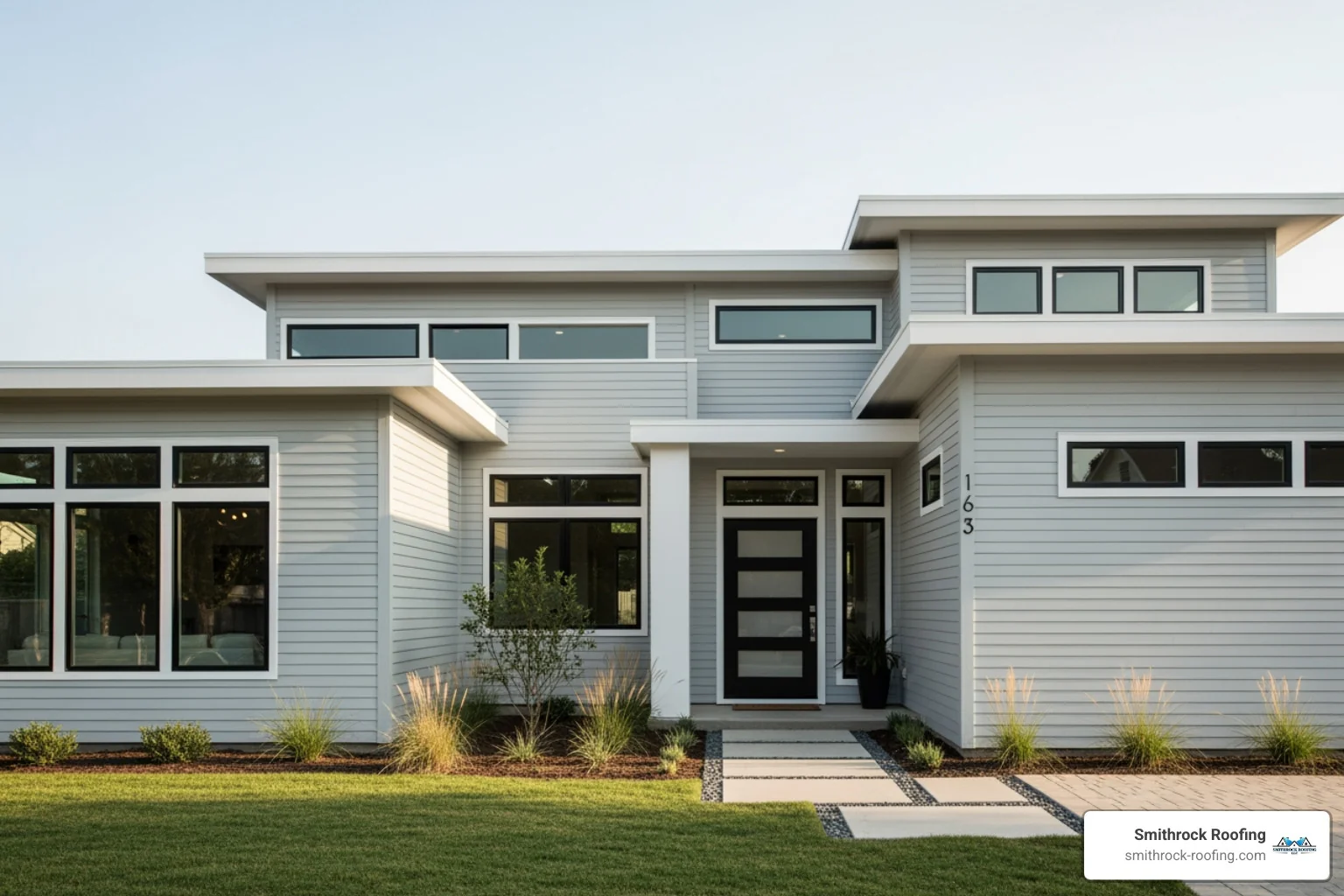
When we talk about the least expensive siding optionsvinyl siding almost always comes to mind first, and for good reason. With an average installed cost of $4 to $12 per square footit’s consistently one of the most budget-friendly materials available, offering a fantastic balance of affordability, versatility, and ease of maintenance. Its popularity is undeniable; the National Association of Home Builders (NAHB) confirms that over a quarter of new single-family homes in the U.S. are built with vinyl siding.
One of vinyl’s biggest draws is its low maintenance. Unlike wood siding that requires frequent painting or staining, vinyl’s color is baked through the material, so it never needs painting. It typically only needs an annual cleaning with a soft brush, soap, and water to keep it looking fresh, saving homeowners significant time and money over its lifespan. It also boasts incredible color variety and texture options. Available in numerous profiles like traditional clapboard, Dutch lap, and vertical board and batten, it can convincingly mimic the appearance of more expensive materials like wood grain, allowing you to achieve a sophisticated look without the premium price tag.
The ease of installation also contributes to its cost-effectiveness. As a lightweight material, it can be installed relatively quickly by a smaller crew, which helps keep labor costs down. In terms of durabilitymodern vinyl siding is quite robust. It’s naturally pest resistantmeaning you won’t have to worry about termites or carpenter ants. Furthermore, it exhibits good fire resistanceas it is self-extinguishing and won’t ignite unless exposed to a very high-temperature flame source.
However, vinyl siding isn’t without its considerations. While generally durable, it has a relatively lower impact resistance compared to fiber cement or engineered wood, meaning it can crack or get punctured by severe hail or a stray baseball. Older or lower-grade vinyl can also become brittle and more susceptible to cracking in extreme cold. Another point to consider is thermal expansion. Vinyl expands and contracts significantly with temperature changes. If it’s nailed too tightly during installation, it can lead to warping or buckling, a phenomenon sometimes called “oil canning.” It’s also worth noting that vinyl can melt if exposed to intense heat, such as from a barbecue grill placed too close to the house or from concentrated sunlight reflected off energy-efficient windows.
Despite these points, vinyl siding remains a top choice for homeowners seeking affordable siding that delivers on both aesthetics and practicality. With a typical lifespan of 20-40 years and strong manufacturer warranties, it offers excellent long-term value. If you’re exploring your options, we offer a wide range of vinyl siding options to suit any home and budget.
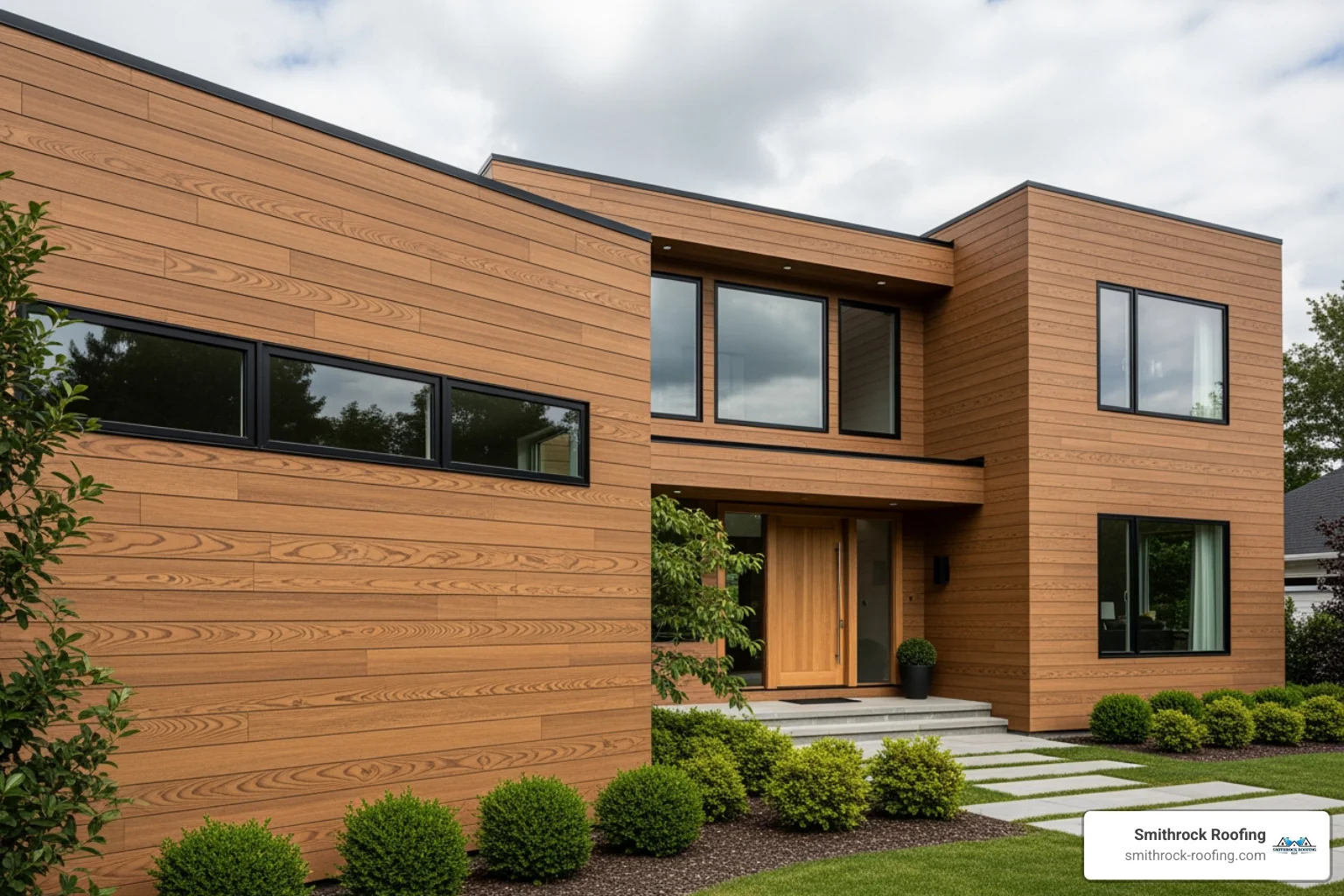
When durability, longevity, and return on investment are high on your list, fiber cement siding emerges as a formidable contender among the least expensive siding options. Though it has a higher upfront material cost than vinyl, typically ranging from $6 to $15 per square foot installedits exceptional performance and extended lifespan often make it the more economical choice in the long run.
Fiber cement is a composite material made from cement, sand, and cellulose fibers, creating an incredibly dense and robust final product. Its exceptional durability is its most celebrated feature. It boasts impressive longevitywith many installations from top brands like James Hardie lasting 50 years or even longer, often backed by 30-year non-prorated warranties. This means fewer replacements and repairs over the decades, translating to significant savings.
For homeowners concerned about safety and resilience, fiber cement offers superior fire resistance. It is non-combustible and will not ignite when exposed to direct flame, providing an invaluable layer of protection. It’s also highly pest and rot resistant due to its inorganic composition, meaning termites, woodpeckers, and moisture-related decay are non-issues. We’ve seen firsthand how its weather resilience stands up to the harsh North Carolina climate. Manufacturers produce FEMA-compliant fiber cement siding engineered to resist the impact of hail and wind-blown debris, leading to fewer repairs and lower insurance premiums in some cases.
Beyond its strength, fiber cement offers remarkable versatility in appearance. It can be manufactured to beautifully mimic the deep, authentic look of natural wood grain, the clean lines of modern smooth panels, or the classic appeal of stucco, all without the maintenance demands of the materials it imitates. It can be purchased primed and ready for paint, or pre-finished with a factory-applied color (like James Hardie’s ColorPlus® Technology) that comes with its own 15-year warranty against chipping, peeling, and cracking.
However, there are a few considerations. Fiber cement is a heavy materialweighing about 2.5 pounds per square foot, which makes installation more labor-intensive and increases installation costs. It requires specialized diamond-tipped blades for cutting, and the process creates silica dust, which necessitates strict safety protocols for installers. While pre-finished options are low-maintenance, primed fiber cement will require painting upon installation and repainting every 15-25 years, depending on paint quality and climate.
Despite these points, fiber cement siding offers a compelling value proposition for those prioritizing long-term performance. It’s a material we highly recommend for its ability to protect your home for decades. To learn more about how it compares to other options, check out our insights on vinyl vs. Hardie board siding.
If you love the warm, classic look of natural wood but are wary of its high cost and demanding maintenance, then engineered wood siding is an excellent choice among the least expensive siding options. Costing an average of $5 to $13 per square foot installedit offers the best of both worlds: the rich aesthetic appeal of wood combined with enhanced durability and a more budget-friendly price point.
Engineered wood siding, with LP SmartSide being the most prominent brand, is created by breaking down wood into strands or fibers and combining them with resins, waxes, and a zinc borate compound under intense heat and pressure. This process creates a product that is stronger, more dimensionally stable, and more resistant to environmental threats than traditional wood. This manufacturing process gives it an authentic wood lookwith deep, embossed textures that are often indistinguishable from the real thing. It’s also lighter than real wood and fiber cementwhich can contribute to a faster and less costly installation.
One of its significant advantages is its superior impact resistance. Engineered wood is designed to withstand impacts from hail, rocks, and everyday bumps far better than vinyl or aluminum. It typically comes in longer 16-foot lengths, resulting in fewer seams on your home’s exterior for a cleaner, more premium look and better protection against moisture. The integrated zinc borate treatment provides powerful pest and fungal decay resistancea crucial feature for durability. With proper installation and maintenance, engineered wood siding can have a lifespan ranging from 20 to 50 years, often backed by a 50-year prorated warranty.
However, engineered wood is not maintenance-free. While more resilient than natural wood, it still requires periodic attention, typically involving cleaning at least once a year and repainting every 5-15 years to maintain its protective layer and appearance. The most critical aspect of this material is its moisture vulnerability at cut edges. Every cut made during installation must be properly primed and sealed according to the manufacturer’s specifications. Failure to do so can allow water to penetrate the board, leading to swelling, delamination, and rot, which would not be covered by the warranty. This makes the quality of the installation absolutely paramount.
For homeowners in Winston-Salem, King, Clemmons, and surrounding areas who desire the timeless beauty of wood without the premium cost and intensive upkeep of solid timber, engineered wood siding presents a compelling option. It offers a beautiful, durable exterior that can last for decades with consistent, but manageable, care. For more information on maintaining your home’s exterior, you might find our guide on siding repair helpful.
When considering affordable siding for a house, aluminum siding often comes up as a practical and enduring choice, especially for specific applications. While its popularity for new home construction has waned in favor of vinyl and fiber cement, it remains a viable and budget-friendly option, typically costing $5 to $10 per square foot installed.
One of aluminum’s standout features is its lightweight materialmaking it easy to handle and quick to install, which helps manage labor costs. It’s also inherently fireproofoffering excellent peace of mind, and completely insect-proofeliminating concerns about termites or other wood-boring pests. A major advantage aluminum has over steel siding is that it is naturally rust-proof. As Western States Metal Roofing highlights, aluminum siding is corrosion resistantmaking it an excellent choice for coastal homes exposed to salt spray. Furthermore, aluminum is a highly recyclable material, appealing to environmentally conscious homeowners. When properly installed, its surface can reflect solar heat away from the home, potentially contributing to modest energy savings in hot climates.
However, aluminum siding does have notable drawbacks. Its primary weakness is that it is prone to denting and scratching. Impacts from hail, thrown objects, or even leaning a ladder against it can leave permanent marks. Unlike steel, it’s a softer metal, which means it can show wear more visibly. Over time, the factory-applied finish can experience fading or chalkingwhere the paint oxidizes and creates a powdery residue on the surface. This will eventually necessitate repainting to restore its appearance, which requires special preparation and primers for metal surfaces. Another common complaint is that it can be noisy in rain or hailas the impact of precipitation creates a distinct drumming sound that is more audible than with thicker materials like fiber cement or engineered wood.
Despite these cons, aluminum siding offers a durable exterior that, with proper maintenance, can last for 30 to 40 years. It’s a low-maintenance option that typically only requires periodic cleaning and eventual repainting. For homeowners in areas like Kernersville or Winston-Salem looking for a lightweight, fire-resistant, and corrosion-proof option among the affordable siding choices, aluminum can be a smart and practical choice. To explore all our offerings, learn about our siding services.
Vinyl is the go-to affordable choice for millions of homeowners, but it isn’t right for every situation. Maybe your neighborhood’s HOA prefers a different look. Maybe you want something with better impact resistance. Maybe you’re simply curious about what else is out there. Here’s a straightforward look at the most practical alternatives to vinyl siding and alternatives to traditional siding materials in general.
Fiber cement is the most popular step up from vinyl. It offers a similar range of profiles and textures, including convincing wood-grain looks, but with superior fire resistance, impact resistance, and a lifespan that can exceed 50 years. The trade-off is a higher upfront cost and heavier installation requirements. For homeowners who want affordable siding that performs at a higher level over the long term, fiber cement is typically the first alternative we recommend.
If the aesthetic of wood is important to you but you don’t want to spend on solid timber or deal with its maintenance demands, engineered wood siding is an excellent middle ground. It looks genuinely like wood, handles impacts better than vinyl, and comes in at a comparable price point. The key difference is that it requires more active maintenance, particularly keeping painted surfaces and cut edges properly sealed, to reach its full lifespan potential.
For homeowners in coastal or high-humidity environments, aluminum siding can be a smarter choice than vinyl because of its natural corrosion resistance. It’s also completely fireproof and pest-proof. The downsides, susceptibility to denting and eventual chalking of the painted finish, make it less ideal for high-activity areas but a solid pick for certain applications.
Some homeowners looking for alternatives to traditional lap siding turn to veneer products. Brick veneer and stone veneer panels can be applied to accent sections of the home’s exterior or even the full façade, offering a premium appearance at a fraction of the cost of genuine masonry. These materials pair beautifully with vinyl or fiber cement on the remainder of the home. For more on this combination approach, see our pages on brick veneer vinyl siding and stone veneer and vinyl siding.
Traditional stucco and natural wood siding are both legitimate options, but neither qualifies as affordable siding in today’s market. Natural wood requires the most ongoing maintenance of any exterior material, regular painting or staining, pest treatments, and prompt repair of damaged areas. Stucco performs well in dry climates but can be problematic in North Carolina’s humid environment if not perfectly applied and maintained. In most cases, engineered wood or fiber cement will deliver the aesthetic these materials offer at a better total cost of ownership for Triad-area homeowners.
Choosing an economical siding material is only one part of the equation. The other crucial element is ensuring it’s installed correctly and maintained thoughtfully. A flawless installation is the foundation of any siding’s performance and longevity. Understanding the process and the realities of long-term upkeep is essential to making the smartest investment for your home’s future.
When selecting from the least expensive siding optionsit can be tempting to further cut costs by attempting a DIY installation. However, we cannot overstate this: professional siding contractors are worth every penny. While a minor repair might be manageable for a seasoned DIYer, a full siding replacement is a complex, large-scale project where small mistakes can lead to catastrophic failures.
The risks of DIY installation are substantial. The most common and damaging error is improper water management, leading to moisture intrusion. If water gets behind the siding, it can cause hidden mold, rot in the wall sheathing and studs, and significant structural damage that is far more expensive to repair than the initial cost of professional labor. We’ve seen countless instances where improper nailing leads to siding warping and buckling. For example, vinyl siding must be hung loosely on the nail to allow for thermal expansion and contraction; nailing it too tightly will cause it to ripple and deform on the first hot day. Furthermore, nearly all manufacturer warranties are voided if the siding isn’t installed according to their strict specifications, specifications that a professional contractor is trained to follow precisely.
The importance of proper flashing cannot be overlooked. Flashing is the thin, waterproof material installed around windows, doors, rooflines, and other penetrations. It is the most critical component for diverting water away from vulnerable areas. An experienced contractor understands the physics of water shedding and installs a layered system of house wrap, flashing, and trim to create a weatherproof seal.
Finding qualified installers is the key to a successful project. When vetting contractors, look for:
Investing in professional installation ensures your chosen siding performs as intended, looks beautiful, and protects your home for decades to come. When you’re ready to start your project, we can help you find the best siding contractors for your project.
When evaluating affordable siding options, a critical but often overlooked aspect is the balance between a material’s lifespan and its maintenance needs. The upfront cost is just the beginning of the story. The true long-term value is revealed in the total cost of ownership, which includes the initial investment plus the cumulative cost of ongoing maintenance, repairs, and eventual replacement.
Let’s look at how our top budget-friendly options stack up:
| Siding Material | Typical Lifespan | Cost per Sq. Ft. (Installed) | Maintenance Needs | Durability |
|---|---|---|---|---|
| Vinyl Siding | 20-40 years | $4 – $12 | Low (annual cleaning) | Fair (low impact resistance, can fade, can become brittle in cold) |
| Fiber Cement Siding | 50+ years | $6 – $15 | Low to Moderate (repainting every 15-25 years) | Excellent (fire, pest, rot, weather, impact resistance) |
| Engineered Wood | 20-50 years | $5 – $13 | Moderate (annual cleaning, repainting/resealing every 5-15 years) | Good (impact resistant, pest resistant with treatments, vulnerable at cut edges if not sealed) |
| Aluminum Siding | 30-40 years | $5 – $10 | Low to Moderate (periodic cleaning, eventual repainting) | Fair (rust-proof and fireproof, but prone to denting and chalking) |
This comparison highlights that the “cheapest” material isn’t always the most economical in the long run. For instance, while vinyl siding typically offers the lowest upfront cost and boasts a low maintenance requirement of just an annual cleaning, its lifespan is generally shorter than fiber cement. This means you might face the cost and disruption of a full replacement sooner.
Fiber cement, on the other hand, while having a higher initial cost, offers an impressive longevity of 50 years or more. Its minimal need for maintenance (primarily repainting every 15-25 years for primed versions) and superior resistance to fire, pests, and severe weather give it a very strong return on investment (ROI). In fact, siding replacement with fiber cement consistently ranks as one of the home improvement projects with the highest ROI, often recouping over 85% of its cost at resale. It’s a classic example of how a slightly larger initial investment can lead to a lower total cost of ownership.
The engineered wood’s aesthetic vs. upkeep presents a key trade-off. It offers the coveted look of real wood at a lower price, but its 20-50 year lifespan is heavily dependent on diligent maintenance. The need for repainting every 5-15 years and ensuring all seams and edges remain perfectly sealed adds to its long-term cost and effort.
Ultimately, finding the best long-term value means balancing upfront investment with future upkeep and your personal goals. If you plan to sell your home in the next five years, the low initial cost of vinyl might be the most sensible choice. If you’re in your “forever home,” the durability and longevity of fiber cement may provide the best value and peace of mind. We help our clients in Greensboro, High Point, and Trinity weigh these factors to make an informed decision that protects their home and finances for years to come.
For many homeowners, the real cost of siding isn’t just the installation, it’s the years of repainting, resealing, and repairs that follow. If staying off a ladder and away from a paint roller is part of your plan, here’s what you need to know about low-maintenance siding.
Vinyl siding is the gold standard for low-maintenance performance among affordable options. Because the color runs throughout the material rather than sitting on top as a painted layer, vinyl will never need scraping or repainting. An annual rinse with a garden hose and an occasional scrub with soapy water is genuinely all it takes to keep it looking sharp. The only maintenance concern is the occasional cracked or dented panel, which can usually be replaced individually rather than requiring a full re-side.
Pre-finished fiber cement sidingsuch as James Hardie’s ColorPlus® Technology, is the strongest low-maintenance option if you’re willing to invest a bit more upfront. The factory-applied finish is warrantied against chipping, peeling, and cracking for 15 years, and the material itself is impervious to rot, pests, and fire. Once installed and painted (or pre-finished), there is very little for a homeowner to do beyond keeping it clean.
Aluminum sidingwhile eventually subject to fading and chalking, is otherwise quite low-effort. It doesn’t rot, isn’t attacked by insects, and doesn’t require the kind of regular repainting cycles that natural wood demands.
Engineered wood is the highest-maintenance option among the affordable materials. Its painted finish needs attention every 5-15 years, and any cut edges or damaged spots must be addressed promptly to prevent moisture infiltration. It rewards diligent owners with a beautiful, wood-like appearance, but it does require that diligence.
If truly low-maintenance exterior cladding is your top priority, vinyl or pre-finished fiber cement will serve you best. Both deliver excellent curb appeal with minimal ongoing demands on your time and budget.
We often hear similar questions from homeowners exploring their siding options. Here, we address some of the most common inquiries about economical siding choices to provide clear, straightforward answers.
Vinyl siding is the cheapest siding material available for most homes. With installed costs typically starting around $4 per square foot, it consistently undercuts other options on upfront price. It’s also widely available, comes in a broad range of colors and profiles, and requires minimal ongoing maintenance, making it not just the cheapest but one of the most practical choices overall. If you’re asking purely about the lowest price per square foot, vinyl wins that comparison every time.
The best value siding depends on your time horizon. For homeowners focused on the next 5-10 years, vinyl offers the best value: low installed cost, minimal upkeep, and a proven track record of performance. For homeowners thinking about the next 30-50 years, fiber cement edges ahead as the best value siding because its dramatically longer lifespan and lower lifetime maintenance costs more than offset the higher upfront investment. We’d describe it this way: vinyl wins on price, fiber cement wins on value over time. The right answer depends on how long you plan to stay in your home and what your maintenance preferences are.
For most affordable siding on a house, vinyl is the clear frontrunner. It’s widely available, quick to install (which keeps labor costs down), and requires no painting. For homeowners looking at affordable siding options that balance cost with a more premium appearance, engineered wood is typically the next step up. It delivers a convincing wood aesthetic at a price point that remains accessible for most budgets, sitting just above vinyl in the overall cost range.
Among the affordable siding materials, fiber cement needs to be replaced the least often. With a lifespan that regularly reaches 50 years or more, it outlasts vinyl (20-40 years), engineered wood (20-50 years, depending on maintenance), and aluminum (30-40 years). For homeowners who want to install siding once and not think about replacing it again for the foreseeable future, fiber cement is the most durable long-term choice. Its resistance to rot, pests, fire, and severe weather means there are very few forces that will compromise it before its natural end of life.
No, “economical” or “inexpensive” refers to the upfront material and installation cost, not necessarily its quality. Many affordable siding options, like vinyl and fiber cement, are high-performance, durable, and long-lasting materials that offer excellent value. Siding quality is determined by the material grade (e.g., thickness of vinyl), the manufacturer’s reputation, and the quality of the installation, not just the price tag. Modern manufacturing has greatly improved the performance of budget-friendly materials. Today’s vinyl has superior color retention and impact resistance compared to older versions, while fiber cement is renowned for its strength, proving that an economical material can absolutely be a high-quality choice.
While technically possible in some cases, we strongly advise against it. This “overlaying” practice is a shortcut that can compromise your home’s integrity. Removing old siding is crucial because it is the only opportunity for a contractor to inspect the home’s sheathing (the wooden wall structure) for hidden damage like rot, mold, or pest infestation. Covering these issues will only allow them to worsen, leading to far more extensive and costly structural repairs down the road. Furthermore, layering new siding creates a bulky, uneven appearance, makes windows and doors look recessed, and can interfere with the proper installation of flashing and ventilation. A full removal ensures a clean, flat surface for a flawless installation that adheres to manufacturer warranties and local building codes.
Among the affordable siding options, vinyl is a top contender for being the most maintenance-free. Its primary requirement is a simple annual cleaning with soap and water to remove surface dirt and mildew. Because vinyl’s color is integrated throughout the material (a property known as “solid core”), it won’t chip, flake, or peel like painted surfaces, so it never needs scraping or repainting.
Fiber cement also ranks very high for low maintenance. It is exceptionally resistant to rot, pests, and fire, eliminating the need for related repairs. While it will eventually need repainting, this is typically only required every 15-25 years for site-painted siding. If you opt for a pre-finished product with a factory-applied coating, the finish itself is often warrantied for 15 years, making it an extremely durable and hassle-free option.
For a new home build, the most practical affordable exterior siding options are vinyl, engineered wood, and fiber cement. Vinyl delivers the lowest installed cost and requires virtually no maintenance, a sensible choice if you’re managing a tight construction budget. Engineered wood is a smart pick when you want the warmth and character of a wood-look exterior without the price of solid timber. Fiber cement costs more upfront but pairs beautifully with new construction because it essentially sets up the home’s exterior for decades without requiring significant attention. For new homes in the NC Triad, where humidity and seasonal storms are real factors, we often guide builders and homeowners toward fiber cement or insulated vinyl as the best combination of affordability and long-term resilience.
For most climates, including North Carolina, the best times of year to replace siding are spring and fall. During these seasons, temperatures are moderate, which is ideal for both the materials and the installers. Extreme cold can make vinyl siding brittle and prone to cracking during installation, while extreme heat can cause materials to expand, making it difficult to achieve proper spacing and alignment. Mild weather also reduces the risk of weather-related project delays. That said, a professional crew can work in most conditions, but spring and fall offer the most favorable circumstances for a smooth project.
For an average-sized single-family home (around 1,500-2,500 square feet), a complete siding replacement project typically takes one to two weeks. However, this timeline can vary significantly based on several factors:
Choosing an economical siding option doesn’t mean sacrificing quality, performance, or curb appeal. The smartest decision comes from balancing the upfront investment with long-term durability and maintenance needs to find a solution that protects both your home and your wallet. The key is to look beyond the initial price tag and consider the total cost of ownership over the decades you’ll live in your home.
As we’ve explored, each of the affordable siding options covered here offers a unique value proposition. Vinyl provides unbeatable affordability and minimal upkeep, making it a practical choice for many homeowners. Engineered wood delivers the timeless, classic look of real wood with enhanced durability and a more accessible price point. For those prioritizing ultimate longevity and resilience against the elements, fiber cement stands out as a superior long-term investment, often providing the best return when it’s time to sell. And for specific applications where fire resistance and corrosion resistance are paramount, aluminum remains a dependable choice.
The right choice depends entirely on your budget, local climate, aesthetic goals, and how long you plan to be in your home. Navigating these options can be complex, but you don’t have to do it alone. For expert guidance in selecting and installing the perfect siding for your home in the Winston-Salem, Greensboro, High Point, Kernersville, Clemmons, Rural Hall, King, or surrounding NC Triad area, trust the professionals at Smithrock Roofing. We are committed to helping you understand your options and make a smart, lasting investment in your home’s future.
Explore our siding solutions today!
Need a local pro? Learn more about our siding installation and repair in Clemmons.
The most affordable siding materials include Vinyl Siding, Engineered Wood, Aluminum Siding, and Fiber Cement.
A siding material that costs less initially might require frequent maintenance or replacement, leading to higher long-term costs, whereas a slightly more expensive option could last longer with minimal maintenance, saving money and hassle over time.
Quality siding acts as a critical shield against moisture, wind, pests, and extreme temperatures, impacts the home's energy efficiency, influences heating and cooling costs, contributes to the home's resale value, and creates a positive first impression.
Vinyl Siding typically costs between $4 to $12 per square foot installed.
Siding replacement projects rank among the home improvements with the highest return on investment (ROI), significantly impacting a home's resale value.

Smithrock Roofing © Copyright 2026 • All Rights Reserved • Privacy Policy • Maintained by Mongoose Digital Marketing