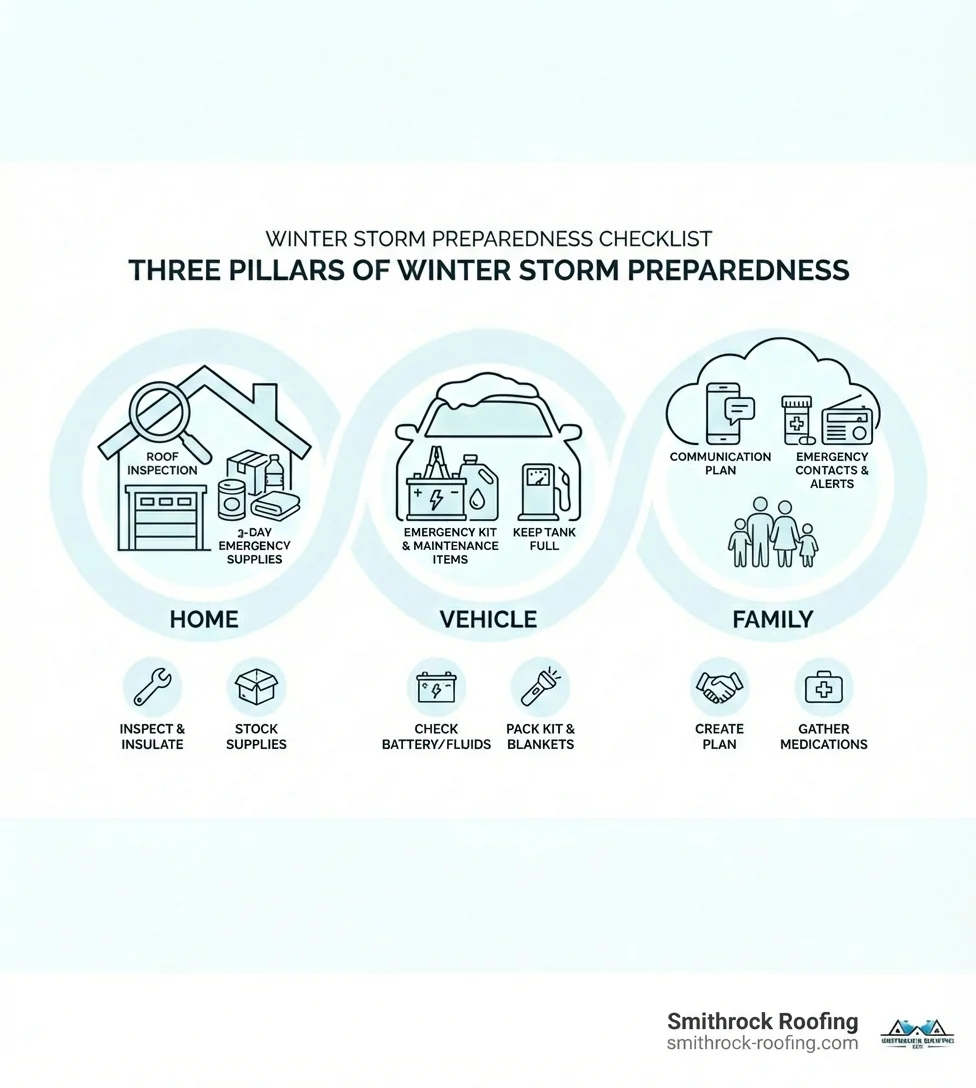
A winter storm checklist helps you prepare your home, vehicle, and family for extreme cold, heavy snow, ice, and high winds before dangerous weather arrives. Here’s what you need to do:
Essential Winter Storm Preparations:
Winter storms bring more than just pretty snowfall. They create life-threatening conditions that can catch even prepared homeowners off guard.
These storms can knock out power for days. They make roads impassable. They cause pipes to burst and roofs to fail under heavy snow loads.
The numbers tell a sobering story. More than 5,000 people die each year in weather-related vehicle crashes. Home fires spike during winter when families try alternative heating methods. And while climate change is making winters warmer overall, it’s also creating conditions for heavier snowfalls, a warmer atmosphere holds more moisture.
Winter storms are particularly unpredictable. A forecast of light snow can turn into a blizzard. Freezing rain can appear with little warning, coating everything in dangerous ice.
Most winter storm deaths aren’t from the storm itself. They’re from traffic accidents, carbon monoxide poisoning from improper generator use, heart attacks from snow shoveling, and hypothermia.
The good news? Proper preparation dramatically reduces these risks.
A comprehensive winter storm checklist removes the guesswork. It helps you systematically prepare your home’s exterior, stock essential supplies, winterize your vehicle, and create action plans for before, during, and after the storm.
This guide walks you through seven critical tips to protect what matters most. You’ll learn how to fortify your home against freezing temperatures, build emergency kits that keep your family safe for days, and recognize dangerous conditions before they become emergencies.
Whether you’re concerned about high heating bills from drafty windows or worried about your family’s safety during the next big storm, this checklist gives you a clear path forward.
Let’s start with understanding the alerts that tell you when to act.
Winter storm checklist basics:
Winter storms, especially in regions like North Carolina, can be notoriously difficult to predict. They often bring a mix of wintry precipitation, including snow, sleet, and freezing rain, which can lead to hazardous conditions. Understanding the different types of winter storm alerts and the primary risks associated with these events is the first crucial step in any effective winter storm checklist. This knowledge empowers us to make timely decisions and keep our families safe.
The primary risks associated with winter storms extend far beyond just inconvenient travel. We often face potential power outageswhich can leave homes without heat and light for extended periods. Traffic accidents are a significant concern, with statistics showing that on average, more than 5,000 people are killed and over 418,000 are injured due to weather-related vehicle crashes each year. Beyond the immediate dangers on the road, cold-related emergencies like hypothermia and frostbite pose serious health threats. Carbon monoxide poisoning is another silent killer that becomes more prevalent during winter storms when people resort to improper heating methods.
Effective communication plans and staying informed through reliable sources are vital. This ensures we receive critical updates and can coordinate with our loved ones during disruptions. For more general information on winter weather safety, the Winter (weather.gov) site is a valuable resource.
When winter weather threatens, various alerts are issued to inform us of potential dangers. Knowing what each alert means is essential for our winter storm checklist preparations.
| Alert Type | Meaning | Timeframes | Recommended Actions |
|---|---|---|---|
| Winter Storm Watch | Indicates that dangerous freezing rain and heavy snow are possible within the next 36 to 48 hours. | 12 to 48 hours before a winter storm. | Prepare your home and car, gather supplies, stay informed, and review your family communication plan. |
| Winter Storm Warning | Life-threatening, severe winter conditions have begun or will begin within 24 hours. This means heavy snow, heavy freezing rain, or heavy sleet is imminent or occurring. | 12 to 24 hours before an event. | Take immediate action to stay safe. Avoid travel. Prepare for power outages. Stay indoors. |
| Winter Weather Advisory | Issued for accumulations of snow, freezing rain, freezing drizzle, and sleet which will cause significant inconveniences. | When significant inconveniences are expected from winter weather. | Exercise caution, slow down if driving, and be aware of hazardous conditions. |
A solid communication plan is an indispensable part of your winter storm checklist. When winter storms hit, cell service can be spotty, and landlines might go down with power outages. That’s why we need a strategy to stay in touch with loved ones, especially if we’re not together when the storm strikes.
First, ensure everyone in your family knows important contact information. This includes home, work, and cell phone numbers, as well as an out-of-state contact person who can serve as a central point of communication if local lines are overwhelmed. Text messages often get through when calls can’t, so plan to use texting as a primary method for quick updates.
Next, identify emergency meeting spots both inside and outside your neighborhood. These could be a neighbor’s house, a local community center, or another safe location.
Finally, we encourage everyone in our service areas, from Winston-Salem to Greensboro, to sign up for local emergency alerts from local officials. These alerts provide timely updates on weather conditions, road closures, and other critical information directly to your phone or email. A National Oceanic and Atmospheric Administration (NOAA) Weather Radio is also an excellent battery-powered device to have, as it provides emergency information and alerts even if other communication methods fail.
Need a hand with this in Winston-Salem, Greensboro and the NC Triad? Call (336) 971-0464 or request a free estimate. Honest answers, no pressure.
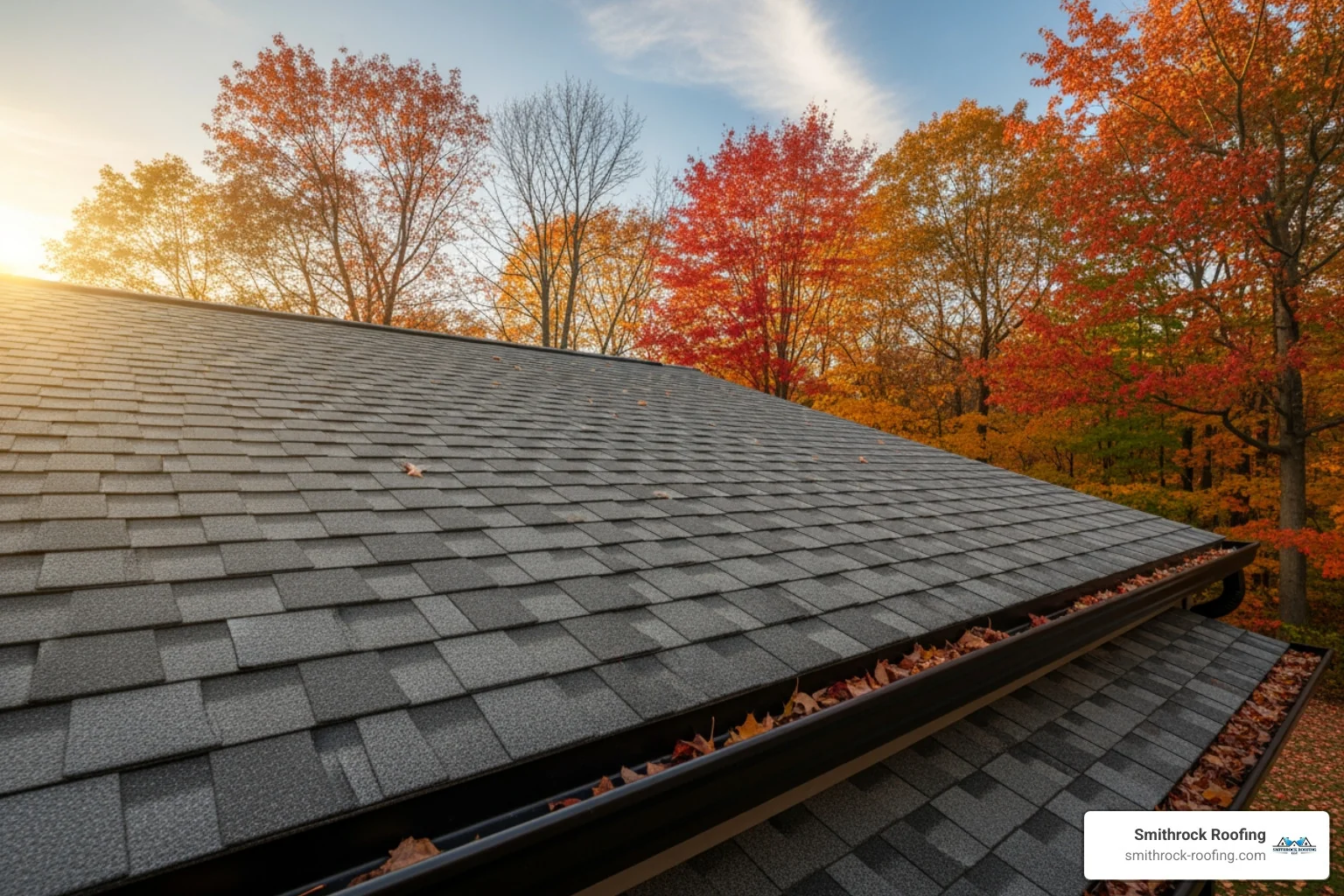
Our homes in North Carolina are our sanctuaries, and protecting them from the harsh realities of winter storms is a top priority. A robust winter storm checklist must include thorough exterior preparations. This isn’t just about comfort; it’s about safeguarding our property against costly damage and ensuring our family’s safety. From inspecting the roof to sealing tiny air leaks, every step contributes to a more resilient home. Proactive winterization can save us from headaches and significant repair bills down the line.
The roof is our home’s first line of defense against winter’s fury. Before the cold truly sets in, we recommend a thorough roof inspection. Look for loose or missing shingles, signs of wear, or any potential weak spots that could lead to Roof Leak Repair during heavy snow or ice. Summer weather, with its hail, wind, and heat, can cause damage that becomes a major problem in winter. If you notice any issues, contacting Experienced Roofing Contractors for a Roof Inspection is a wise decision.
One of the biggest winter culprits for roof damage is the ice dam. These occur when snow on the roof melts, runs down to the colder eaves, and refreezes, creating a barrier that prevents further melting snow from draining. This backed-up water can then seep under shingles and into your home, causing significant water damage. Adequate attic insulation is key to preventing ice dams, as it helps regulate the attic temperature, preventing premature snowmelt. For more information on tackling these icy foes, check out our guide on How to Get Rid of Ice Dams.
Equally important are our gutters. Fall leaves, twigs, and other debris can quickly clog them. If gutters are blocked, melting snow and ice have nowhere to go, leading to overflow that can damage siding, foundations, and create icy, hazardous walkways. Clogged gutters can also contribute to ice dams. Ensuring your gutters are clean and in good repair is critical. If your gutters are old or damaged, considering Gutter Installation Services can be a smart investment in protecting your home.
Air leaks are silent energy thieves, especially in winter. Drafts around windows and doors can significantly increase our heating bills. The Department of Energy estimates that caulking leaks can result in an overall energy savings of 10%-20% for your household. We can use caulk to seal small gaps and weather stripping for movable parts like windows and doors. For a deeper dive into making your windows winter-ready, our article on Winterizing Your Windows offers valuable tips.
If you have older, single-pane windows, you might consider upgrading to Insulated Windows. These can drastically reduce heat loss and improve your home’s energy efficiency. Our team specializes in Window Replacement Winston Salem Ultimate Guide and can help you select the best options for your home in Winston-Salem, Greensboro, or any of our other service areas.
Don’t overlook your siding. Extreme weather can cause dings, dents, or punctures. Inspect your siding for any cracks, gaps, or rotten areas. These seemingly small issues can allow moisture to penetrate, leading to bigger problems like mold or structural damage. Addressing these promptly with Siding Repair is crucial for maintaining your home’s integrity. Improving your home’s overall thermal envelope through better insulation, including Better Home Insulation in walls and attics, is one of the most effective ways to stay warm and save energy.
Frozen pipes are a nightmare scenario for any homeowner. As part of our winter storm checklistwe need to take proactive steps to prevent them from bursting, which can cause extensive water damage. Insulate any exposed pipes in unheated areas like basements, crawl spaces, or garages. You can use pipe sleeves or even newspaper. For exterior faucets, disconnect all garden hoses and drain the faucets completely. If you have hose bibb shut-off valves, turn them off for the winter. For those without shut-off valves, Styrofoam covers can offer some protection. During extreme cold, allowing indoor faucets to drip slightly can keep water moving and help prevent freezing.
When the snow finally falls, clearing pathways around our homes becomes a necessity. However, snow removal comes with its own risks. Overexertion while shoveling can lead to heart attacks, especially for individuals who are not accustomed to strenuous physical activity. Take frequent breaks, lift with your legs, and avoid heavy meals or alcohol before shoveling. Keep rock salt, sand, or kitty litter on hand to spread on icy walkways and steps for improved traction. This simple step can prevent slips and falls, making your home safer for everyone.
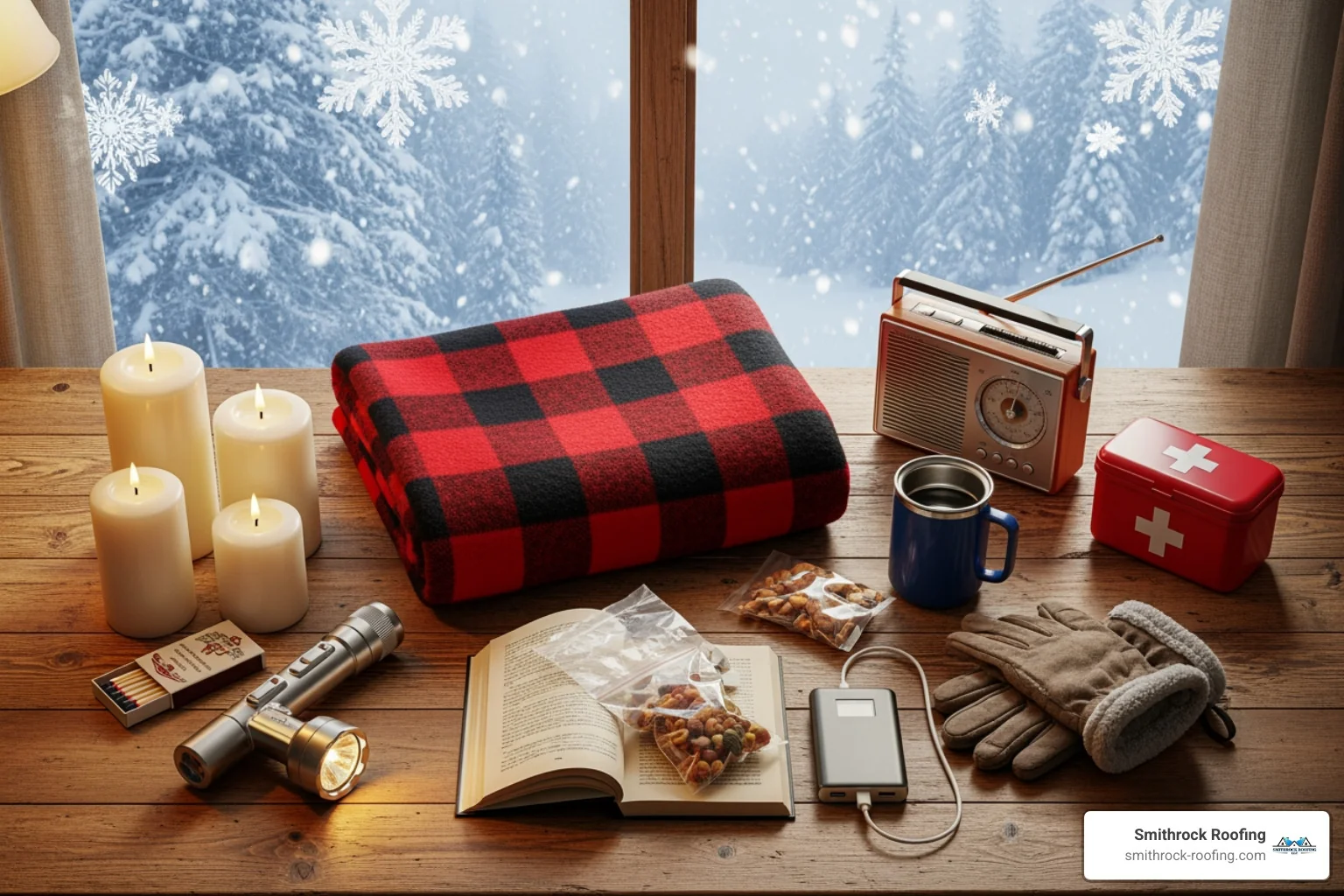
When a winter storm hits, we might find ourselves without power, heat, or even access to local stores for an extended period. This is where a well-stocked home emergency kit, a key component of our winter storm checklistbecomes our lifeline. The goal is to be self-sufficient for at least three days. Think about what you and your family would need if all services were unavailable.
Your home emergency kit should be stored in an easily accessible location, ready to go at a moment’s notice. It’s more than just a box of supplies; it’s peace of mind. Here’s a comprehensive list of items we recommend including:
For more detailed guidance on assembling your kit, Ready.gov offers excellent resources on their Emergency Supply Kit page. Additionally, consider preparing a “Go-Bag” for each person, a smaller, easy-to-carry backpack with essentials in case you need to evacuate quickly.
Food and water are the most fundamental needs during a winter storm. Our winter storm checklist prioritizes non-perishable items that require no cooking or refrigeration.
Remember to rotate your emergency food and water supplies every six months to ensure freshness.
When the power goes out during a winter storm, our homes can quickly become uncomfortably cold. Creating a safe and warm indoor haven is a critical part of our winter storm checklist. This involves not only planning for alternative heating but also understanding the serious risks associated with them, such as carbon monoxide poisoning and fire.
If you plan to use a generator during a power outage, safety is paramount. Generators produce carbon monoxide (CO), an odorless, colorless gas that can be deadly. Always operate generators outdoors, at least 20 feet away from windows, doors, and attached garages. Never run a generator inside your home, basement, or garage, even if the doors and windows are open. Keep the generator dry and protected from rain or flooding. For more details on safe generator use and indoor air quality during outages, consult the EPA’s guidelines on Power Outages and Indoor Air Quality (EPA).
If you have a fireplace, ensure it has been inspected and cleaned by a professional before winter. A chimney sweep can clear out creosote buildup, which is a major cause of chimney fires. Ensure your chimney has a functional Chimney Cap Replacement to prevent debris and animals from entering. Keep a multipurpose, dry-chemical fire extinguisher readily accessible. Never use a gas stovetop or oven to heat your home, as this can also lead to carbon monoxide buildup.
Perhaps the most crucial safety device for alternative heating is a carbon monoxide detector. Install battery-operated CO detectors on every level of your home and outside sleeping areas. Test them monthly and replace batteries twice a year. The signs of CO poisoning can be subtle: headache, dizziness, nausea, and confusion. If a CO alarm sounds, immediately move to fresh air and call for help. Home fires are more common in winter, so always exercise extreme caution.
Extreme cold can quickly lead to dangerous health conditions like hypothermia and frostbite. Our winter storm checklist must include knowledge of how to prevent these and what to do if they occur.
If you suspect hypothermia, get the person into a warm room. Remove any wet clothing and warm the center of their body first (chest, neck, head, groin) using dry, warm blankets. For frostbite, move to a warm area. Gently warm the affected area in warm (not hot) water or use body heat. Do not rub the frostbitten area, as this can cause further damage. Seek emergency medical help for severe cases of both. Learning basic first aid, including how to treat these conditions, is a valuable skill. For comprehensive safety tips, refer to the CDC’s guide on Preparing for a Winter Storm.
Our vehicles are often essential for daily life, but they can quickly become a liability during a winter storm if not properly prepared. Incorporating vehicle readiness into our winter storm checklist is crucial for safety on the roads of Winston-Salem, Greensboro, and beyond. This means both pre-season maintenance and stocking an emergency survival kit.
Before winter arrives, give your car some extra love and attention. These checks can prevent breakdowns and keep you safer:
Even with a well-maintained vehicle, unexpected situations can arise. A comprehensive car survival kit is a must-have for any winter storm checklist. This kit should be kept in your vehicle throughout the winter months. Ready.gov provides an excellent resource on what to keep the following in your car. Here’s what we recommend:
A comprehensive winter storm checklist extends beyond our immediate household to include our wider family, beloved pets, and even our neighbors. Winter storms can disrupt routines, making it challenging for schools and workplaces, and posing unique threats to animals.
Winter storms frequently lead to school and work disruptions. In our North Carolina communities like Winston-Salem, Kernersville, and High Point, we often see schools close or switch to remote learning. This necessitates planning ahead.
Our pets and farm animals rely on us for their safety and well-being, especially during harsh winter weather. They are an integral part of our family and deserve a place on our winter storm checklist.
Checking on vulnerable neighbors, older adults, young children, or individuals with disabilities, is also a vital community responsibility. A quick phone call or a safe check-in can make a significant difference.
A truly effective winter storm checklist isn’t just about gathering supplies; it’s about having a clear plan of action for every stage of a storm. Knowing what to do before, during, and after a winter storm can significantly improve our safety and resilience. The Winter Storm Preparedness & Blizzard Safety | Red Cross guide is an excellent resource for this comprehensive approach.
As a winter storm approaches our North Carolina communities, it’s time to finalize our preparations:
Once the storm hits, the safest place to be is indoors. Our plan shifts from preparing to conserving and staying safe:
The storm has passed, but dangers can still linger. Our post-storm action plan focuses on safety and recovery:
A Winter Storm Watch means that conditions are favorable for a winter storm to develop in your area, typically within the next 12 to 48 hours. It’s a heads-up to start preparing. A Winter Storm Warningon the other hand, means that severe winter weather conditions, such as heavy snow, freezing rain, or sleet, are imminent or already occurring, usually within 12 to 24 hours. A Warning requires immediate action to stay safe.
To prevent pipes from freezing, especially in our North Carolina climate, insulate any exposed pipes in unheated areas like basements, crawl spaces, or garages. Disconnect all garden hoses from outdoor faucets and drain them. During extreme cold, allow indoor faucets to drip slowly to keep water moving. You can also open cabinet doors under sinks to allow warmer air to circulate around pipes.
The most critical items for a car’s winter survival kit include warm blankets or a sleeping bag, a flashlight with extra batteries, jumper cables, a small shovel, sand or kitty litter for traction, non-perishable food and water, a fully charged cell phone and portable charger, and a basic first-aid kit. These items can be life-saving if you get stranded or your vehicle breaks down in cold conditions.
Preparing for winter storms might seem like a daunting task, but as we’ve explored, having a comprehensive winter storm checklist is the ultimate key to peace of mind. By systematically addressing each aspect, from understanding weather alerts and fortifying our homes to stocking emergency kits and planning for our loved ones and pets, we can significantly reduce stress and improve our safety and security.
A little preparation goes a long way in weathering any storm. It’s about protecting what matters most: our families and our homes. For professional help securing your home’s exterior, from Durable Roofing Solutions to Energy Efficient Upgrades for your windows, the experts at Smithrock Roofing are ready to help. We specialize in ensuring homes in Winston-Salem, Greensboro, High Point, and surrounding North Carolina communities are prepared for the harshest winter conditions.
Contact us today to schedule a pre-winter inspection and ensure your home is ready for whatever the season brings!
https://smithrock-roofing.com/contact-us/
Need a local pro? Learn more about our roofing services in Kernersville.
Inspect the roof and gutters, seal air leaks, insulate pipes, and stock up on 3-day emergency supplies.
Check the vehicle's battery and antifreeze levels, pack blankets and a flashlight, and keep the gas tank full.
Create a communication plan, gather necessary medications, and sign up for weather alerts.
A winter storm checklist prepares your home, vehicle, and family for extreme conditions, reducing the risks of power outages, impassable roads, burst pipes, and roof failures.
Install carbon monoxide detectors, prepare alternative heat sources, and learn the signs of frostbite.

Smithrock Roofing © Copyright 2026 • All Rights Reserved • Privacy Policy • Maintained by Mongoose Digital Marketing