
Finding the best way to block drafty windows is more than just a matter of comfort; it is a critical step in maintaining your home’s structural integrity and financial health. When the temperature drops in North Carolina, particularly in areas like Winston-Salem and Greensboro, the efficiency of your home is put to the ultimate test. Windows are often the weakest link in a home’s thermal envelope, acting as a gateway for expensive heated air to escape and for the biting winter chill to enter. In the Piedmont Triad, the transition from the humid, sweltering summers to the crisp, often freezing winters creates a unique set of challenges for residential fenestration. Windows are not merely aesthetic portals to the outside world; they are complex systems designed to manage light, air, and heat. When these systems fail, the “best way to block drafty windows” becomes a priority for every homeowner looking to preserve their comfort and their bank account.
The best way to block drafty windows depends on your budget, window type, and how permanent a fix you need — but here are the most effective methods ranked by impact:
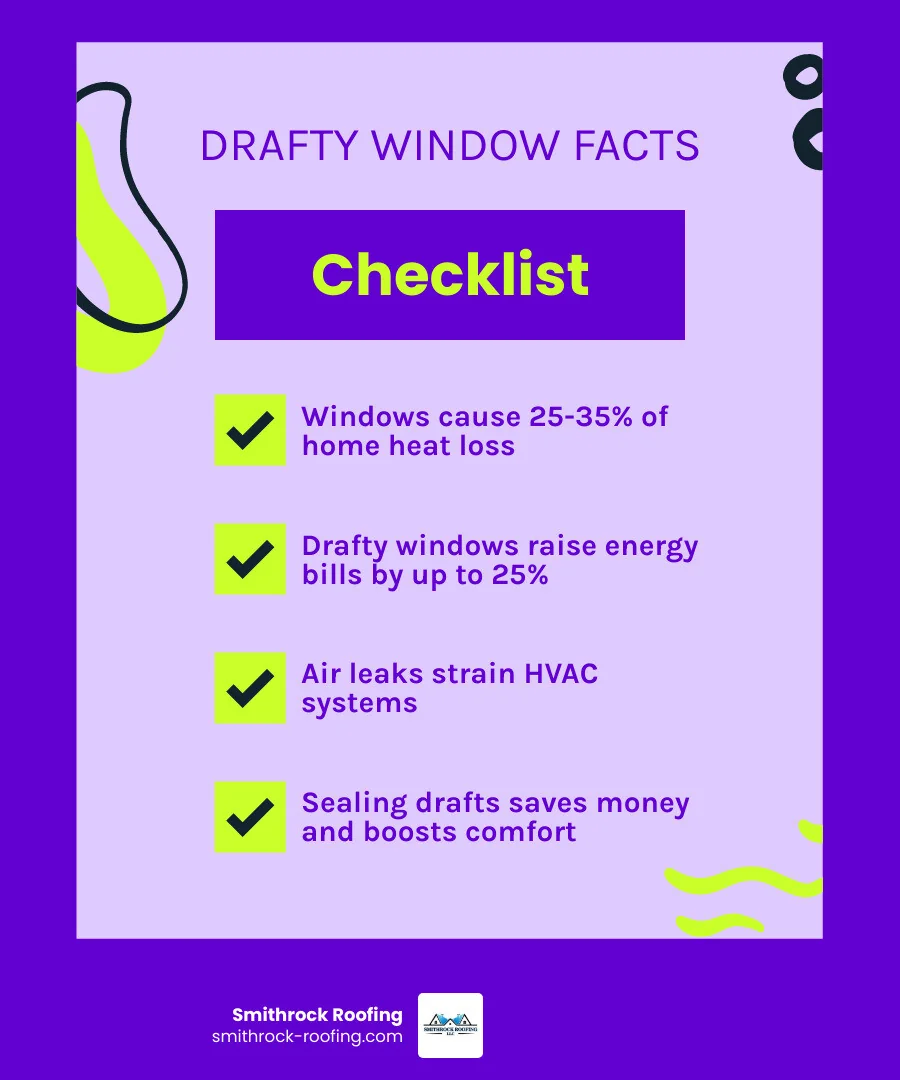
Picture this: you’re settled in for the evening, and out of nowhere a cold chill creeps down the back of your neck. The heating is on. The windows are closed. And yet — somehow — winter is in the room with you. This phenomenon is not just an annoyance; it is a symptom of a larger problem. Windows can account for 25 to 35 percent of your home’s heat loss. Furthermore, drafty windows can push your energy bills up by as much as 25 percent. That’s a significant hit to your wallet every single month, essentially paying for energy that is leaking directly into the backyard. In many cases, this heat loss creates a “convection loop” inside your room: warm air hits the cold glass, cools down, sinks to the floor, and pulls more warm air toward the window, creating a constant, artificial breeze that makes the room feel much colder than the thermostat indicates.
The good news is that you don’t necessarily need to invest in a full window replacement to fix the problem immediately. Most drafts originate from degraded seals, worn weatherstripping, or small cracks — all of which are fixable with the right approach and a modest investment of time. By understanding the physics of how air moves through your home, you can apply targeted solutions that yield immediate results in both comfort and cost savings. This guide will explore the nuances of thermal transfer, the specific materials best suited for North Carolina’s climate, and the step-by-step processes required to seal your home effectively.
This comprehensive guide walks you through everything: how to find drafts with surgical precision, which fixes actually work for different window types, what common mistakes to avoid, and when it’s finally time to call in a professional for a permanent upgrade.
Before you start applying sealants or hanging heavy fabrics, you must identify exactly where the air is entering. Finding drafts is a process of elimination that requires a bit of detective work. Air leaks are often invisible, but their effects are felt through temperature fluctuations and rising utility costs.
One of the most reliable and classic methods is the candle test. On a particularly windy day, light a candle or an incense stick and move it slowly near the edges of your window frames, the meeting rails, and the sills. If the flame flickers violently or the smoke moves horizontally, you’ve identified a point of infiltration. This method is highly effective because it visualizes the air current, showing you the exact path the draft is taking. However, safety is paramount; ensure you keep the flame away from flammable curtains or blinds. For a safer alternative, a smoke pen or a specialized “smoke pencil” can be used to generate a controlled stream of non-toxic smoke that reacts to the slightest air movement.
Another effective technique is the damp hand method. By lightly wetting your hand with water and moving it around the perimeter of the window, you increase your skin’s sensitivity to temperature changes. The evaporating water on your skin will react instantly to even the smallest stream of cold air, allowing you to pinpoint leaks that might be too small to move a candle flame.
For those who prefer a more high-tech approach, the Flashlight Test is a simple yet effective method for detecting larger gaps in the window frame or sash. Wait until nightfall and have one person stand outside the window with a high-powered flashlight. The second person stays inside and watches the perimeter of the window. If light “bleeds” through the edges, you have a significant air leak that requires immediate attention. This is often more effective than the candle test for finding gaps in the exterior casing that might be hidden by interior trim.
You should also perform a thorough visual inspection. Look for specific red flags such as:
According to ENERGYSTAR.gov research on home air leaks, home air leaks can account for up to 40% of the energy wasted for heating and cooling. By taking the time to winterize your windows, you are effectively putting money back into your pocket and reducing the strain on your heating system.

Why do windows that were once airtight start acting like sieves? In regions like Winston-Salem and Greensboro, NC, the primary culprit is the cycle of thermal expansion and contraction. Our climate experiences significant temperature swings, which causes building materials to grow and shrink repeatedly. Wood, vinyl, and aluminum all expand at different rates, which can stress the joints and seals of a window unit.
Over time, this movement leads to several common failures:
If you want to dive deeper into the science of thermal transfer and how it affects your living space, check out our guide on how to insulate drafty windows for a warmer home.
It might seem like a small “whistle” of air isn’t a big deal, but the cumulative effect is staggering. Think of a drafty window like a small hole in a bucket of water; eventually, the bucket will be empty regardless of how much you refill it. Your HVAC system is forced to work overtime to replace the heat that’s escaping, which leads to higher utility bills and premature wear and tear on your furnace or heat pump. In the winter, this is known as “infiltration,” where cold air enters the home; in the summer, it’s “exfiltration,” where your expensive air-conditioned air leaks out.
The 2022 Insulation Industry Opportunity Study suggests that with the right air sealing and insulation upgrades, you could cut up to 45% of your energy waste. Reducing drafts isn’t just about personal comfort; it’s about operational efficiency and reducing your home’s overall carbon footprint. By sealing these leaks, you also improve the indoor air quality by preventing dust, pollen, and outdoor pollutants from being sucked into your living areas.
If you aren’t ready for a full window replacement, there are several highly effective, budget-friendly ways to tackle the problem. The best way to block drafty windows on a budget usually involves a trip to the local hardware store and a dedicated Saturday afternoon. These solutions range from seasonal fixes to more permanent repairs that can last for several years. When choosing a DIY method, consider the “return on effort” — some methods take minutes but only last a month, while others take an afternoon but last for years.
| Method | Cost | Difficulty | Duration |
|---|---|---|---|
| Insulation Film | Low | Medium | Seasonal (Winter) |
| Weatherstripping | Medium | Medium | Long-term (3-5 years) |
| Draft Stoppers | Low | Easy | Temporary/As needed |
| Bubble Wrap | Very Low | Easy | Seasonal (Winter) |
| Rope Caulk | Low | Easy | Seasonal (Removable) |
For those who enjoy a bit of crafting and want a customized look, you can even look into making draft stoppers using recycled materials like old socks, heavy fabric scraps, or even decorative sand-filled tubes. These are particularly effective for the bottom of windows or doors where the gap is most pronounced. A well-made draft stopper (or “draft snake”) should be heavy enough to stay in place and long enough to cover the entire width of the window sill.
Window insulation film is a perennial favorite for a reason. It is essentially a specialized plastic membrane that you shrink-to-fit over your window frame using heat. This creates an airtight barrier that stops drafts completely and adds an extra layer of still air, which acts as a thermal insulator. The physics behind this is simple: air is a poor conductor of heat when it is trapped and cannot circulate. By creating a “dead air space” between the film and the glass, you significantly reduce the rate of heat transfer.
To apply it correctly for maximum efficiency:
This is often cited as the best way to block drafty windows in rental properties because it is 100% removable and leaves no permanent marks. For more on this, see our article on better home insulation.
If your windows are still in good structural shape but simply don’t seal tightly when closed, weatherstripping is your best long-term DIY friend. There are several types designed for specific parts of the window, and choosing the right material is key to success:
When applying any adhesive weatherstripping, the surface must be bone-dry and clean. If the surface is dirty, the adhesive will fail, and you’ll be repeating the process. We always recommend insulated windows for the best performance, but quality weatherstripping can buy you several more years of comfort and efficiency.
Sometimes you need a fix right now, and the stores are closed or the budget is tight.
For a comprehensive look at these “life hacks” and more advanced DIY strategies, read our well insulated windows guide 2025.
If you own your home and want something more substantial and aesthetically pleasing than plastic film, it’s time to look at advanced insulation options. These methods require a bit more investment but offer significantly better performance, soundproofing, and longevity. Advanced solutions often address both “conduction” (heat moving through the glass) and “infiltration” (air moving through gaps).
Custom-fitted window inserts have revolutionized the way we think about window insulation. These are high-grade acrylic panels edged with a compression seal (often silicone). You simply press them into the interior of your existing window frame, where they stay held in place by friction. Because acrylic is a better insulator than glass (it has a lower thermal conductivity), these inserts significantly reduce the “cold radiation” effect felt when sitting near a window.
These are particularly popular in historic homes in areas like Bethania or Old Salem, where homeowners want to preserve the original wooden windows but need modern thermal efficiency. You can find more info by searching for insulated windows near me.
Sometimes the draft isn’t coming from the part of the window that moves, but from the frame’s connection to the house. Over time, exterior caulk can shrink, crack, and pull away from the siding, creating a direct path for air and moisture to enter your walls. This can lead to hidden rot and mold growth inside the wall cavity.
For professional insights on how to properly seal the exterior of your home, check our page on window installation and replacement.
Don’t underestimate the power of high-quality window treatments. Thermal curtains are engineered with multiple layers, including a high-density foam or reflective backing that blocks both light and air movement. When closed, they create a pocket of air between the fabric and the window, significantly reducing heat transfer. For maximum effect, the curtains should overlap the window frame and reach the floor to prevent air from “leaking” out the bottom.
Cellular shades (also known as honeycomb shades) are perhaps the most efficient window covering available. They feature unique “cells” that trap air, creating a powerful thermal barrier right at the glass surface. The hexagonal shape of the cells prevents air from circulating, which is the key to their insulating power. According to the U.S. Department of Energy, properly installed cellular shades can reduce heat loss through windows by 40% or more. Pairing these with insulated low-E glass is a winning combination for year-round comfort. You can browse different styles and efficiency ratings on our windows page.
When we get obsessed with stopping drafts, it is easy to over-seal a home. While the goal is to stop “uncontrolled” air leaks, your house still needs to “breathe” to maintain a healthy indoor environment. Understanding the difference between a draft and necessary ventilation is key to a safe home. A home that is too tight can suffer from “Sick Building Syndrome,” where indoor air pollutants reach unhealthy concentrations.
Drafts are uncontrolled air leaks that happen when you don’t want them to. Ventilation is the controlled movement of air designed to remove moisture and pollutants. If you seal your house too tightly without considering ventilation, you may encounter several issues:
Never block trickle vents (small vents often found at the top of modern windows) or airbricks. Also, be extremely careful around weep holes. These are small, intentional gaps in the bottom of vinyl or aluminum window frames designed to let water drain out of the track. If you caulk these shut, water will become trapped inside your window frame and eventually leak into your walls, causing massive, hidden damage that can cost thousands to repair.
For more on proper techniques and maintaining the balance of your home’s ecosystem, see our window installation guide.
We love a good DIY project, but there comes a point where the window is simply beyond repair. If you can see through the frame to the outside, or if the wood is soft enough to poke a screwdriver through, it’s time to stop applying tape and start considering a replacement. Temporary fixes on a failing structure are like putting a bandage on a broken bone; they might hide the problem, but they won’t fix the underlying structural failure.
At Smithrock Roofing, we specialize in high-performance window replacement. We recommend products like the Norandex eXtreme 3000S, which are specifically engineered for the North Carolina climate. These windows feature multi-chambered frames that trap air for better insulation and high-performance glass packages that far exceed the insulation capabilities of older units. You can learn more about the best windows for insulation to see how modern technology can transform your home’s comfort.
Sometimes the “window draft” isn’t actually the window’s fault. The stack effect is a phenomenon where warm air rises and escapes through leaks in your attic (like recessed lights, plumbing stacks, or attic hatches). This creates a vacuum in the lower levels of your home, which sucks cold air in through every tiny crack in your windows and doors. If your attic isn’t properly insulated (ENERGY STAR recommends 10 to 14 inches of insulation), you might find that even new windows feel drafty because the house is literally pulling air through them. A professional energy audit can help determine if your problem is the windows or the attic.
While results vary based on the age of your home and the severity of the leaks, homeowners typically save between 5% and 30% on their annual energy bills by properly sealing drafts. In the Piedmont Triad, where we experience both high humidity in the summer and freezing temperatures in the winter, these savings accumulate quickly and often pay for the DIY materials within a single season. For a typical home, this could mean saving $200 to $500 per year.
Window insulation film (shrink film) is widely considered the best way to block drafty windows in rentals. It provides a total, airtight seal over the entire window opening, is very inexpensive, and can be removed without leaving a trace if you use the correct low-tack adhesive tape. It also doesn’t interfere with the operation of blinds or curtains, making it a tenant-friendly option.
It can if the indoor humidity is too high. When you seal a window, you are preventing air exchange. If you notice moisture building up on the glass after sealing, it is a sign that your indoor humidity is too high. You may need to use a dehumidifier, ensure your kitchen and bathroom exhaust fans are vented to the outside, and avoid drying clothes indoors. Keeping air circulating with ceiling fans can also help prevent moisture from settling on cold surfaces.
You can use interior-grade caulk (like acrylic latex) to seal the gaps between the window trim and the wall. This is actually a great way to stop air that is leaking around the window frame. However, you should never caulk the actual moving parts of the window (the sashes) shut. For gaps between the sash and the frame, use removable rope caulk or weatherstripping instead.
Yes, bubble wrap is a surprisingly effective thermal barrier. The small pockets of air trapped in the bubbles act as insulators, similar to the way a double-pane window works. While it isn’t as effective as professional inserts or film at stopping air leaks (infiltration), it is excellent at reducing heat loss through the glass itself (conduction). It is a great “emergency” fix for a particularly cold room.
Absolutely. North-facing windows in North Carolina receive the least amount of solar heat gain in the winter and are often hit by the coldest prevailing winds. These should be your priority for heavy-duty insulation like cellular shades or storm inserts. South-facing windows, conversely, can provide “passive solar heating” during the day, so you might want a solution that is easily removable, like thermal curtains, to let the sun in when it’s shining.
Winter is an inevitable visitor, but it doesn’t have to live in your living room. Whether you choose the quick, tactile fix of a draft snake, the seasonal protection of high-performance insulation film, or the long-term investment of new insulated windows, taking action now is one of the smartest moves you can make for your home. The best way to block drafty windows is ultimately a multi-layered approach: identify the leaks, apply the appropriate sealants, and consider the long-term efficiency of your home’s thermal envelope.
From the historic streets of Winston-Salem to the growing neighborhoods of High Point and Greensboro, we have seen firsthand how much of a difference a well-sealed window makes. It’s not just about the numbers on your utility bill; it’s about being able to sit by your window with a cup of coffee and not feel a chill. It’s about the peace of mind that comes with a well-maintained, efficient home that protects your family from the elements year-round.
If you’ve tried the DIY route and you’re still feeling the wind whistle through your home, it may be time for a more permanent solution. DIY fixes are excellent for immediate relief, but they cannot compensate for structural failure or outdated technology. Give us a call at Smithrock Roofing. Our team of experts can help you evaluate your current windows and decide if it’s time for an upgrade to the best windows for insulation available on the market today. Don’t let your hard-earned money leak out through the cracks—take control of your home’s comfort today. Stay warm out there!
Need a local pro? Learn more about our window replacement in Winston-Salem.

Smithrock Roofing © Copyright 2026 • All Rights Reserved • Privacy Policy • Maintained by Mongoose Digital Marketing