Most homeowners approach window replacement the same way — pick a style, pick a material, get a few quotes, and schedule the install. It feels straightforward on the surface. But anyone who has lived through a window project that underdelivered knows the real frustration: drafts that persist after brand-new windows are installed, glass that fogs up within a few years, or a contractor who showed up and started pulling frames without mentioning anything about lead paint or permits.
The truth is that window replacement is a building science decision as much as it is a product decision. The windows themselves matter, but so does your existing frame condition, your home’s age, your orientation to the sun, and the specific climate demands of where you live. In the NC Triad — Winston-Salem, Greensboro, High Point, Kernersville, Clemmons, Rural Hall, King, and the surrounding communities — those demands are specific enough that generic national content simply does not serve you well.
This guide covers what the brochures and comparison websites leave out: the technical decisions that determine whether your window replacement project actually performs the way it should for years to come.
The NC Triad sits within IECC Climate Zone 4A, classified as Mixed-Humid. That designation is not just bureaucratic shorthand — it has real implications for how your windows should be specified.
A Mixed-Humid climate means your home faces meaningful heating loads through winter and real solar heat gain pressure through summer. Unlike purely cold climates where the only goal is to keep heat in, or purely hot climates where the goal is to block solar gain, Zone 4A requires windows that handle both demands well. Generic Energy Star stickers don’t tell you whether a window is actually optimized for this balance, which is why understanding the underlying performance numbers matters.
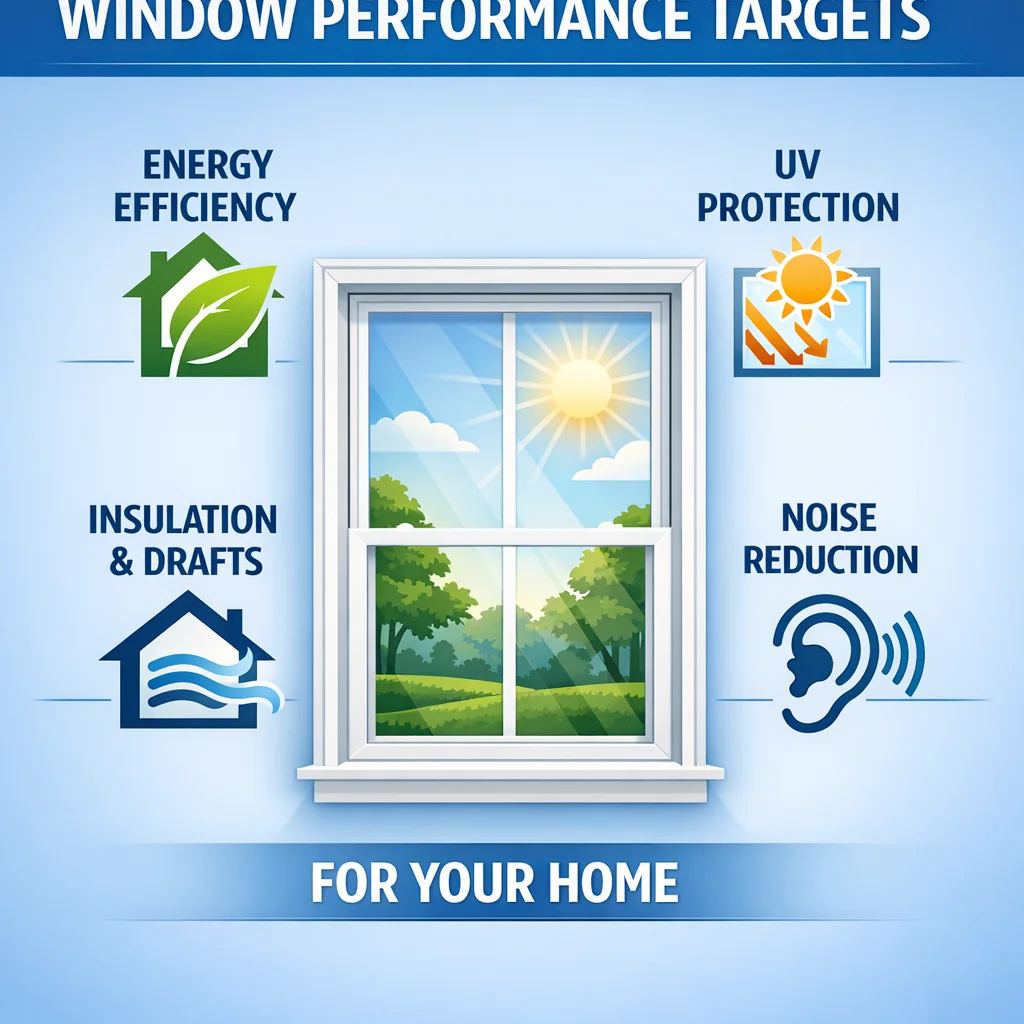
When evaluating replacement windows for a Triad-area home, there are three ratings worth understanding:
U-Factor
This measures how well a window resists heat flow — essentially, how well it insulates. The lower the number, the better the insulation. For Zone 4A, a U-factor of 0.27 or lower is the target for meaningful heating-season performance. Many standard vinyl double-pane units sold nationally land around 0.28–0.32, which looks close on paper but represents a meaningful efficiency gap over the lifetime of the window.
Solar Heat Gain Coefficient (SHGC)
This measures how much solar radiation passes through the glass as heat. In Zone 4A, the appropriate target range is 0.25–0.40, but orientation matters. A south-facing window can tolerate a slightly higher SHGC because winter sun at a low angle provides useful passive heat gain. A west-facing window needs a lower SHGC to prevent overheating on long summer afternoons — a very common source of discomfort in living rooms and home offices throughout the Triad.
Air Leakage Rating
Often overlooked entirely, this measures how much air passes through a closed window assembly. The standard target per AAMA/WDMA testing is 0.30 cfm/ft² or lower. Windows that test poorly here will underperform regardless of their glass package, because infiltration bypasses insulation entirely.
This is the fork in the road that separates a well-executed window project from one that creates problems down the line. Most content online defaults to insert (pocket) replacement as the assumed approach. That assumption is wrong in more situations than the industry typically admits.
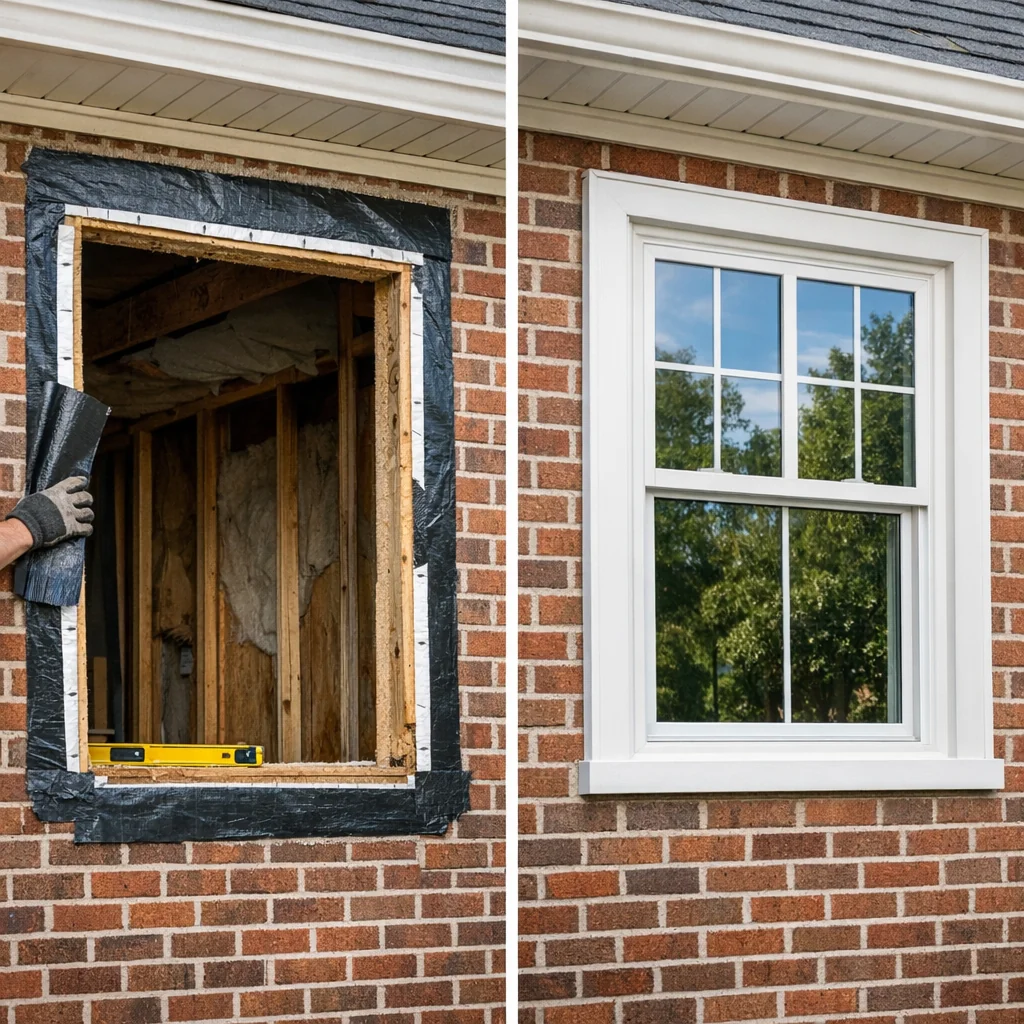
An insert replacement keeps the existing window frame, sill, and exterior trim in place. The old sash and glass are removed, and a new pre-built window unit is installed inside the existing frame opening. When the existing frame is in good condition, this approach is faster, less disruptive, and preserves your interior and exterior trim — a real advantage in homes where that trim is original or well-matched to the architecture.
Insert replacement is appropriate when:
– The existing frame is structurally sound — no rot, no soft wood, no water damage
– The rough opening is square within ½ inch tolerance
– The sill is intact and properly sloped for drainage
– You are upgrading from a similar-era unit (like replacing older double-pane with new double-pane) and the frame geometry accommodates the new unit
The trade-off most contractors don’t mention upfront:
Because the new window unit sits inside the existing frame, the visible glass area is reduced — typically by 10–15%. In a room where natural light is important, or on a window where you already feel the opening is small, this is a meaningful change. You are not getting the same view or the same light transmission you had before, even with new glass. Ask to see the specific rough opening dimensions and the new unit’s daylight opening before you commit.
Full-frame replacement removes everything — the sash, the frame, the sill, the interior and exterior trim, and sometimes the casing — down to the rough opening in the wall. A new window unit is then installed directly into that opening with proper flashing, air sealing, and new trim.
Full-frame replacement is necessary when:
– There is visible rot in the frame or sill — any soft, discolored, or crumbling wood means insert replacement is not a sound option
– The rough opening is significantly out of square (more than ½ inch), which can prevent the new unit from operating or sealing correctly
– The existing frame is a single-pane steel or aluminum unit from the 1950s–1970s, which is common in Triad-area mid-century homes — these frames cannot accept a standard insert unit
– Flashing has failed and water has entered the wall cavity, requiring inspection and remediation of the surrounding framing
– You want the maximum possible glass area in the new window
Full-frame replacement is more labor-intensive and more disruptive, but it is the only structurally honest path when frame conditions are compromised. Choosing an insert replacement over a compromised frame does not solve the underlying problem — it conceals it.
| Factor | Insert (Pocket) Replacement | Full-Frame Replacement |
|---|---|---|
| Existing frame condition | Must be sound — no rot, damage, or significant out-of-square | Appropriate for damaged, rotted, or severely out-of-square frames |
| Glass area | Reduced 10–15% vs. original opening | Full daylight opening restored |
| Installation disruption | Lower — interior and exterior trim preserved | Higher — trim removed; more interior and exterior work |
| Wall cavity inspection | Limited — existing frame conceals the rough opening | Full — rough opening exposed for inspection and remediation |
| Flashing integration | Limited by existing frame geometry | Full flashing system installed from scratch |
| Best for | Sound, well-maintained older windows in good frames | Older housing stock with frame wear, rot, or single-pane metal frames |
| Air sealing opportunity | Partial — gap between new and old frame must be sealed | Complete — full perimeter sealed at rough opening |
Here is something that surprises most homeowners: a window with an excellent U-factor and SHGC rating can still underperform significantly if the gap between the new window frame and the rough opening is not sealed correctly. That gap — sometimes a quarter inch, sometimes more — is a direct pathway for conditioned air to escape and outside air to enter, bypassing the glass entirely.
The proper protocol uses low-expansion foam (not standard expanding foam, which can bow frames) combined with backer rod for larger gaps. This creates a continuous, flexible air barrier at the frame perimeter. It is not a glamorous step. It doesn’t photograph well. But it is the step that separates a window that actually performs from one that generates callbacks six months later because “the new windows are still drafty.”
When evaluating contractors, ask directly: what is your air sealing protocol at the rough opening? A professional who can answer that question without hesitation is a professional who has done this work at a high standard.
Frame material is where most homeowners spend the bulk of their research time, and it does matter — but perhaps not for the reasons typically emphasized.
Vinyl is the most common replacement window frame material in the Triad market, and for good reason. It does not rot, does not require painting, handles humidity well, and offers strong thermal performance when the frame is multi-chambered (meaning the interior of the frame is divided into separate sections that reduce heat conduction). For most Triad homeowners replacing standard residential windows in sound openings, a quality multi-chambered vinyl frame with a proper glass package is a durable, low-maintenance solution.
The quality gap in vinyl is significant, though. Entry-level vinyl frames are single-chamber or use thin profiles that can warp or discolor over time in NC’s summer heat. Ask specifically whether the frame is multi-chambered and what the warranty covers regarding discoloration or warping.
Wood windows offer excellent insulating properties and are the traditional choice for historic or architecturally distinctive homes. In the NC Triad, where there is a meaningful inventory of Craftsman, Colonial Revival, and early mid-century homes, wood windows can be the right match aesthetically and historically. The ongoing maintenance demand — periodic painting or staining to prevent moisture intrusion — is real, and in the NC Triad’s humid summers, that maintenance schedule matters more than it would in a drier climate.
Wood-clad windows (wood interior, aluminum or fiberglass exterior) offer a middle ground: the warmth and workability of wood on the inside with reduced exterior maintenance.
Fiberglass is the highest-performing frame material available and also the least common, primarily due to cost. It is dimensionally stable — meaning it expands and contracts very little with temperature changes — which produces consistently tight weatherstripping contact across seasons. For Triad homeowners with unusually large window openings, unusually high performance requirements, or a desire for a window that simply will not require attention for decades, fiberglass is worth serious consideration.
Standard aluminum frames conduct heat very efficiently — which is exactly what you do not want in a window. Without a thermal break (an insulating strip separating the interior and exterior aluminum sections), aluminum frames will create interior condensation in winter and contribute to heat gain in summer. If you are replacing aluminum windows from the 1960s or 1970s, you are likely replacing them precisely because of this problem. New aluminum windows with proper thermal breaks perform far better, but in Zone 4A, vinyl or fiberglass will generally outperform aluminum for the same investment.
If your home was built before 1978, federal law applies to your window replacement project. The EPA’s Renovation, Repair, and Painting (RRP) Rule requires that any contractor disturbing painted surfaces in a pre-1978 home must hold current EPA RRP certification and follow specific containment and cleanup protocols to prevent lead dust exposure.
Window removal in older homes is one of the highest-risk activities under RRP because painted frames, sills, and trim are being physically disturbed during the removal process. This is not a bureaucratic formality — lead dust exposure is a genuine health risk, particularly for children and pregnant women.
Before any contractor begins work on a pre-1978 home in the Triad, verify their EPA RRP certification. A reputable contractor will bring it up themselves before you have to ask.
Window replacement permitting in North Carolina depends on scope and local jurisdiction. As a general principle:
Unpermitted work that should have been permitted creates real problems when you sell your home. A buyer’s inspector or their lender may flag the work, potentially requiring after-the-fact inspections or remediation before closing. Ask your contractor directly whether a permit is required for your specific project scope, and make sure they pull it if it is.
Every window manufacturer offers some version of a “lifetime warranty,” and nearly every competitor in this space uses that phrase as though it ends the conversation. It doesn’t. The details of what a warranty actually covers — and what it excludes — are worth understanding before you sign.
When evaluating a window contractor in the Triad, ask specifically: what is your labor warranty, and what does it cover? A company that backs its installation work with a clear, written labor warranty is making a commitment the manufacturer’s warranty alone does not make. You can review Smithrock Roofing’s warranty coverage to understand what a written installation commitment looks like in practice.
Not every underperforming window needs to be replaced. Some problems are serviceable, and a good contractor will tell you that honestly rather than defaulting to a full replacement recommendation.
Signs that replacement is the right answer:
– Visible rot in the frame, sill, or surrounding trim that extends into the wall assembly
– Failed glass seals that cause persistent fogging between panes — this is a glass unit failure, not a cleaning problem, and cannot be resolved without replacing the IGU
– Single-pane glass (common in pre-1960s Triad homes) — the thermal and acoustic performance gap between single-pane and modern double-pane is too large to bridge with weatherstripping
– Windows that are structurally inoperable due to frame damage, severe warping, or deteriorated hardware
– Air infiltration that persists after weatherstripping replacement and caulking — this indicates frame-level failure
Signs that repair or maintenance may be sufficient:
– Worn or compressed weatherstripping (replaceable)
– Stiff or binding hardware (often lubricatable or replaceable)
– Minor exterior caulk failure at the window-to-siding joint (resealable)
– Condensation on the interior surface of the glass in winter (a humidity control issue, not a window failure)
Understanding this distinction protects you from unnecessary expense and gives you confidence that when replacement is recommended, it is genuinely warranted.
A well-executed window replacement — regardless of whether it is insert or full-frame — follows a consistent professional sequence:
This is not an extraordinary standard. It is the baseline standard that a homeowner paying for professional installation should expect and receive.
The contractor decision matters as much as the product decision. A well-specified window installed poorly will underperform. A mid-range window installed with precision, proper air sealing, and correct flashing will outperform a premium window installed carelessly.
When vetting contractors for your Triad-area window project, the questions worth asking are:
A contractor who answers these questions clearly, without defensiveness, and who volunteers relevant information you did not think to ask about — that is a contractor operating at a professional level.
At Smithrock Roofing, we have served homeowners across Winston-Salem, Greensboro, High Point, Kernersville, Clemmons, Rural Hall, King, and the surrounding NC Triad for years. Our team takes the same approach to windows that we bring to every exterior project: honest assessment, quality materials, and workmanship we stand behind. If you are weighing a window replacement project, we are glad to walk through it with you — no pressure, just a straight answer about what your home actually needs.
As you move toward a window replacement decision, three steps will put you in the strongest position heading into the project:
1. Schedule a Pre-Project Energy Audit
Before selecting a product or signing a contract, consider having a home energy audit performed by a certified auditor. An audit will identify where your current windows rank among your home’s overall air leakage and heat loss sources — and in some cases, it reveals that insulation or air sealing deficiencies are compounding the problem. This gives you an evidence-based starting point rather than a sales-driven one.
2. Request a Side-by-Side Specification Comparison
When gathering estimates, ask each contractor to provide a written product specification sheet for the window they are recommending. Put them side by side and compare frame material, glass package, U-factor, Solar Heat Gain Coefficient, and warranty terms. The NC Triad’s mixed climate makes both heating-season and cooling-season performance relevant — a specification review will surface differences that a verbal sales pitch will not.
3. Confirm Permit and Inspection Requirements with Your Local Jurisdiction
Requirements vary across Forsyth, Guilford, and Davidson counties and their municipalities. Before work begins, verify whether your project scope requires a permit and inspection. A contractor who pulls permits and welcomes inspections is demonstrating accountability. One who discourages the process is giving you important information about how they operate.
Insert replacement — where the new window unit is installed within the existing frame — is appropriate when the existing frame is structurally sound, plumb, square, and free of rot or water damage. Full-frame replacement removes everything down to the rough opening and is necessary when the existing frame is compromised, when you want to change the window size or configuration, or when the exterior trim and cladding are being updated at the same time. A qualified contractor should inspect your existing frames before recommending an approach, not default to one method for every situation.
The Triad sits in a mixed-humid climate zone, which means your windows need to manage both cold-season heat loss and warm-season solar heat gain effectively. That dual demand affects which glass packages make sense and how air sealing and flashing should be executed to prevent moisture problems common in humid conditions. Contractors experienced in this specific region understand the local code environment, the seasonal performance priorities, and the failure patterns that show up in Triad homes — that regional familiarity has practical value.
A legitimate labor warranty should cover defects in the installation itself — air sealing failures, water infiltration at the installation interface, operability problems caused by improper shimming or leveling, and trim work that separates or fails prematurely. It should be offered in writing, clearly define the coverage period, and specify what the contractor will do to remedy a covered issue. A labor warranty that exists only as a verbal assurance is not a warranty in any meaningful sense.
For most residential projects involving a standard number of windows, the installation itself is completed in one to two days. Larger projects, full-frame replacements with exterior trim work, or situations where underlying damage is discovered at the rough opening can extend the timeline. Lead time for window orders — from the point a contract is signed to when product arrives and installation can be scheduled — varies by manufacturer and season, and your contractor should give you a realistic timeline in writing before work begins.
Window replacement is a meaningful investment in your home’s comfort, efficiency, and long-term condition — and it deserves a contractor who treats it that way. Smithrock Roofing has built its reputation across Winston-Salem and High Point by doing the work correctly the first time, standing behind it, and giving homeowners straight answers rather than high-pressure sales pitches. If you are ready to talk through what your windows project actually needs, we are here for that conversation — Contact Smithrock Roofing and let’s get started.

Smithrock Roofing © Copyright 2026 • All Rights Reserved • Privacy Policy • Maintained by Mongoose Digital Marketing