Choosing a cedar roofing company comes down to three things: whether the material is actually right for your home, whether the contractor you hire has genuine cedar-specific experience, and whether you understand what it takes to protect that investment over time. Get all three right and a cedar roof is a genuinely rewarding choice. Miss any one of them and the problems compound quickly.
This guide works through each of those decisions with the level of detail that actually helps you evaluate your options, starting with what cedar roofing materials actually are and ending with what separates a qualified cedar roofing company from one that is simply willing to attempt the work.
Most conversations about cedar roofing treat shakes and shingles as rough equivalents, with the only difference being appearance. That framing understates a meaningful structural difference.
Cedar shingles are sawn smooth on both faces, producing uniform thickness that tapers from the butt end to the tip. Because they are machine-cut to consistent dimensions, they install predictably and allow for tighter, more uniform exposure patterns.
Cedar shakes are split from the block rather than sawn. Hand-split shakes have a rough, textured face and vary in thickness across each piece. Hand-split-and-resawn shakes are split on one face and sawn on the other, producing a product with a distinctive texture on the exposed face and a flatter back that sits more predictably on the deck. This is not simply a cosmetic distinction. The variance in hand-split shake thickness changes how each piece sheds water and how it must be positioned relative to the pieces around it. A roofer without specific shake experience may not recognize that each piece requires individual evaluation during installation.
The choice between shakes and shingles also affects what underlayment system you need, which is a detail almost no consumer-facing cedar content addresses at all.
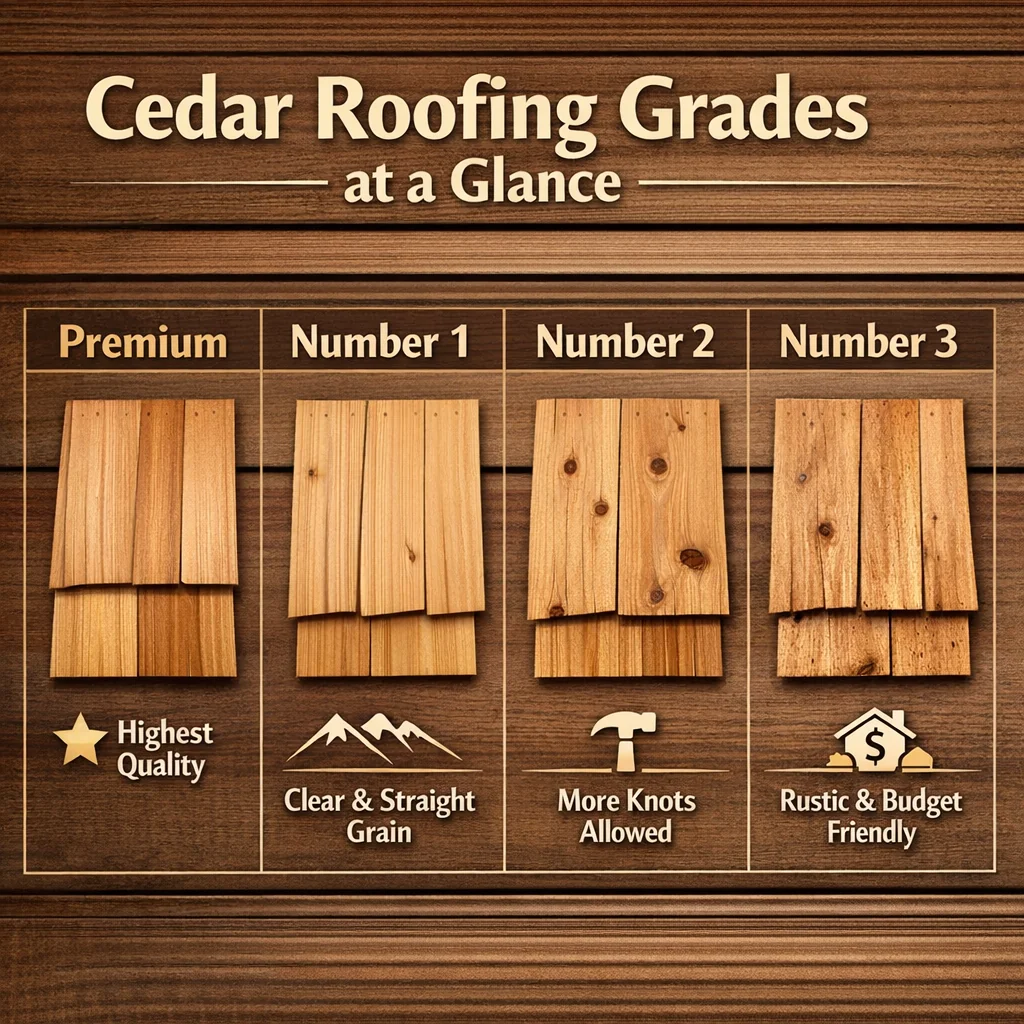
Cedar roofing materials are graded, and the grade is one of the most consequential details in any bid you receive. Contractors who work primarily with asphalt products may not volunteer this information.
| Grade | Label Color | Description |
|---|---|---|
| No. 1 | Blue Label | 100% clear, 100% edge grain; highest durability and longest lifespan |
| No. 2 | Red Label | Flat grain permitted; some sapwood allowed; still suitable for most residential applications |
| No. 3 | Black Label | Flat grain and sapwood acceptable; typically used for outbuildings or utility structures |
| Grade | Description |
|---|---|
| Premium | 100% clear, highest proportion of heartwood; maximum durability |
| No. 1 | Clear face; some sapwood permitted on the back face only |
| No. 2 | Utility grade; not recommended for primary residential roofing |
Heartwood is the dense inner wood of the tree, and it contains the natural oils that make cedar resistant to rot and insects. Sapwood, from the outer rings of the tree, lacks those oils and is significantly more vulnerable to moisture damage. This is the detail competitors reference when they say that durability depends on “which part of the tree the material was cut from,” but they never explain why it matters. Now you know: a roof installed with high-sapwood material will show signs of deterioration meaningfully faster than one installed with No. 1 or Premium grade material, regardless of how well it is maintained.
When you receive bids from any cedar roofing company, ask specifically what grade of material is included. That single question separates informed buyers from those who compare bids purely by price.
Need a hand with this in Winston-Salem, Greensboro and the Triad? Call (336) 971-0464 or request a free estimate. Honest answers, no pressure.
Every competitor who writes about cedar roofing focuses on the visible surface. The underlayment system beneath it rarely comes up, even though it directly determines whether the moisture management principles the experts describe are actually achievable in practice.
Cedar needs to breathe. When traditional impermeable felt underlayment is used beneath a cedar roof, moisture that passes through the wood has nowhere to go. It accumulates at the interface between the shake or shingle and the underlayment, which is exactly the condition that accelerates rot from below even when the visible surface appears healthy.
Breathable underlayments allow vapor to pass through rather than trapping it, which supports the moisture equilibrium the cedar needs. A cedar roofing company that specifies the right underlayment for the application is demonstrating systems-level knowledge, not just surface familiarity. If an estimate does not address underlayment at all, that is worth raising before you commit. For a broader look at how material choices affect long-term performance, the article on durable roofing solutions comparing slate, metal, and tile offers useful context for homeowners weighing their options.
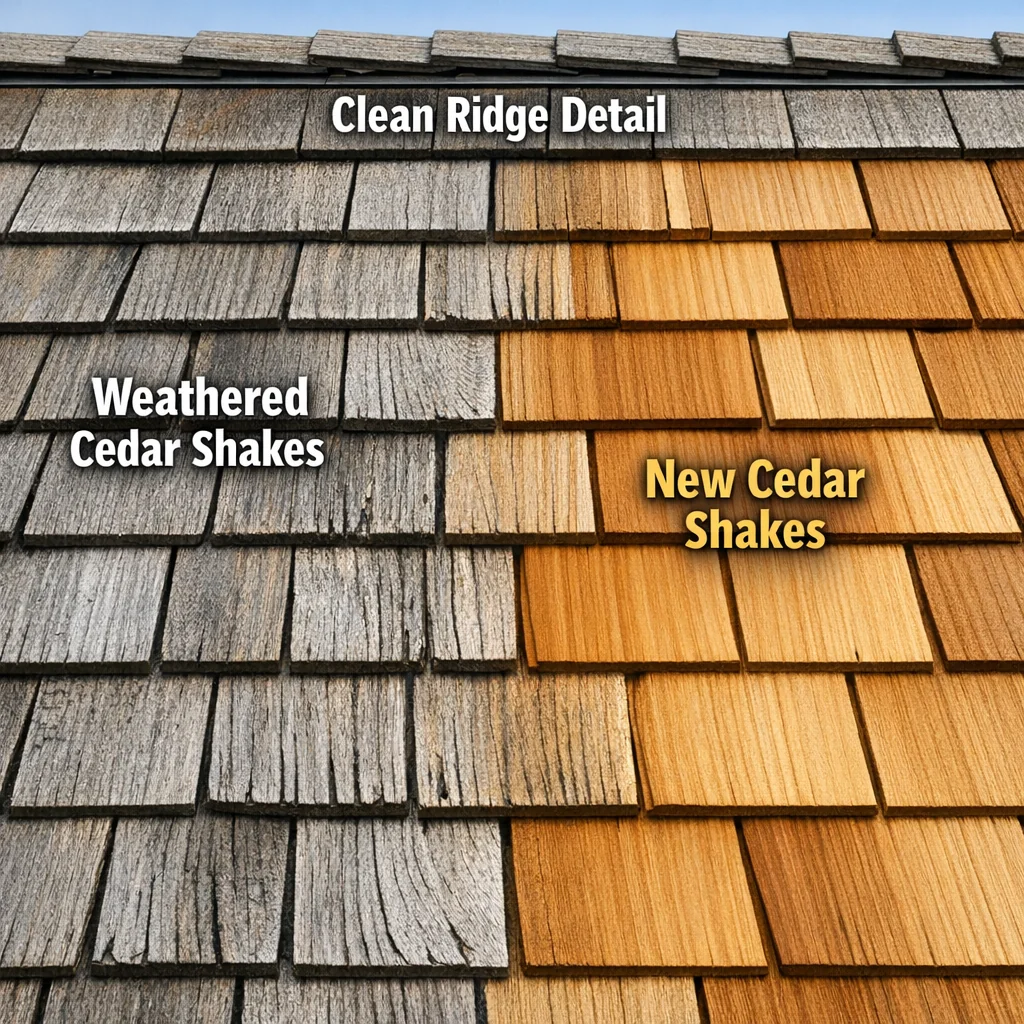
The commonly cited figure of “up to 25 years” for cedar roofing is accurate as a floor, not as a ceiling. Well-maintained cedar installations using No. 1 or Premium grade material, installed over an appropriate underlayment system with correct ventilation, can perform significantly longer. Poorly maintained or improperly installed cedar can fail well short of that mark.
This is not a contradiction. It reflects the fact that cedar lifespan is determined by a system, and every component of that system matters.
The four variables that determine actual cedar lifespan:
Cedar faces a maintenance challenge that is rarely explained clearly. The risk is not simply “too much moisture.” It runs in both directions.
When cedar is exposed to excess moisture without adequate ventilation or drainage, it becomes prone to rot, moss, mold, and fungal growth. When cedar dries out too aggressively from heat and sun exposure without periodic treatment, it cracks, loses structural integrity, and becomes meaningfully more susceptible to fire.
The goal of cedar maintenance is therefore equilibrium. Treatments should preserve the wood’s natural flexibility and moisture content rather than either sealing it completely or leaving it to dry out. A professional cedar maintenance inspection evaluates both conditions: signs of moisture retention on one hand and signs of drying and brittleness on the other. The appropriate response to each is different, and a blanket “apply treatment every three years” instruction without evaluating actual conditions is not the same thing as real maintenance guidance.
Given the installation complexity and the material-specific knowledge required, vetting a cedar roofing company deserves more rigor than vetting a standard shingle installer.
Questions that separate qualified contractors from those who are willing but inexperienced:
At Smithrock Roofing, our team brings more than 60 combined years of exterior experience across the NC Triad, including Winston-Salem, roofing in Greensboro, High Point, Kernersville, Clemmons, Rural Hall, King, and Mount Airy. We hold CertainTeed PREMIER ShingleMaster certification, carry an A+ BBB rating, and have earned more than 350 five-star reviews from homeowners who wanted straight answers and quality work. When we evaluate a cedar roofing project, our roofing service covers the whole system, not just the surface, and we give you the information you need to make a confident decision.
A properly installed cedar shake roof can last 30 to 50 years when the system is correctly ventilated and maintained on a regular schedule. Lifespan depends heavily on wood grade, installation quality, climate exposure, and whether the homeowner keeps up with periodic cleaning and retreatment. Cedar roofs that are neglected or installed with improper underlayment often fall short of that range.
Cedar performs well in the Piedmont Triad region when the installation accounts for the humidity and seasonal moisture swings common to North Carolina. The key factors are adequate attic ventilation, a breathable underlayment system, and appropriate spacing between shakes to allow the wood to expand, contract, and dry out between rain events. In the hands of an experienced installer, cedar is a durable and appropriate choice for this climate.
Most cedar roofs benefit from a professional inspection and cleaning every three to five years, with retreatment applied as needed to preserve the wood and extend its service life. Debris accumulation in valleys and on the roof surface holds moisture against the wood and accelerates decay, so keeping the roof clear is a practical ongoing responsibility for the homeowner. A qualified contractor should provide you with a specific maintenance outline at the time of installation.
Cedar shake roofs are well suited to section-by-section repair because individual shakes and shingles can be replaced without disturbing the surrounding material. When damage or deterioration is limited to a specific area, targeted repair is often the most practical approach. A full replacement is typically warranted when the underlying wood structure has been compromised, when the roof has exceeded its serviceable age across most of its surface, or when recurring repairs are no longer cost-effective.
Cedar roofing rewards homeowners who take the installation seriously from the start, and that begins with choosing a contractor who knows the material as well as the local conditions. Smithrock Roofing has been serving homeowners across Winston-Salem, Greensboro, High Point, and the broader NC Triad for years, and we bring the same level of care to a cedar shake project as we do to every roof we touch. If you’re ready to talk through your options with a team that will give you honest answers, call us at (336) 971-0464 or Contact Smithrock Roofing to get started.

Smithrock Roofing © Copyright 2026 • All Rights Reserved • Privacy Policy • Maintained by Mongoose Digital Marketing