You noticed a faint water stain on your ceiling last spring, kept an eye on it, and it never seemed to grow. Then a line of storms moved through, and now you are not sure whether your roof is fine or whether something quiet has been building up for months. That is the exact moment a roof inspection earns its value, and it is also the moment where the quality of the inspection matters most.
At Smithrock Roofing, we have been helping homeowners across the NC Triad, including Greensboro, Winston-Salem, High Point, Kernersville, Clemmons, Rural Hall, King, and Mount Airy, understand what their roofs are actually telling them. This guide explains what a thorough roof inspection in Greensboro, NC involves, how to recognize whether the inspection you received was genuinely diagnostic, and what specific situations change the scope of work entirely.
Most homeowners picture a contractor walking the perimeter, looking up, and pointing at a few shingles. A thorough inspection is structured differently. It follows a diagnostic logic where each component is evaluated not just on its own condition but in relation to everything connected to it.
Here is what that looks like across the main inspection areas:
A trained inspector looks beyond obvious missing or curling shingles. Granule loss, for example, is not just cosmetic wear. Granules provide UV protection; their absence accelerates the underlying asphalt’s brittleness and shortens the remaining service life faster than the calendar alone would suggest. Blistering, cracking, or cupping each tell a different story about whether the failure is material-related, installation-related, or driven by what is happening underneath the deck.
Flashing is the thin metal that seals roof-to-wall joints, chimney bases, valleys, dormers, and pipe penetrations. It is also where most leaks originate, because these transitions experience the most movement as materials expand and contract. An inspector checks whether the flashing is properly seated, whether sealants have dried out or pulled away, and whether the surrounding material shows any discoloration or soft spots that indicate water has already been traveling.
The important point here is the travel path. Water entering at a chimney base does not always fall straight down to your ceiling. It follows the path of least resistance along rafters and deck boards, sometimes traveling several feet before finding a penetration point into your living space. By the time you see a ceiling stain, the source may be well removed from the visible damage. A diagnostic inspection works backward from visible symptoms to identify where that travel path began.
Attic ventilation consistently appears on inspection checklists without much explanation. Here is why it matters. When a roof system lacks adequate airflow, heat and moisture build up in the attic space. That buildup degrades shingles from the underside, which is a failure mode that is invisible from the exterior until it is well advanced. It also creates conditions for condensation and mold growth on the deck boards. Inspecting ridge vents, soffit vents, and intake-to-exhaust balance is part of understanding why a roof may be aging faster than expected, even when the surface looks acceptable. For a deeper look at how attic conditions connect to roof performance, our Roof and Attic Inspection Guide for NC Homeowners covers the relationship in detail.
These components are evaluated because they affect how water leaves the roof system. Gutters that are pulling away from the fascia, clogged with debris, or improperly sloped allow water to back up against the roof edge. Over time, that pooling damages the underlying fascia board and creates conditions for moisture to wick under the first course of shingles. An inspector who skips the gutters has skipped a meaningful piece of the drainage picture. If your gutters need attention beyond what a roof inspection reveals, our gutter services are available to address drainage issues at the source.
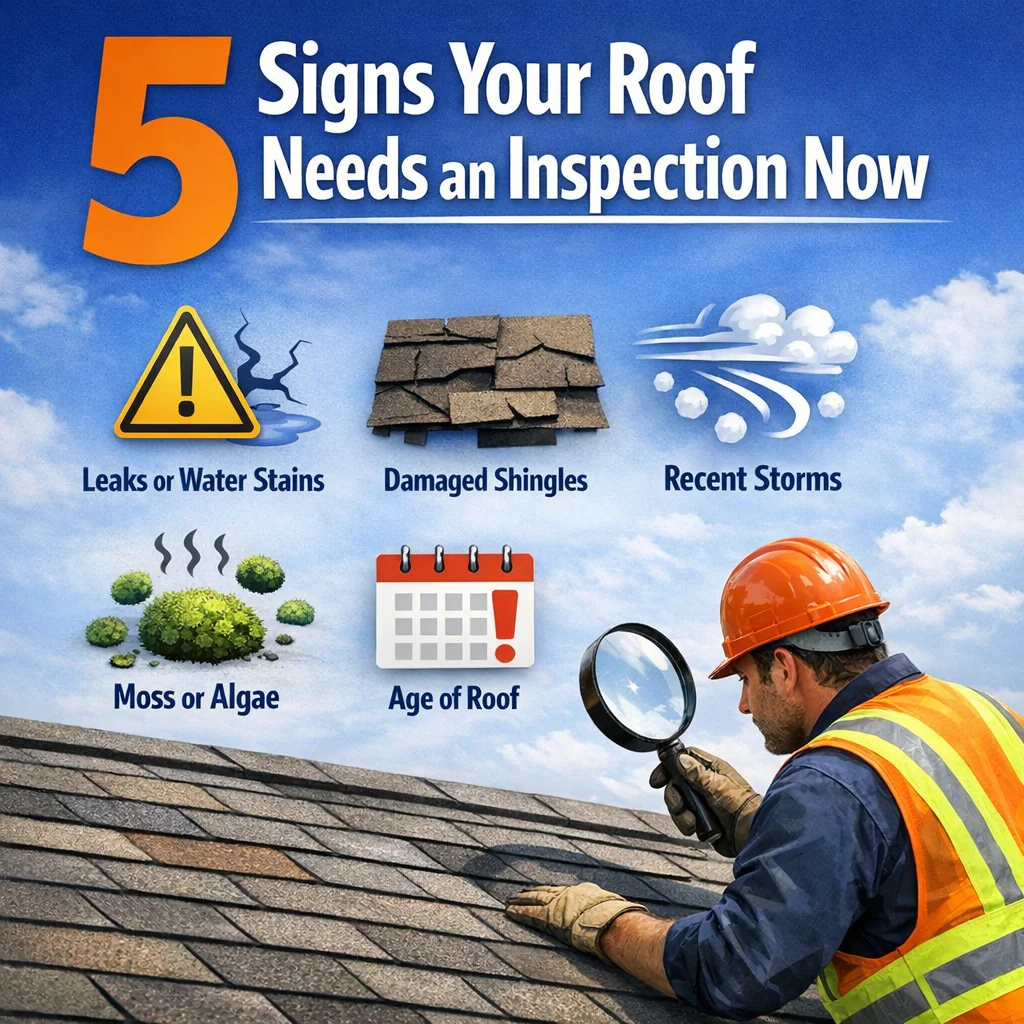
Different competitors offer different guidance on how often to schedule a roof inspection, and the variation is wide enough that it can leave a homeowner more confused than when they started. The reasoning behind frequency guidelines matters more than the numbers themselves.
| Roof Age | Recommended Frequency | Why the Logic Changes |
|---|---|---|
| Under 5 years | Every 3 to 5 years, or after major storms | New installations primarily need verification that no installation errors have appeared early; storm inspections remain event-driven |
| 5 to 15 years | Every 2 to 3 years | Mid-life roofs are past the early-defect window but not yet showing the accelerated wear that comes later; inspections catch gradual sealant and flashing deterioration |
| Over 15 years | Every 1 to 2 years | Older roofs are in or approaching the period where multiple components may degrade in parallel; more frequent inspection gives more decision lead time |
| Any age, post-storm | Within days of the event | See timing section below |
The key principle is that frequency should reflect the inspection’s purpose. A newer roof in good condition needs verification, not intensive diagnostics. An aging roof needs a more thorough review more often because the margin between “manageable maintenance” and “system-level failure” narrows as materials approach end of life.
Need a hand with this in Winston-Salem, Greensboro and the Triad? Call (336) 971-0464 or request a free estimate. Honest answers, no pressure.
Every roofing contractor in the area will tell you to call after a storm. What often goes unsaid is why the timing of that inspection affects its usefulness, especially if an insurance claim may be involved.
Wind and hail damage is frequently not visible from the ground. Hail bruising on shingles, for example, leaves impact points that compress and displace granules without creating obvious holes. From the street, the roof may look untouched. Up close, a trained inspector can identify the pattern, density, and distribution of impacts in a way that clearly distinguishes storm damage from normal aging.
The documentation challenge is this: if a second weather event occurs between the original storm and the inspection, it becomes harder to attribute specific damage to the first event versus the second, or to normal wear that predated both. An inspection conducted promptly after a named storm creates a clear record that links the findings to that specific event. That distinction matters when the findings are used to support an insurance claim. Our Storm Damage Roof Repair: NC Triad Homeowner Guide walks through what that documentation process looks like and how to navigate it effectively.
This is why a post-storm inspection is categorically different from a routine maintenance inspection, not just in what the inspector looks for, but in the record it needs to create.
Homeowners in Greensboro’s historic districts, including College Hill, Fisher Park, and Dunleath, face an inspection requirement that goes beyond damage assessment. The Historic Preservation Commission reviews roofing material, color, and profile as part of the Certificate of Appropriateness process before any replacement work can begin.
What this means at the inspection stage is specific. An inspector working on a historic-district home should document not only what is damaged but also the existing material profile, shingle dimensions, color, and installation details. That documentation becomes the baseline for a COA application. An inspection report that simply states “shingles require replacement” without capturing those existing details leaves the homeowner without the information needed to begin the approval process.
In practical terms, the inspection on a historic-district home is functioning as a pre-application document, not just a repair estimate trigger. A contractor who understands that difference will structure the report accordingly. Homeowners looking for experienced roofing in Greensboro who are familiar with historic district requirements will find that working with a certified local contractor makes a meaningful difference at every stage.
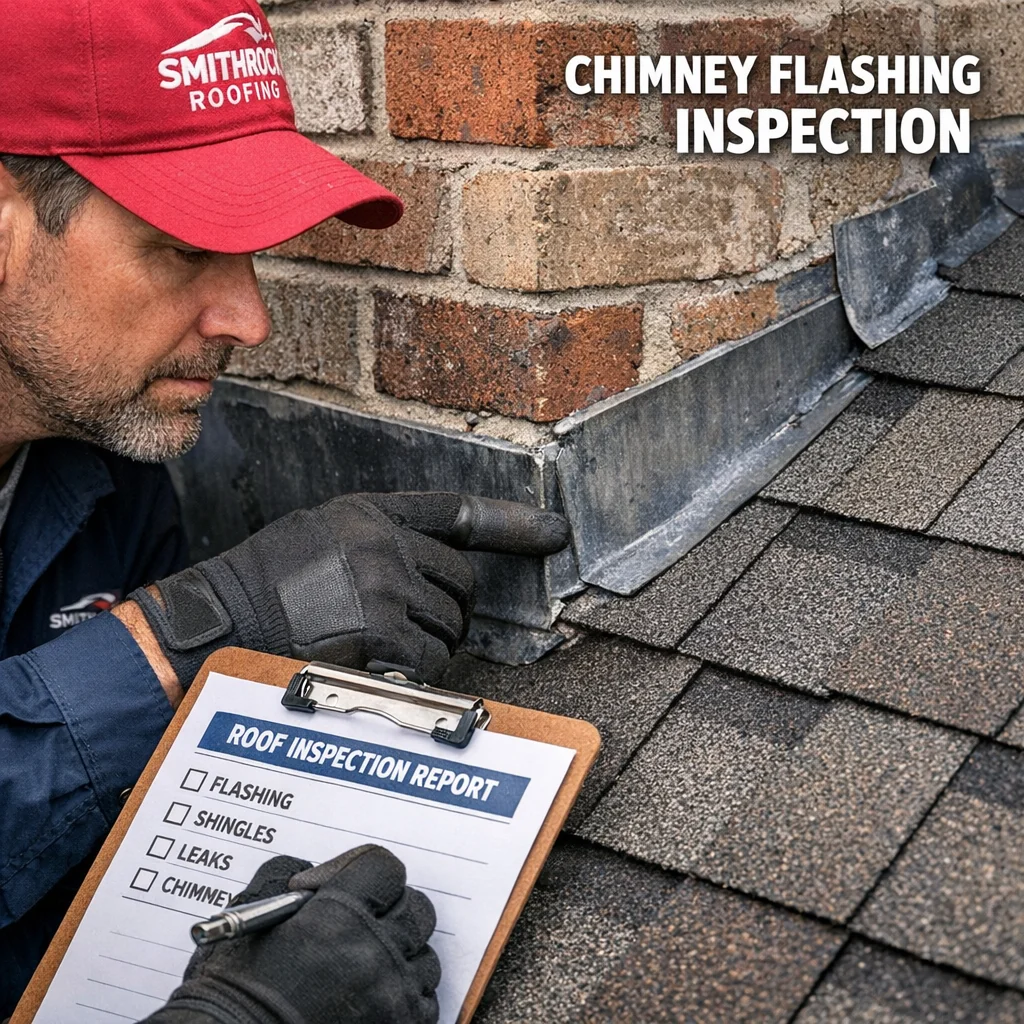
A roof inspection is only as useful as what it tells you. Here is what distinguishes a thorough report from a surface-level one.
At Smithrock Roofing, our team holds CertainTeed PREMIER ShingleMark Master Certification and carries more than 60 combined years of experience across the NC Triad. Our roofing service is designed to give you a clear, honest picture of your roof’s condition, documented in a way that actually supports whatever decision comes next, whether that is monitoring, maintenance, or a full replacement conversation.
If you are a homeowner in Greensboro, Winston-Salem, High Point, Kernersville, Clemmons, Rural Hall, King, or Mount Airy and you want a roof inspection that goes beyond a quick visual pass, we are ready to take a close look.
Most residential roof inspections take between one and two hours, depending on the size of the home, the complexity of the roof system, and the number of penetrations, valleys, and flashings that need to be examined. Older homes or those with multiple roof sections may take longer. The time spent on-site directly affects the quality of what gets documented, so a thorough inspection will rarely be a quick walk-around.
In many cases, a post-storm inspection itself is not a separate line item on an insurance claim, but the documentation produced during a qualified inspection is often essential to supporting a damage claim. If storm damage is confirmed and a claim is filed, your policy may cover repair or replacement costs based on that documentation. It is worth reviewing your specific policy and speaking with your adjuster about what is required before and after an inspection.
Most roofing professionals recommend a formal inspection at least once every two to three years for roofs in good condition, and annually for roofs approaching the later portion of their expected service life. In the Greensboro area, where summer storms, ice events, and significant seasonal temperature swings are common, inspecting after any major weather event is also a sound practice regardless of where you are in that general cycle.
A home inspector provides a general assessment of the entire property and will flag visible roofing concerns, but they are typically not roofing specialists. A roofing contractor inspection goes deeper, evaluating specific components like flashing integrity, fastener patterns, granule adhesion, ventilation balance, and underlayment condition where it is accessible. For insurance documentation, warranty compliance, or a detailed understanding of your roof’s actual condition, a contractor inspection from a certified roofing professional will give you considerably more usable information.
When your roof needs a closer look, the right inspection makes the difference between catching a problem early and discovering it after the damage has already spread. Smithrock Roofing has been serving homeowners across Greensboro, High Point, and the surrounding NC Triad with inspections built on certification, hands-on experience, and honest reporting. If you are ready to know exactly where your roof stands, give us a call at (336) 971-0464 or Contact Smithrock Roofing to schedule your inspection today.

Smithrock Roofing © Copyright 2026 • All Rights Reserved • Privacy Policy • Maintained by Mongoose Digital Marketing