
A note on the numbers: the figures in this guide are national industry averages compiled for research — they are not Smithrock Roofing quotes. Every home and project is different, which is why our in-home assessments and written quotes are always free.
Your gutters are silent protectors, working around the clock to shield your home from the relentless threat of water damage. When rain pours down your roof, a properly functioning gutter system is engineered to handle a surprising volume of water—a single inch of rain on a 2,000-square-foot roof can produce over 1,200 gallons. This system diligently channels thousands of gallons away from your foundation, siding, and landscaping every year. Without them—or with failing, clogged, or damaged gutters—that water has nowhere to go but down, where it can seep into your basement, erode the soil supporting your home, and cause expensive, often hidden, structural damage.
Many homeowners understandably put off gutter replacement, viewing it as an expense that can be delayed. However, this perspective often proves costly. The cost of emergency repairs after foundation damage, basement flooding, or extensive wood rot far exceeds the proactive investment in a new, functional gutter system. A failing gutter system isn’t just an eyesore; it’s a ticking clock on your home’s structural integrity.
Understanding what drives guttering replacement costs empowers you to budget wisely and avoid unexpected financial burdens. The final price tag is a tailored calculation based on your home’s unique characteristics. Its size and the total linear footage of the roofline, the material you choose, your roof’s complexity, and even your geographic location all play significant roles. Whether you’re seeing the telltale signs of sagging gutters, noticing persistent water stains on your siding, or simply planning ahead for responsible home maintenance, knowing these cost factors puts you in control of the process.
In this comprehensive guide, we’ll break down every aspect of gutter replacement costs, from material selection and labor to essential add-ons and long-term value. Our goal is to provide you with the knowledge to make confident, informed decisions about protecting your home and your wallet for decades to come.
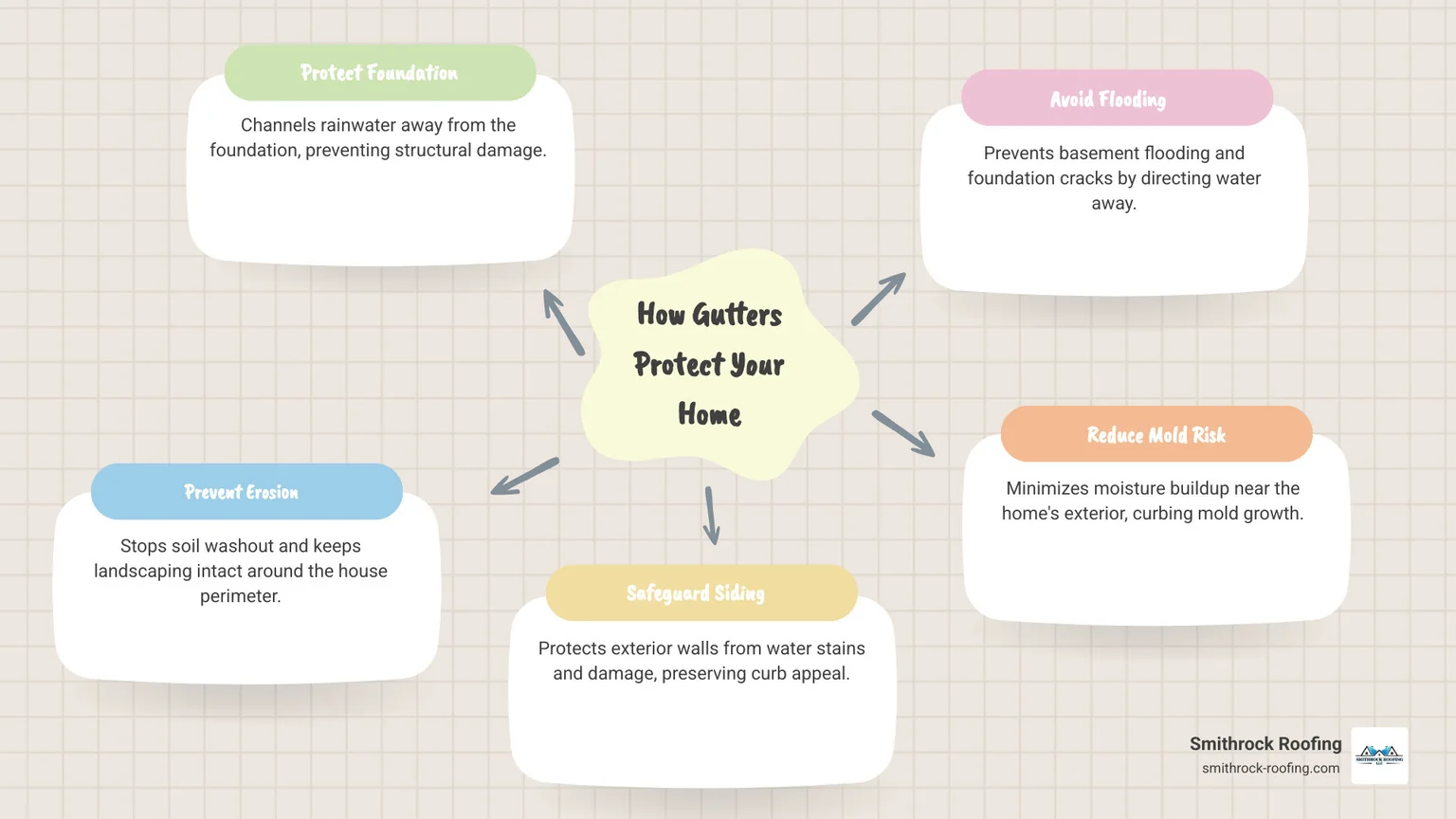
When planning for new gutters, you might wonder why quotes from different contractors can vary so dramatically. The total investment isn’t a simple flat rate—it’s a detailed calculation influenced by several important factors unique to your property, your aesthetic preferences, and your long-term goals.
Understanding these factors upfront is the key to planning realistically and avoiding surprises. Once you know what drives these costs, you can make informed decisions that balance your immediate budget with your home’s future needs. Whether you’re in Winston-Salem, King, Kernersville, or anywhere in our North Carolina service area, these same core factors will shape your gutter replacement project.
Your home’s physical characteristics are the foundation of any gutter replacement estimate. The primary metric is linear footage—the total length of the roof edges (fascia boards) that need gutters. A larger home with a more expansive roofline naturally requires more material and more labor hours, which directly increases the project’s scope and cost.
A helpful rule of thumb for a rough estimate is to divide your home’s total square footage by 10. For example, a 2,000-square-foot home would typically need around 200 linear feet of guttering. However, this is just a starting point. The actual need is determined by your home’s specific layout, including porches, additions, and detached garages.
The height of your home is another critical cost factor. Single-story homes are generally more straightforward to work on, as our team can access most areas with standard ladders and safety protocols. Multi-story homes present more challenges due to height, requiring additional safety equipment like harnesses, specialized ladders, and sometimes even scaffolding or boom lifts. This necessary equipment and the increased risk and time involved will be reflected in the labor costs.
Furthermore, roof complexity matters tremendously. A simple rectangular home with a gable roof is the most straightforward. A home with steep pitches, multiple dormers, intersecting rooflines (valleys), or intricate angles (hips and gables) requires more precise measurements, numerous custom cuts, and additional components like corner miters. This complexity demands more careful planning and significantly more installation time. If your home has multiple roof levels or hard-to-reach areas, the project cost will reflect that complexity, as specialized equipment may be needed for both safety and precision.
Choosing your gutter material is one of the most significant decisions you’ll make, as it dramatically affects the project’s cost, durability, and appearance. This isn’t just about your budget today—it’s about balancing upfront costs with long-term value and maintenance requirements.
Different materials come with different price points, lifespans, and performance characteristics. A less expensive material like vinyl might save you money initially but could require replacement much sooner. Conversely, investing more upfront in a premium material like copper might provide decades of virtually maintenance-free service, making it cheaper over its entire lifespan.
Your local climate plays a crucial role. Here in North Carolina, we experience hot, humid summers, heavy rains, and occasional freezes. Some materials handle these conditions better than others. Vinyl, for instance, can become brittle in freezing temperatures and may warp under intense summer sun. Aluminum is an excellent choice as it resists corrosion in our humid climate, but it can dent during severe hailstorms or from falling limbs. Steel offers superior strength but must be properly coated to prevent rust.
The aesthetic impact shouldn’t be overlooked either. Your gutters are a prominent feature that contributes to your home’s overall appearance. The right choice can complement your home’s architectural style and improve curb appeal, while the wrong one can detract from it.
For a comprehensive overview of how different materials perform, visit our Gutter Installation Services page.
Beyond the material, the style and type of gutters you select will influence both functionality and cost. Each style has distinct characteristics that affect water-handling capacity, appearance, and installation complexity.
Perhaps the most important decision in this category is between sectional and seamless gutters. Sectional gutters are the type you find at big-box home improvement stores. They come in pre-cut 10- to 20-foot lengths that are joined together during installation. Every joint is sealed with caulk and fastened with a connector piece, creating a seam. Over time, due to thermal expansion and contraction, these seams can weaken, crack, and become primary sources of leaks.
Seamless gutters, by contrast, are custom-fabricated on-site using a specialized machine that extrudes a continuous piece of gutter to match your home’s exact measurements. With seams only at corners and downspouts, they dramatically reduce potential leak points. While the initial investment for seamless gutters is higher, they require less maintenance, last longer, and provide superior, worry-free performance, making them the best long-term investment for most homes.
Learn more about why seamless gutters might be the right choice for your home on our Seamless Gutter Installation page.
Many homeowners overlook the condition of the wood structures behind their old gutters, but their health is paramount. Your fascia and soffit boards are critical components that must be in good shape before new gutters can be installed.
The fascia is the vertical board that runs along the roof’s edge, to which the gutters are attached. The soffit is the horizontal board that covers the underside of the roof overhang. When old gutters leak or overflow, they constantly saturate these wooden boards, leading to water damage, rot, and decay. Sometimes the damage is obvious, with peeling paint or visible soft spots, but often it’s hidden until the old gutters are removed.
As part of our professional process, we thoroughly inspect your fascia and soffit before any installation begins. If we find rot or damage, it must be repaired or replaced first. Installing new gutters on a compromised structure is pointless; the rotten wood cannot adequately support the weight of the new system (especially when full of water or debris), and it will lead to premature failure, sagging, and improper drainage. Repairing these boards adds to the project cost—often priced per linear foot—but it is an essential investment in the longevity and structural integrity of your new gutter system. Addressing these issues during the replacement project is both practical and financially sensible, ensuring a solid foundation for your new gutters for decades to come.
When it comes to choosing gutter materials, you’re making a decision that will protect your home for years, if not decades. The material you select plays the most central role in your gutter system’s performance, appearance, maintenance needs, and the overall replacement cost. Let’s explore the most common gutter materials available, from budget-friendly options to premium choices that can last a lifetime, including estimated costs per linear foot.
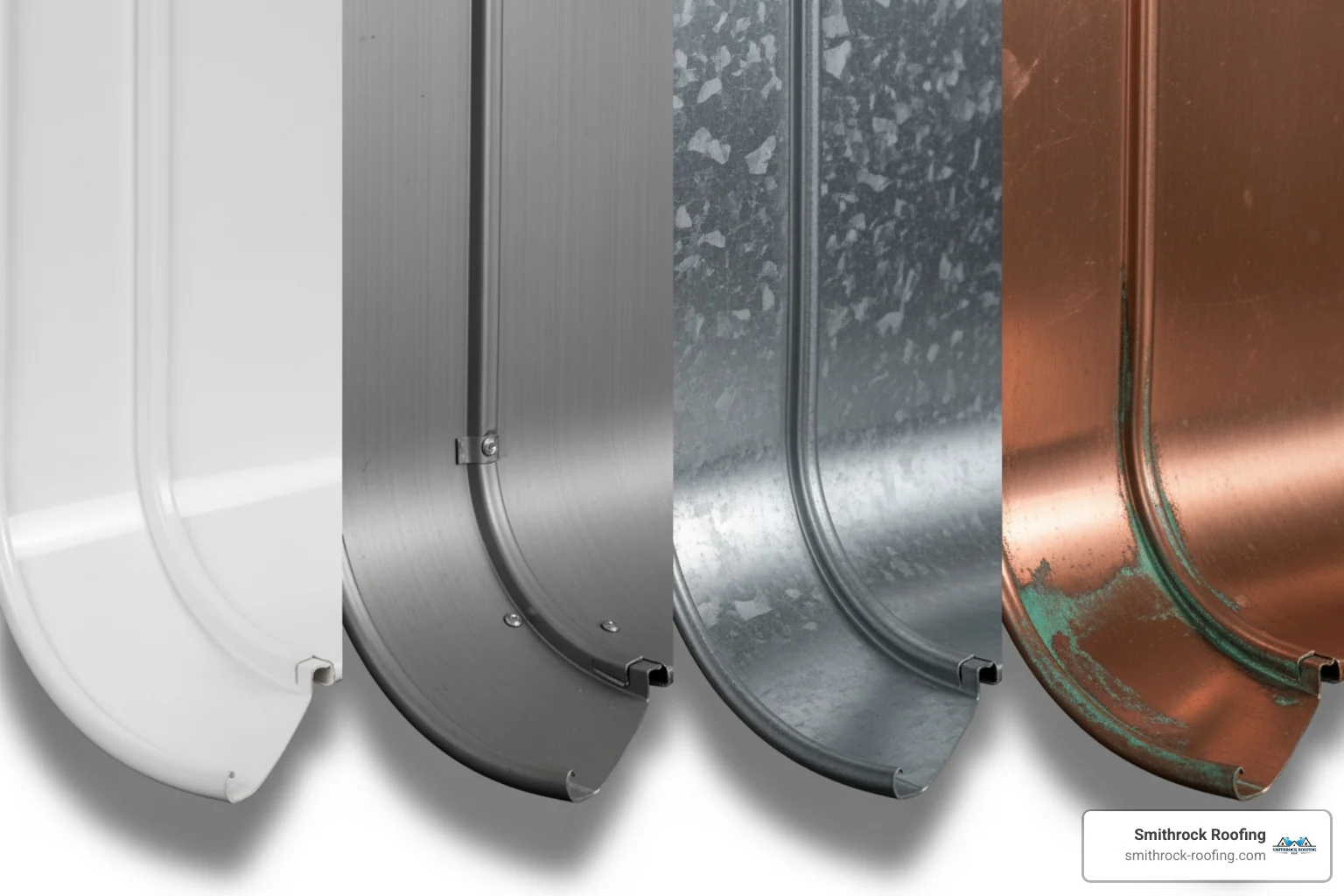
If you’re working with a tighter budget or need a solution for a shed or detached garage, vinyl and aluminum gutters offer reliable performance at an accessible price point.
Vinyl Gutters
Aluminum Gutters
When you need gutters that can stand up to challenging weather and heavy loads, steel gutters deliver impressive strength and durability for a moderate increase in cost.
Galvanized Steel Gutters
Galvalume Steel Gutters are similar but are coated with a blend of zinc and aluminum, offering enhanced corrosion resistance compared to standard galvanized steel.
For homeowners who view their gutters as a defining architectural statement, premium materials like copper, zinc, and wood offer unparalleled beauty, longevity, and character.
Copper Gutters
Zinc Gutters
Wood Gutters
Our team at Smithrock Roofing can walk you through these options to find the perfect fit for your North Carolina home. For more details, visit our Gutter and Downspout Installation page.
At some point, every homeowner faces this critical question: should I repair my gutters or replace them entirely? While a simple repair usually costs less upfront, small fixes can sometimes be a temporary patch on a systemic problem, leading to more spending and frustration in the long run. The key is to accurately assess whether your gutter system is showing signs of widespread failure or just has a few isolated trouble spots.
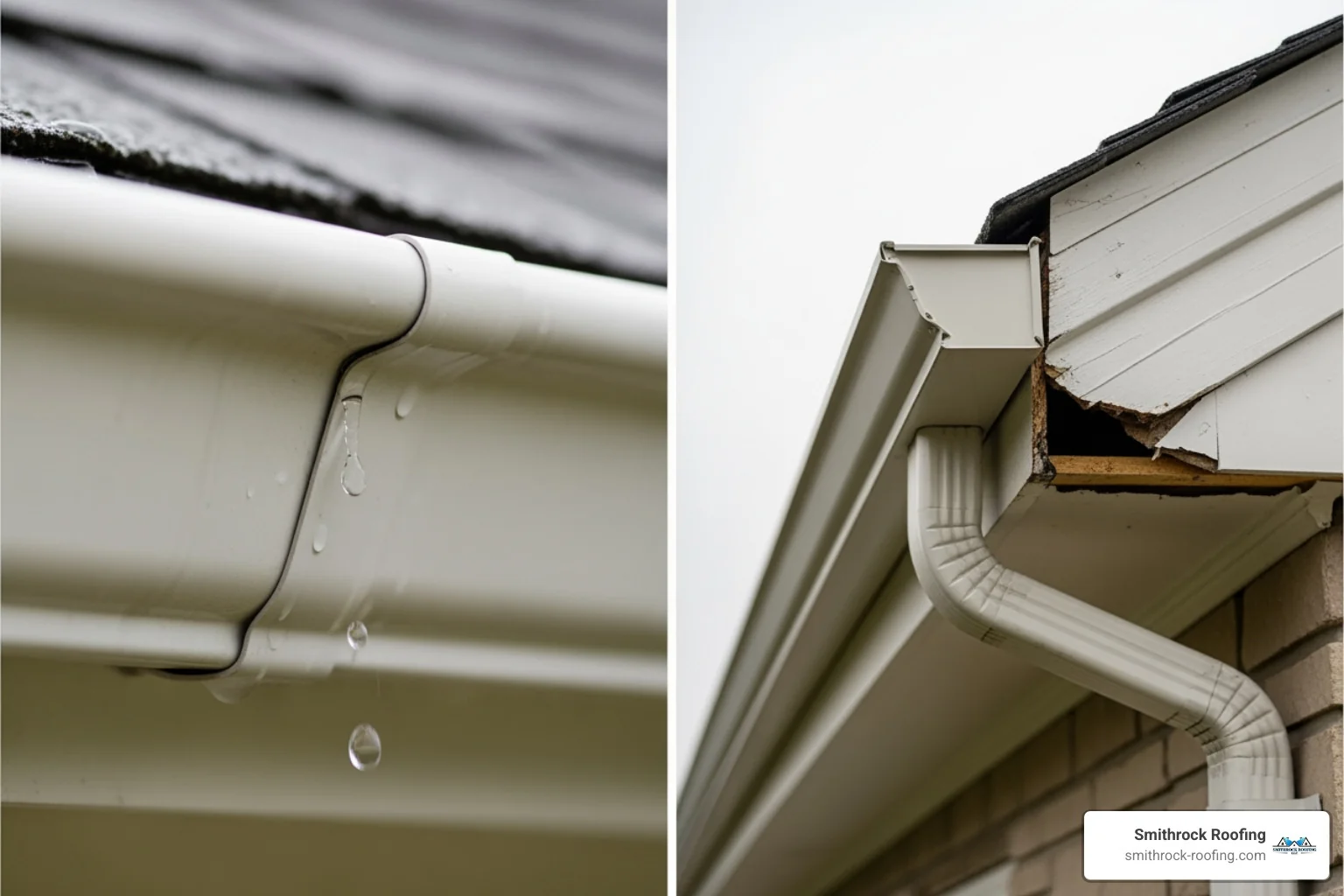
Sometimes your gutters are fundamentally sound but need targeted attention. Catching these issues early can prevent bigger problems and extend the life of your current system. Repair is often the most cost-effective solution for:
If you’re dealing with these specific concerns in the Winston-Salem, King, or Kernersville areas, our team can help. Check out our Gutter Repair Near Me services to get your system back in working order.
In other situations, your gutters are clearly indicating they’ve reached the end of their useful life. In these cases, repeated repairs are like putting a bandage on a serious wound—ineffective and ultimately more expensive. Consider a full replacement if you observe any of the following:
While a single repair bill of $200-$400 is cheaper than a full replacement cost of $2,000-$5,000, the financial calculation changes with frequency. If you’re spending money every year to fix an aging system, you have to ask if you’re just postponing the inevitable. For example, spending $300 annually on repairs for an 18-year-old aluminum gutter system means you’ll spend $1,500 over five years, only to likely need a full replacement anyway. The aging system remains a constant risk to your home during every rainstorm.
A full gutter replacement offers something repairs never can: peace of mind with a comprehensive warranty. A new system comes with coverage on both materials (from the manufacturer) and workmanship (from the installer), protecting you if something goes wrong. With repairs, you’re only addressing one specific issue while the rest of your aging system remains vulnerable.
There’s also real value in knowing you won’t have to worry about your gutters for the next 20 years or more. A new system provides decades of reliable, worry-free protection. When you factor in the potential costs of water damage from a failing system—which can run into the tens of thousands for foundation or structural repairs—a full replacement is often the smarter and safer long-term investment.
If you’re on the fence, we can provide an honest assessment. And if you’re considering adding gutters to your home for the first time, our Cost to Add Gutters to a House page can help you understand that investment.
When planning for a gutter replacement, it’s important to remember that an effective water management system is more than just the horizontal gutters themselves. Several essential components, valuable add-ons, and related services contribute to the total investment, all working together to protect your home correctly.
These items are not optional; they are integral parts of a functional gutter system, and their cost is typically included in a comprehensive quote.
If your home is surrounded by trees, you know the constant battle with leaves, pine needles, twigs, and other debris. This is where gutter guards become a homeowner’s best friend.
So, are gutter guards worth it? In our experience, for most homeowners in North Carolina, the answer is a resounding yes. Gutter guards are protective covers that create a barrier to stop debris from entering your gutters while allowing water to flow through freely. This dramatically reduces, and in some cases nearly eliminates, the need for frequent, hazardous gutter cleaning. Beyond convenience, gutter guards protect your investment by preventing clogs that lead to water overflow, which can damage your fascia, siding, and foundation. They also help prevent ice dams in winter and keep pests, birds, and rodents from nesting in your gutters.
There are several types of gutter guards, each with pros and cons:
Adding gutter guards during your replacement project makes excellent financial sense. While there’s an upfront investment, you’ll likely recoup those costs through reduced cleaning expenses and by preventing costly water damage repairs over the years. For more information, visit our Cost to Install Leaf Guard Gutters and Gutter Guard Installation pages.
Even with the best system, regular maintenance is essential. Experts recommend inspecting and cleaning your gutters at least twice a year, typically in late spring and late fall, as noted in the U.S. General Services Administration guidance on gutter maintenance. Professional cleaning involves more than just scooping out debris; it’s also an opportunity for a full inspection. Our team checks for loose hangers, failing sealant, improper pitch, and early signs of corrosion. Spotting these issues early allows for simple, inexpensive repairs, extending the life of your gutters and helping you avoid major water damage.
Several other considerations factor into the total project cost. These aren’t hidden fees but necessary parts of a professional, safe, and compliant job.
When facing a home improvement project, it’s natural to wonder if you can save money by doing it yourself. But when it comes to your gutter system—a critical component that protects your entire home from water damage—the decision involves more than just comparing material costs to a professional quote.
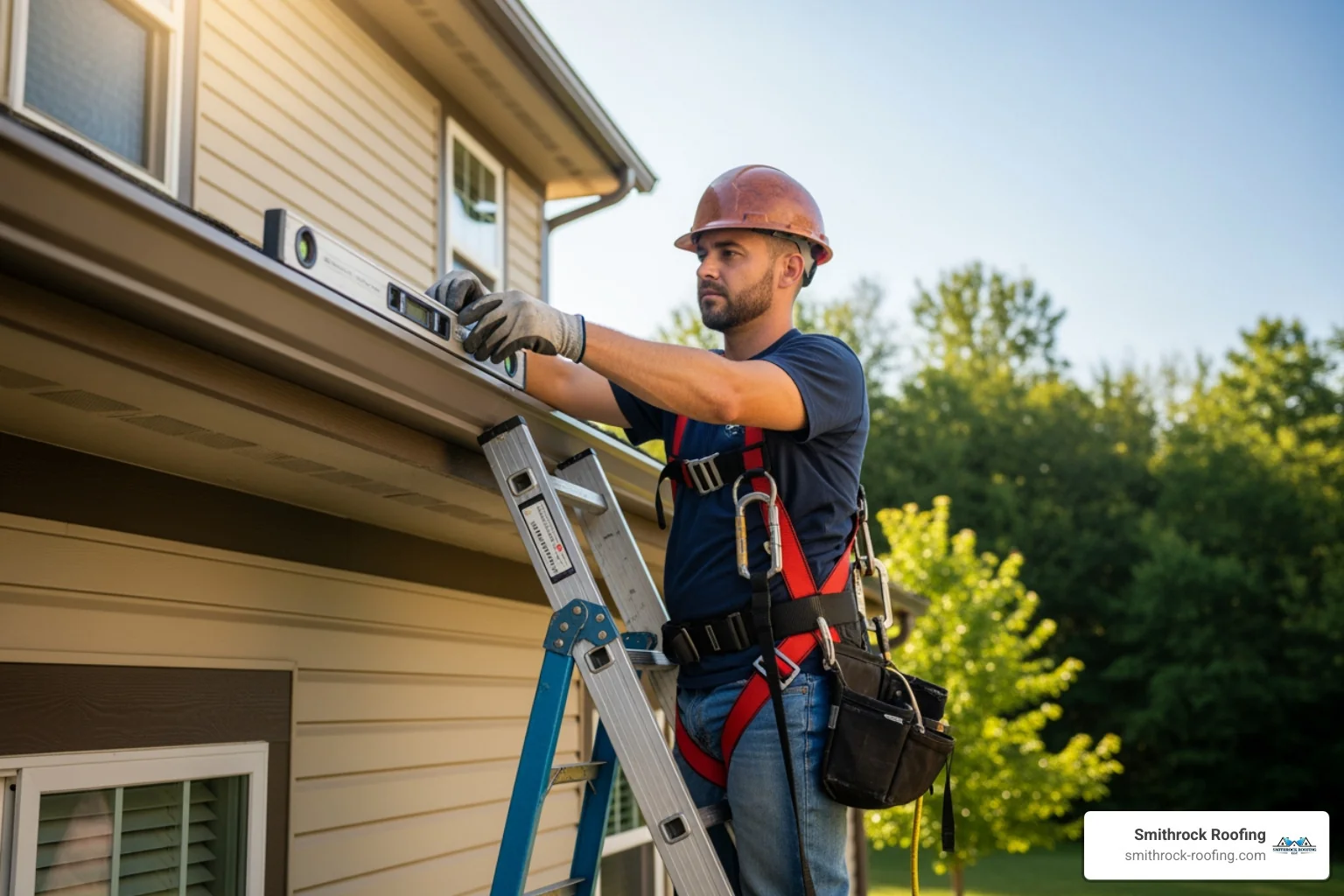
While a DIY approach might seem to reduce costs by eliminating professional labor, the potential risks and hidden costs often outweigh the perceived savings. The real challenge isn’t just hanging the gutters; it’s ensuring they function correctly and reliably for decades. Common and costly DIY mistakes include:
Furthermore, installing seamless gutters requires a large, truck-mounted extruding machine that is not available for rent to the average homeowner. This superior system is only available through professional installers. For these reasons, we always recommend working with a qualified Gutter Installation Contractor. Our experienced team ensures proper pitch, secure fastening, and optimal water flow, all backed by a workmanship warranty for your peace of mind.
While new gutters may not add thousands of dollars to your home’s sale price in the same way a kitchen remodel does, they play a crucial role in protecting your home’s existing value and enhancing its marketability.
From a curb appeal perspective, the impact is immediate. Sleek, new seamless gutters make a home look crisp, clean, and well-cared-for. In contrast, sagging, stained, or rusted gutters are a major red flag for potential buyers, suggesting deferred maintenance and hinting at other, potentially hidden problems. A home inspector will always note the condition of the water management system, and faulty gutters can lead to demands for repair credits or a lower offer.
The real value, however, lies in preventing costly damage. A functional gutter system is your first line of defense against foundation cracks, soil erosion, basement flooding, and siding rot—serious structural problems that can cost tens of thousands of dollars to repair. By installing new gutters, you are demonstrating to buyers that you have been a responsible homeowner. This instills confidence and removes a major point of contention during the sale process, helping you secure your home’s full appraised value.
Investing in quality gutters and professional installation is a strategic decision that pays dividends for decades through cost avoidance and structural preservation.
The most critical benefit is protecting your home’s foundation. By diverting thousands of gallons of water away from your home each year, a proper gutter system safeguards its structural integrity and helps you avoid one of the most expensive and disruptive home repairs possible. Foundation repair can easily cost between $5,000 and $25,000 or more.
Quality gutters also prevent soil erosion around your home, protecting your landscaping and ensuring the ground remains properly graded to channel water away. For homes with basements or crawl spaces, they are the first and most important line of defense against basement flooding and moisture intrusion, which can cost $5,000 to $15,000 to waterproof and repair. By managing runoff effectively, they also reduce the risk of mold and mildew growth on your home’s exterior and within its substructure, avoiding remediation costs that can run into the thousands.
A quality gutter replacement isn’t an expense—it’s an investment in your home’s health, your family’s safety, and your financial security.
We understand you might have questions when considering gutter replacement for your home in Winston-Salem, Pilot Mountain, or our other service areas. Here are answers to some of the most common concerns we hear from homeowners.
The lifespan of your new gutters depends largely on the material you choose, the quality of the installation, and your maintenance routine. Here are some general estimates:
Regardless of the material, regular cleaning and prompt repairs of any minor issues are essential to helping your gutters reach their full potential lifespan.
Yes, for most homeowners, seamless gutters are absolutely worth the modest additional investment. While the initial cost is slightly higher than for traditional sectional gutters from a big-box store, the long-term benefits are significant:
For these reasons, seamless gutters provide superior protection, require less upkeep, and deliver excellent long-term value.
To get a rough idea for budgeting, you can use a tape measure to find the length of all the horizontal roof edges (fascia boards) where gutters will be installed. Then, add the vertical height for all necessary downspouts, which are typically needed every 30 to 40 feet. For a very quick, ballpark estimate, you can divide your home’s total square footage by 10 (e.g., a 2,000 sq. ft. home might need about 200 linear feet).
While these methods are helpful for a preliminary budget, a professional measurement is always the most accurate. Our team will provide a precise assessment that considers your roof’s pitch, complexity, and specific drainage needs, ensuring you get an accurate quote with no guesswork.
A reputable gutter installation contractor should offer two types of warranties. First is a manufacturer’s warranty on the gutter material itself, which protects against defects like cracking or fading for a set period. Second, and just as important, is a workmanship warranty from the installer. This covers any issues related to the quality of the installation, such as improper pitch or loose hangers, typically for a period of one to five years or more.
For an average-sized, single-story home, a professional crew can often complete a full gutter replacement in a single day. Larger, multi-story homes or those with complex rooflines may take two days. Factors like the need for fascia board repair can also extend the timeline.
Your gutters work quietly day and night, performing the vital task of protecting one of your biggest investments—your home. Now that you understand the key factors that influence the cost of guttering replacement, you are equipped to make a confident, informed decision that balances your budget, your home’s needs, and your long-term peace of mind.
We’ve walked through how your home’s size, roof complexity, material choice, and the underlying condition of your fascia all play a role in your final investment. We’ve explored the critical differences between sectional and seamless gutters, and weighed the risks of a DIY attempt against the security of a professional installation. Each factor matters because it directly impacts how well your gutter system will perform and how long it will last.
A gutter replacement isn’t just another item on your home maintenance checklist; it is a strategic investment in preserving your property’s value and structural integrity. A high-quality, professionally installed gutter system is your frontline defense against a host of expensive and stressful problems. It prevents costly foundation damage, stops soil erosion that can destabilize your home, keeps your basement dry and free of mold, and gives your home a pristine, well-maintained appearance.
Whether you’re currently dealing with the frustrating symptoms of failing gutters—sagging sections, water stains, or foundation puddles—or simply planning for your home’s future, the right gutter system provides invaluable security. It’s the assurance that your home is protected from the elements, rain or shine.
At Smithrock Roofing, we have been proudly serving homeowners throughout Winston-Salem, Clemmons, High Point, King, Kernersville, and surrounding North Carolina communities with professional, reliable gutter solutions. Our experienced team is committed to quality craftsmanship. We will perform a thorough assessment of your home’s needs, recommend the best approach for your budget, and install your new gutter system with the precision and care it deserves.
Ready to take the next step toward securing your home? Explore our comprehensive gutter services and let’s start a conversation about protecting your investment with a flawless gutter system you can count on for years to come.

Smithrock Roofing © Copyright 2026 • All Rights Reserved • Privacy Policy • Maintained by Mongoose Digital Marketing