Understanding Why Skylights Leak
Common skylight leaks stem from a handful of predictable issues. While skylights bring beautiful natural light into your home, finding water stains on your ceiling or drips around the frame can be deeply frustrating.
Here are the most common causes of skylight leaks:
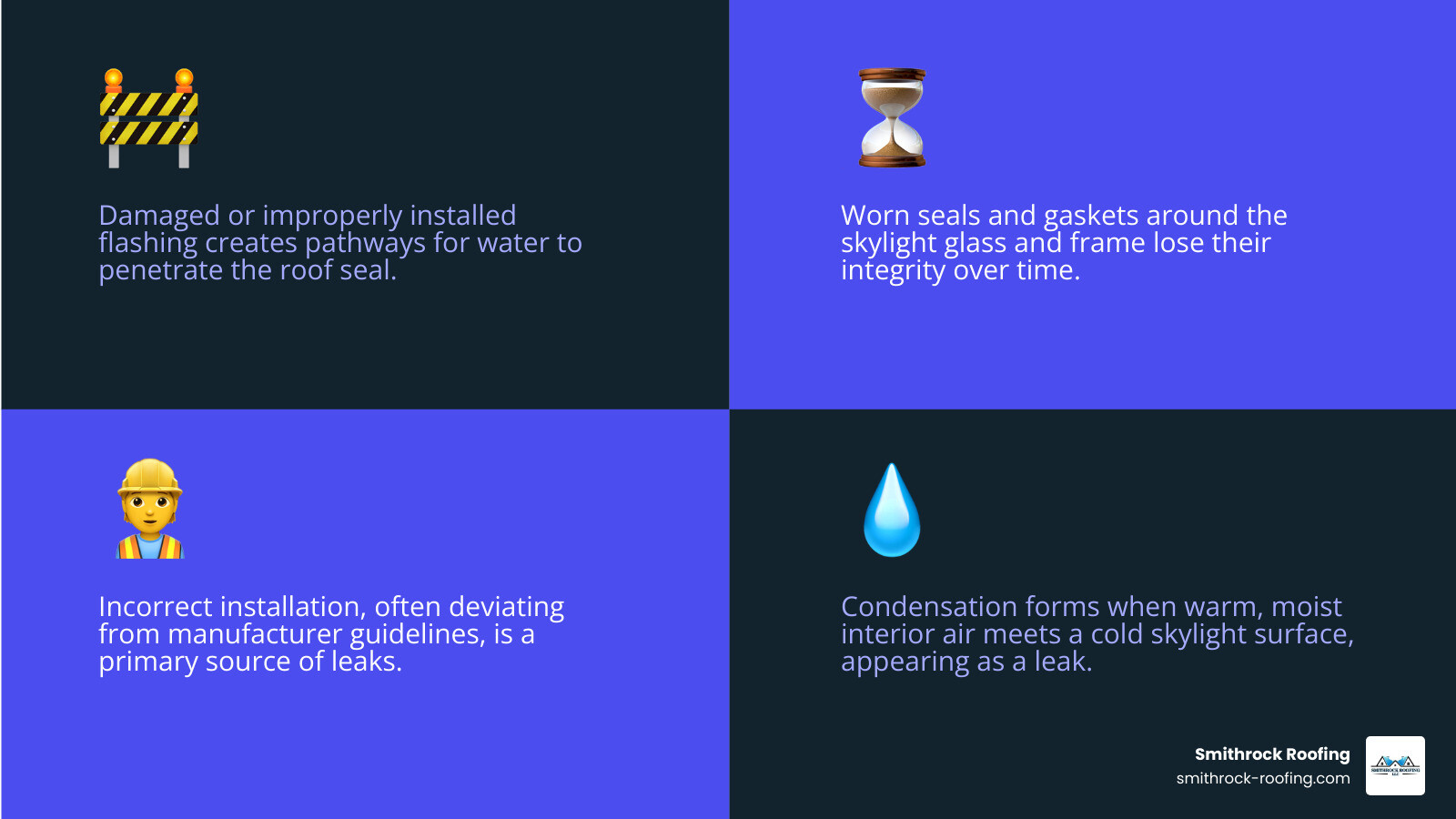
- Damaged or Improperly Installed Flashing: The metal barrier sealing the skylight to the roof deteriorates or was installed incorrectly.
- Worn Seals and Gaskets: The rubber or sealant between the glass and frame breaks down over time.
- Condensation Mistaken for Leaks: Warm, humid air meeting cold glass creates water droplets that drip down.
- Clogged Drainage Channels: Debris blocks weep holes designed to let moisture escape.
- Age and Weather Damage: Years of exposure to sun, rain, and temperature swings take their toll.
The good news? If a skylight is mounted properly and sealed to its curb per the manufacturer’s instructions, it is very unlikely that it will leak. Most skylight leaks aren’t the skylight’s fault. They’re usually caused by installation errors, flashing problems, or issues with the surrounding roof.
This guide will help you identify the cause of your skylight leak, distinguish it from condensation, decide between repair and replacement, and learn preventative measures. Understanding these common issues is the first step toward a dry, comfortable home.

Know your common skylight leaks terms:
Diagnosing the Drip: Is It a Leak or Just Condensation?
When water appears around your skylight, the first step is to find the source. Is it a breach in your roof’s defense, or something else? This initial diagnosis is crucial because it dictates your next steps.

Is It Really a Leak? The Condensation Confusion
Homeowners often mistake condensation for a genuine skylight leak. We often hear from clients in Winston-Salem and surrounding areas who are concerned about a leak, only to find the culprit is simply too much humidity.
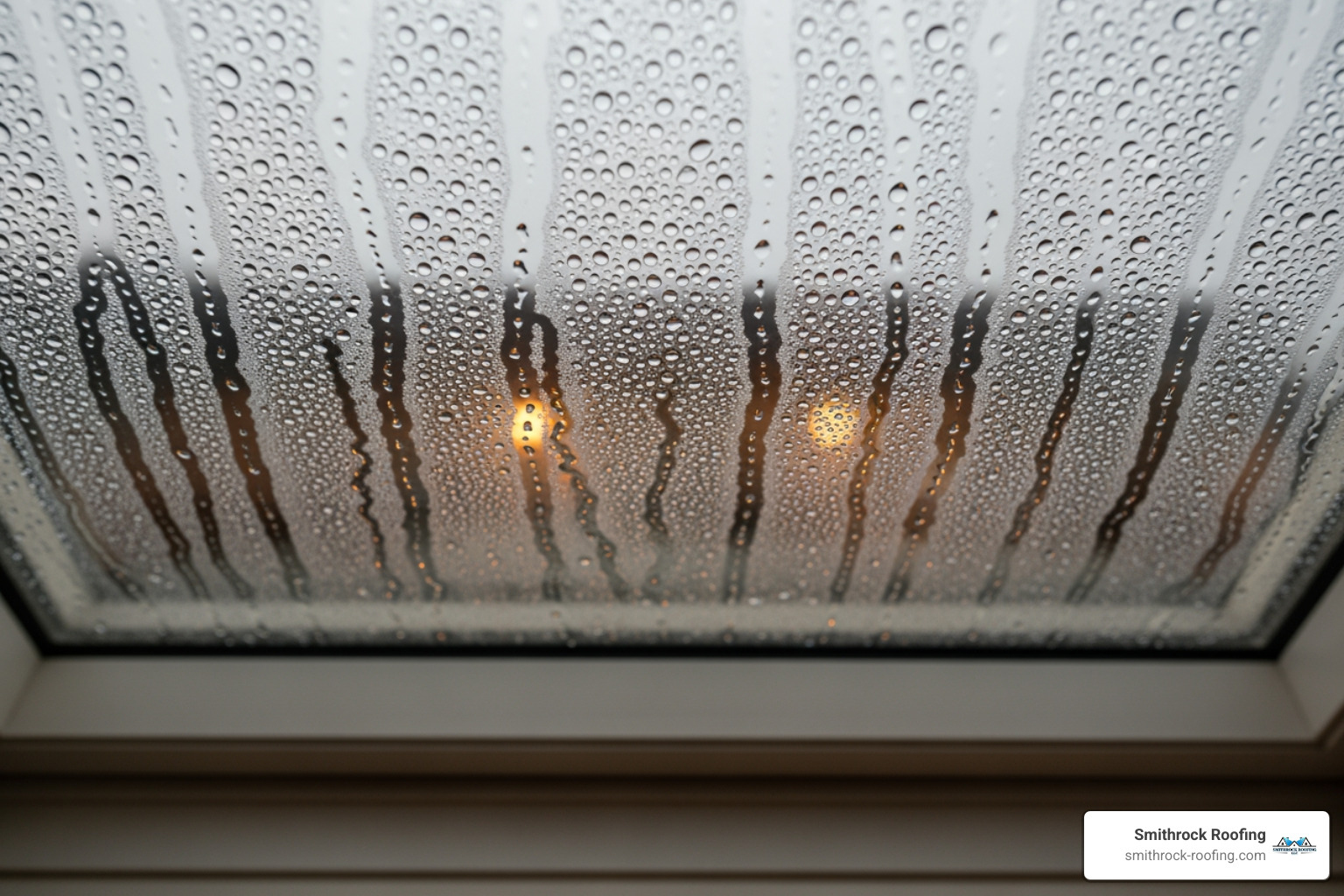
Condensation occurs when warm, moist air inside your home contacts a cold surface, like the skylight glass. The water vapor cools and turns back into liquid, forming droplets that drip and mimic a leak. This is especially common in high-humidity rooms like bathrooms or kitchens, where activities like showering or cooking increase indoor moisture. Older acrylic dome skylights, which often lack a thermal break (an insulated barrier to prevent heat transfer), are particularly prone to this.
How can you tell the difference? If water appears on the inside surface of the glass or frame, especially during colder weather or after high-humidity activities, condensation is a strong suspect.
To address condensation, we recommend these steps:
- Improve Ventilation: Ensure bathroom or kitchen fans work effectively and are used regularly. Opening a window can also help.
- Reduce Humidity: Consider using a dehumidifier in damp areas.
- Check Weep Holes: Many skylights have small drainage channels or weep holes to let condensation escape. If clogged with dust or debris, water can build up. Clear them gently with a small wire or compressed air.
- Improve Insulation: For older skylights, adding roofing felt and insulation between the frame and the rough opening can significantly reduce condensation by preventing cold transfer to interior surfaces.
For more information on improving home energy efficiency, which can help with condensation, explore our resources on energy efficient window upgrades. If you’re still unsure, our experts can provide clarity on why is my skylight leaking?.
Pinpointing the Source: Skylight vs. Surrounding Roof
Once you’ve ruled out condensation, the next challenge is determining if the leak is from the skylight unit or the surrounding roof. Water can travel along rafters and sheathing before it drips into your home, often appearing far from its entry point.
Here are clues to help pinpoint the source:
- Leak Location on the Skylight:
- Leaks at the lower end: Water entering at the bottom of the skylight, near the glass, often indicates a problem with the seal between the glass and frame, or with the weatherstripping.
- Leaks at the higher end: Water appearing at the top or sides, where the skylight meets the roof, often points to flashing problems or a leak originating higher up on the roof.
- Roof Issues Above the Skylight: Sometimes, the skylight is just a collection point for a leak that starts elsewhere, such as:
- Damaged Shingles: Missing or cracked shingles above the skylight can allow water to seep in.
- Compromised Vents: Nearby roof vents with damaged seals can direct water toward the skylight opening.
- Chimney Flashing: Faulty chimney flashing can also funnel water down to the skylight.
- Water Traveling Down the Roof Deck: Water that gets under the roof covering can travel along the sheathing, finding the path of least resistance at the skylight opening.
The Hose Test Method: A controlled hose test can provide a more definitive diagnosis. This requires two people: one on the roof with a hose and one inside with a flashlight.
- Start Low: Begin by spraying water only on the lower end of the skylight and surrounding roof for several minutes. If no leak appears, move up.
- Move Gradually Up: Systematically spray different sections of the skylight and the roof above it, working your way upwards. Apply water to the sides, then the top, then the roof area directly above.
- Isolate the Area: Wait several minutes after spraying each section. The person inside should watch for drips. When the leak appears, you’ve likely found the general area of entry.
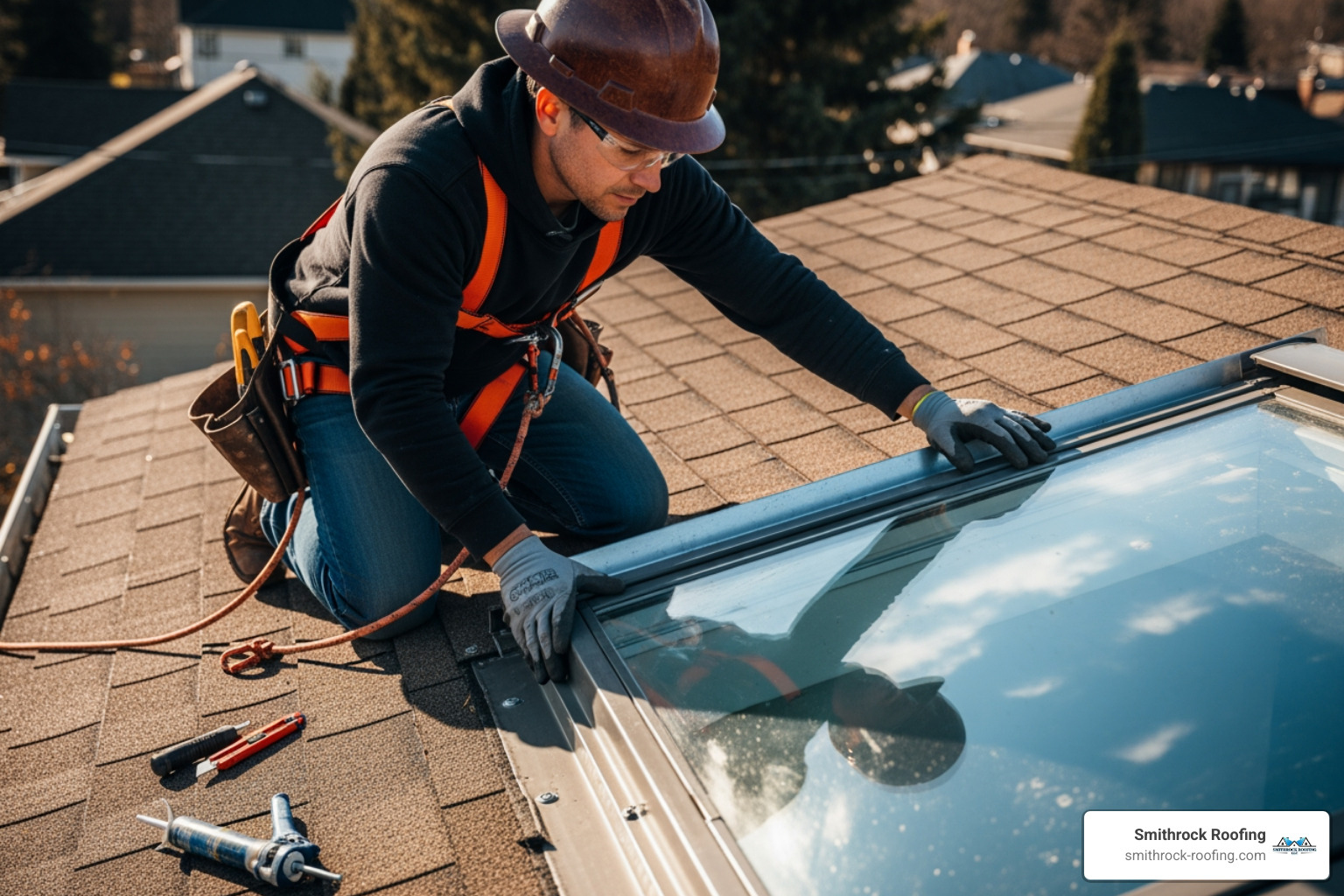
Safety First: When performing a hose test or any roof inspection, safety is paramount. Ensure the roof is dry, wear non-slip shoes, and have a spotter. For steep roofs or if you’re uncomfortable at heights, it’s always best to call a professional. Our team at Smithrock Roofing offers expert roof leak repair services and can accurately diagnose your leak. For a comprehensive understanding of how we identify leaks, check out our guide to leak detection.
The Usual Suspects: Uncovering Common Skylight Leaks & Causes
Once we’ve determined your skylight is leaking and not just condensing, it’s time to investigate the most frequent culprits. While designed to be watertight, skylights are a penetration in your roof, making them susceptible to certain vulnerabilities.
The Critical Role of Flashing
Perhaps the most important component in preventing common skylight leaks is flashing. Flashing is a metal material (typically aluminum, copper, or steel) that creates a waterproof barrier, directing water away from vulnerable areas like skylights. It prevents water from seeping into the roof deck and your home.
When flashing fails, leaks are almost inevitable. Common issues include:
- Damaged or Corroded Flashing: Over time, exposure can cause flashing to rust, crack, or become dislodged, creating pathways for water.
- Improperly Installed Flashing: This is a leading cause of skylight leaks. If not installed correctly, it won’t effectively shed water. Common errors include:
- Missing Step Flashing: These L-shaped pieces are woven in with each course of shingles along the skylight’s sides. If missing or improperly overlapped, water gets underneath.
- Incorrect Back Pan Flashing: The flashing at the top of the skylight must be shaped and integrated to direct water over the shingles, not under them.
- Exposed Nails: Flashing should be installed without exposed nails. If nails are exposed and not sealed, they can rust and create holes as the sealant degrades.
- Site-Made vs. Manufacturer Kits: Site-made flashings often rely heavily on caulk at the corners, which can fail in 5-10 years. Manufacturer-specific flashing kits are designed for a more reliable, long-lasting, and watertight seal.
If you suspect flashing issues, it’s crucial to address them promptly. Problems with roof and chimney flashing are often at the root of many skylight problems.
The Impact of Improper Installation
Poor installation is one of the leading causes of common skylight leaks. Even a high-quality skylight can leak if not installed according to the manufacturer’s specifications.
- Manufacturer Instructions: Deviating from the manufacturer’s specific installation guidelines dramatically increases the risk of leaks.
- Sealing the Curb: For curb-mounted skylights, properly sealing the unit to its curb (the raised frame on the roof) is paramount. A compromised seal allows water to seep underneath.
- Importance of Roofing Felt and Insulation: Neglecting to add roofing felt and insulation between the skylight frame and the rough opening can lead to condensation and ice dam formation.
- Long-Term Consequences: An improperly installed skylight can lead to persistent leaks, causing significant damage like rot in structural timbers, damaged drywall, and mold growth. This is why hiring experienced roofing contractors proficient in skylight installation is critical.
Aging Materials and Seal Failure
Even with perfect installation, materials degrade over time, leading to leaks.
- Seal Degradation: The sealant between the glass and frame, as well as gaskets on operable units, naturally ages. It can become brittle, shrink, and crack, leading to leaks between the glass and frame.
- Gasket Wear and Tear: On venting skylights, the rubber gaskets that create a seal can become worn or compressed, allowing water to enter.
- Insulated Glass Unit (IGU) Failure: Modern skylights use insulated glass. If the seal around the panes fails, moisture gets trapped between the layers, causing a foggy look. This indicates a compromised unit that has lost its insulating properties and needs replacement.
- Visible Cracks: Cracks in the glass or frame are obvious pathways for water.
Regularly inspecting skylights for water damage and infiltration can help catch these issues early.
How Skylight Type Affects Leaks
The type of skylight you have—curb-mounted or deck-mounted—can influence its susceptibility to leaks.
| Feature | Curb-Mounted Skylights | Deck-Mounted Skylights |
|---|
| Installation | Sits on a raised curb built on the roof deck | Mounted directly to the roof deck, flush with the roof |
| Leak Vulnerability | Generally less prone to leaks if curb is properly flashed. Less susceptible to ice damming. | More susceptible to leaks if flashing isn’t perfect. More vulnerable to ice damming. |
| Repair Differences | Easier to replace the skylight unit, as the curb remains. | Unit and flashing are more integrated, making repairs potentially more involved. |
| Ice Damming | Less vulnerable as the curb lifts the skylight above potential ice. | More vulnerable as the unit sits lower, allowing ice to build up around it. |
- Curb-Mounted Skylights: These sit on a raised wooden frame (the curb) built on the roof deck. The curb lifts the skylight above the roof plane, providing a better barrier against water and ice. If properly installed and flashed, they are very robust.
- Deck-Mounted Skylights: These are installed directly on the roof deck for a sleeker look. Their direct integration can make them more susceptible to leaks if the flashing isn’t perfect or if the unit warps. They are also more vulnerable to ice damming.
Understanding your skylight’s type helps in diagnosing and addressing potential leak points.
Weather’s Wrath and Clogged Drainage
Even a robust skylight can be challenged by nature and neglect.
- Extreme Weather Conditions: Severe weather in the Winston-Salem area can contribute to common skylight leaks:
- Wind-Driven Rain: High winds can force rain under flashing and seals.
- Hail Damage: Hail can crack glass or dent flashing, creating entry points for water.
- Ice Dams: Ice forming on the roof below a skylight can cause water to back up under shingles and flashing, a particular concern with deck-mounted units.
- Freeze-Thaw Cycles: Constant expansion and contraction of materials can stress seals and loosen flashing over time.
- Clogged Drainage Channels: Many skylights have internal drainage systems, like weep holes, to manage moisture. These can become clogged.
- Debris Buildup: Leaves, pine needles, and dirt can accumulate in the skylight’s frame and drainage channels.
- Water Backup: When these channels are clogged, water can’t drain. It backs up and overflows into your home. Regularly cleaning this debris is a simple, effective preventative measure.
From Quick Fixes to Full Replacement: Your Skylight Solution Guide
When you find a skylight leak, knowing whether to opt for a quick fix or a full replacement is key to a lasting solution.
First Response: What to Do When You Spot a Leak
Finding a leak can be alarming, but acting quickly can minimize damage. Here are the immediate steps to take:
- Damage Control: Your first priority is to contain the water and protect your home’s interior.
- Catch the Water: Place buckets, towels, or tarps directly under the drip.
- Protect Belongings: Move furniture, electronics, and other valuables away from the area.
- Absorb Moisture: Lay down towels on floors to soak up any splashes.
- Locating the Drip Source (Initial Assessment): A quick look can help, but professional diagnosis is best.
- Indoor Inspection: Use a stepladder to look closely at the skylight. Try to see where the water is coming from – the glass, the frame, or the surrounding ceiling.
- Check for Condensation: As discussed, confirm it’s not just condensation. If it is, improving ventilation may solve the problem.
- Safety Considerations: Never inspect or repair a skylight from the roof in unsafe conditions (wet, icy, windy). If the leak is severe or you’re unsure of the cause, call us for emergency roof repair services immediately.
Repair or Replace? Making the Cost-Effective Choice
The decision to repair or replace a leaking skylight depends on several factors. We aim to provide our clients in Winston-Salem with the most cost-effective, long-lasting solution.
Factors to Consider:
- Skylight Age: If your skylight is over 10-15 years old, replacement often makes more sense. Units older than 20 years are strong candidates for replacement due to material degradation.
- Extent of Damage: A small leak from a worn seal might be repairable. If the frame is warped, the glass is cracked, or there’s significant water damage to the roof deck, replacement is usually the better option.
- Repair vs. Replacement Costs: The labor for a complex repair can sometimes approach the cost of a full replacement, especially considering the benefits of a new unit.
- Energy Efficiency: Modern skylights are far more energy-efficient than older models, featuring low-E glass and better insulation. Replacing an old unit can lead to savings on your energy bills, offsetting the replacement cost over time.
- Combining with a Roof Replacement: If you’re planning a full roof replacement, it’s almost always more cost-effective to replace your skylights at the same time. Integrating new skylights during a re-roof is much cheaper than doing it as a standalone project. Manufacturers often recommend replacing skylights over 10 years old when the roof is replaced, as resetting an old unit can break brittle seals and cause new leaks.
For more insights, look at our guide on roof repair vs replacement.
Telltale Signs Your Skylight Needs Replacement
Sometimes, a repair isn’t enough. Here are clear signs your skylight has reached the end of its life:
- Cracked Glass or Frame: Significant cracks in the glass or frame compromise its integrity and seal.
- Significant Condensation Between Panes: Persistent fogging between the glass panes indicates a failed seal in the insulated glass unit (IGU). The unit has lost its insulating properties and is broken.
- Widespread Water Damage: Extensive water stains, mold, or rotting wood around the skylight’s interior suggest a long-standing leak that has likely compromised the surrounding structure.
- Obvious Warping or Sagging: If the frame is visibly warped or no longer sits flush, its integrity is compromised and it cannot form a proper seal.
- Outdated, Inefficient Model: If your skylight contributes to high energy bills, replacing it with an Energy Star rated model provides long-term benefits.
- Skylight Older Than 20 Years: Units over two decades old are past their expected lifespan. Their materials are likely degraded, making them prone to leaks.
When these signs are present, replacement is an upgrade that provides peace of mind, improved energy efficiency, and a watertight solution. You can find more information on replacing existing skylights that might be helpful.
Proactive Prevention: How to Avoid Common Skylight Leaks
An ounce of prevention is worth a pound of cure. Taking proactive steps can significantly reduce the likelihood of common skylight leaks.
- Regular Roof Inspection: Routine roof inspection of your entire roof, including around skylights, is the best defense. This allows us to catch minor issues like cracked caulk or displaced flashing before they become major leaks. We recommend an annual inspection, especially after severe weather. Read about the benefits of regular roof inspections.
- Cleaning Debris: Periodically clear leaves, pine needles, and other debris from the skylight’s frame and drainage channels (weep holes). Clogged channels cause water to back up and leak.
- Checking Seals and Weatherstripping: For operable skylights, inspect the rubber gaskets for wear or cracking. They can often be replaced if compromised.
- Proper Attic Ventilation: Good attic ventilation helps regulate temperature and humidity, reducing the chance of condensation forming on skylights and the roof deck.
- Gutter Maintenance: Keep your gutters clean. Clogged gutters can cause water to back up onto your roof, where it can find weak points around your skylight. Find more info in our gutter repair Winston Salem guide.
Frequently Asked Questions about Common Skylight Leaks
How long should a skylight last without leaking?
A high-quality, properly installed skylight can last 20-30 years. Manufacturers often provide 10-year or longer leak-proof warranties. Leaks usually stem from installation errors, flashing issues, or surrounding roof problems, not the skylight unit itself, especially on newer units.
Can a new roof cause an old skylight to leak?
Yes. Removing and resetting an old skylight during a re-roofing project can disturb and break its aged, brittle seals, causing new leaks. We strongly recommend replacing skylights that are over 10 years old when you get a new roof installation. This is more cost-effective in the long run and prevents future headaches.
Is it okay to use temporary sealants on a leaking skylight?
While temporary sealants like roofing cement can offer a short-term patch in an emergency, they are not a permanent solution. They can trap moisture, accelerate rot, and hide the true source of the leak, making professional repairs more difficult and costly later. We advise against relying on them for anything more than a temporary fix until a professional assessment can be made.
Conclusion: Ensuring a Bright and Dry Home
We know that dealing with common skylight leaks can be a source of stress for homeowners. This guide has covered the primary culprits, from the misunderstood issue of condensation to critical flashing failures, improper installation, and the wear of aging materials.
The key takeaway is that an accurate diagnosis is paramount. Distinguishing between a harmless condensation drip and a serious structural leak is the first step toward an effective solution. Furthermore, proactive prevention through regular inspections can save you from costly repairs.
Ignoring a leaking skylight, even a minor one, can lead to severe long-term consequences like structural damage, rot, and mold growth, which impact your home’s integrity and your family’s health.
At Smithrock Roofing, we specialize in identifying and resolving all types of roof and skylight issues. Our team is dedicated to providing quality repairs and installations, ensuring your home remains bright, energy-efficient, and dry. Don’t let a leaky skylight dim the natural light in your home or cause hidden damage. For a definitive solution to your roof leak repair needs, contact our experts today. We’re here to help homeowners in Winston-Salem, King, Clemmons, Lewisville, Pilot Mountain, East Bend, Mt. Airy, Kernersville, Siloam, Danbury, High Point, Trinity, Pfafftown, Tobaccoville, Greensboro, Walnut Cove, Belews Creek, Rural Hall, Pinnacle, Bethania, Advance, Wallburg, Horneytown, Union Cross, and Midway, NC.