
If you’re a homeowner facing water stains on your siding, pooling water near your foundation, or gutters that sag and pull away from your roofline, you’re likely wondering what it will take to fix the problem. The total cost to install new rain gutters varies significantly based on material choice, home size, installation type, and labor.
Gutters channel thousands of gallons of rainwater away from your roof, walls, and foundation every year. Without properly functioning gutters, water damage can quickly lead to expensive repairs—rotted fascia boards, basement flooding, foundation cracks, mold growth, and damaged landscaping.
Understanding how gutter replacement projects are estimated gives you the insight to ask better questions, compare quotes accurately, and prioritize upgrades that offer the best long-term value. This guide breaks down everything affecting gutter replacement costs from a non-pricing perspective, including how different materials compare, what factors influence the work involved, and how installation methods and add-ons change your project scope.
By the end of this article, you will be able to:
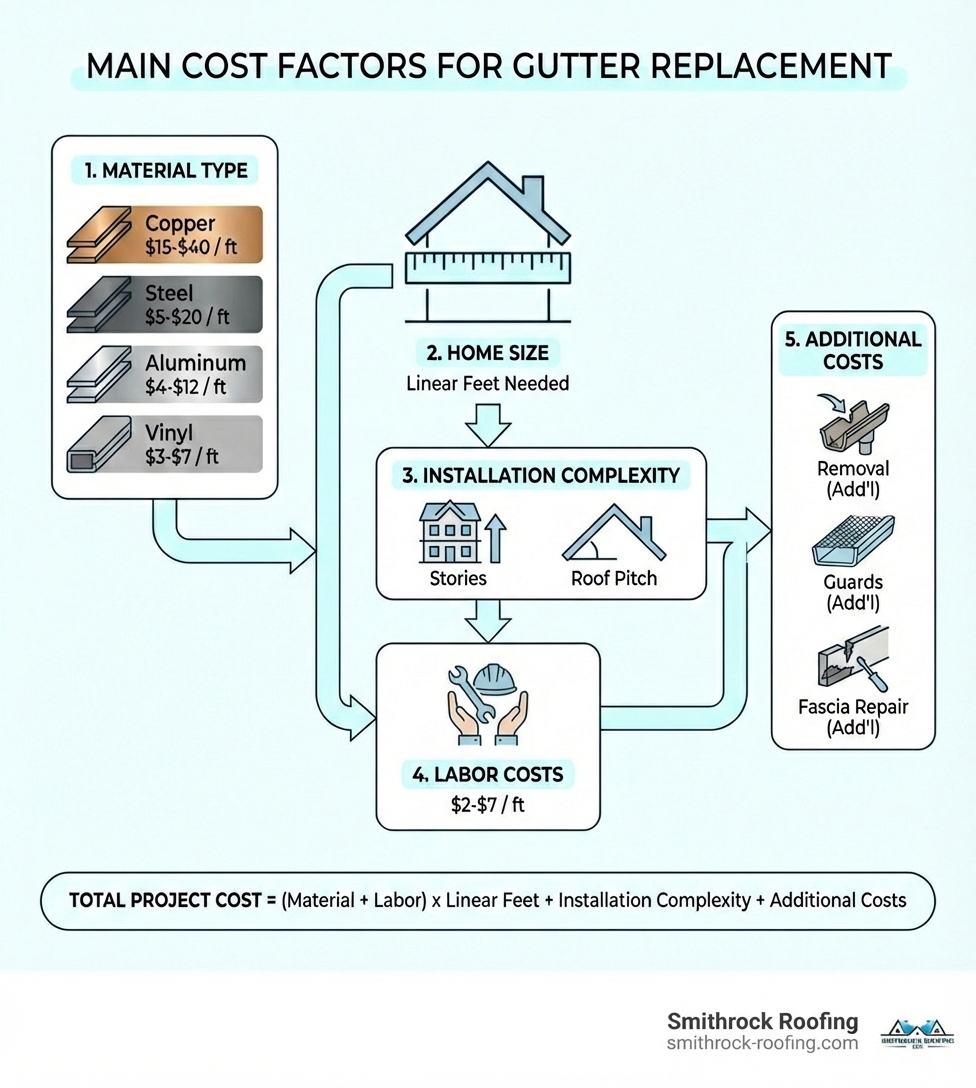
When considering a gutter replacement project, homeowners in Winston-Salem, King, Clemmons, and surrounding North Carolina communities often ask what factors influence the total cost. Most professional gutter companies calculate estimates primarily on a per-linear-foot basis for the gutters themselves, adjusted for material type, style, and your home’s specific design. This linear foot price is an all-inclusive figure that covers not just the gutter trough but also the necessary components and labor for a complete system.
Your quote will typically incorporate:
Replacing an existing system is a more involved process than installing on new construction. It involves the careful removal and disposal of the old gutters, a thorough inspection of the underlying fascia and soffit for water damage, and sometimes making necessary repairs before the new installation can begin. The typical professional process includes:
The material you choose profoundly influences both the initial investment and the long-term performance and maintenance requirements of your gutter system:
Vinyl Gutters: The most budget-conscious option, often sold in 10-foot sections at big-box stores, making it a popular choice for DIY projects. However, vinyl can become brittle and crack in cold climates and may warp or sag in intense sun and heat. Its sectional nature means numerous seams that must be sealed, creating potential points for future leaks.
Aluminum Gutters: The most popular choice in the U.S., balancing affordability, durability, and low maintenance. It’s lightweight, rust-resistant, and available in a wide array of factory-applied colors. Most professional installations use seamless aluminum gutters, formed on-site to eliminate seams and reduce leak points. While it can be dented by heavy impacts (like a falling branch or ladder), a well-installed system made from a thicker gauge (e.g., 0.032 inches vs. the standard 0.027) can provide decades of reliable service.
Galvanized Steel Gutters: Known for its strength and rigidity, steel is an excellent choice for regions with heavy snowfall or frequent ice. It is coated with a layer of zinc to resist rust. However, it is heavier than aluminum, requiring robust hangers and professional installation. If the zinc coating is scratched or wears away, the underlying steel can rust. A related option, Galvalume, is coated with an aluminum-zinc alloy for even greater corrosion resistance.
Copper Gutters: A premium material combining exceptional durability with a striking, high-end appearance. Copper will not rust and develops a beautiful blue-green patina over time, which acts as a protective layer. It is often chosen for historic restorations or luxury homes. Due to the material cost and specialized soldering techniques required for installation, copper is a significant investment but can last for a century or more.
Zinc Gutters: Similar in performance and cost to copper, zinc is a highly durable, corrosion-resistant material that also develops a protective patina. Scratches on zinc gutters can effectively “heal” themselves as the patina re-forms. It is a strong, low-maintenance, and long-lasting option that requires professional installation by specialists familiar with the material.
| Gutter Material | Relative Cost | Typical Lifespan | Pros | Cons |
|---|---|---|---|---|
| Vinyl | Low | 10-20 years | Most affordable, lightweight | Less durable, prone to cracking |
| Aluminum | Low-Medium | 20-30 years | Rust-resistant, color variety | Can dent, may bend |
| Galvanized Steel | Medium | 15-20 years | Strong, durable | Can rust, heavier |
| Copper | Very High | 50-100+ years | Extremely durable, distinctive | Higher investment required |
| Zinc | High | 30-80+ years | Very durable, self-healing | Limited availability |
Sectional Gutters: Assembled from pre-cut lengths (typically 10-20 feet) joined with connectors and sealants. Every joint is a potential weak point for debris to snag on and for leaks to develop over time as the sealant degrades.
Seamless Gutters: Custom-fabricated on-site from a continuous coil of metal (usually aluminum). The only seams are at corners and downspout outlets. This continuous design means far fewer opportunities for leaks, a cleaner and more professional appearance, and reduced maintenance.
While seamless gutters require specialized equipment and experienced installers, they offer superior long-term value through improved performance, enhanced durability, and reduced maintenance needs. Learn about our seamless gutter installation services.
Beyond the base cost of materials and the choice between sectional and seamless styles, several factors related to your home’s specific architecture and site conditions can dramatically influence your final quote.
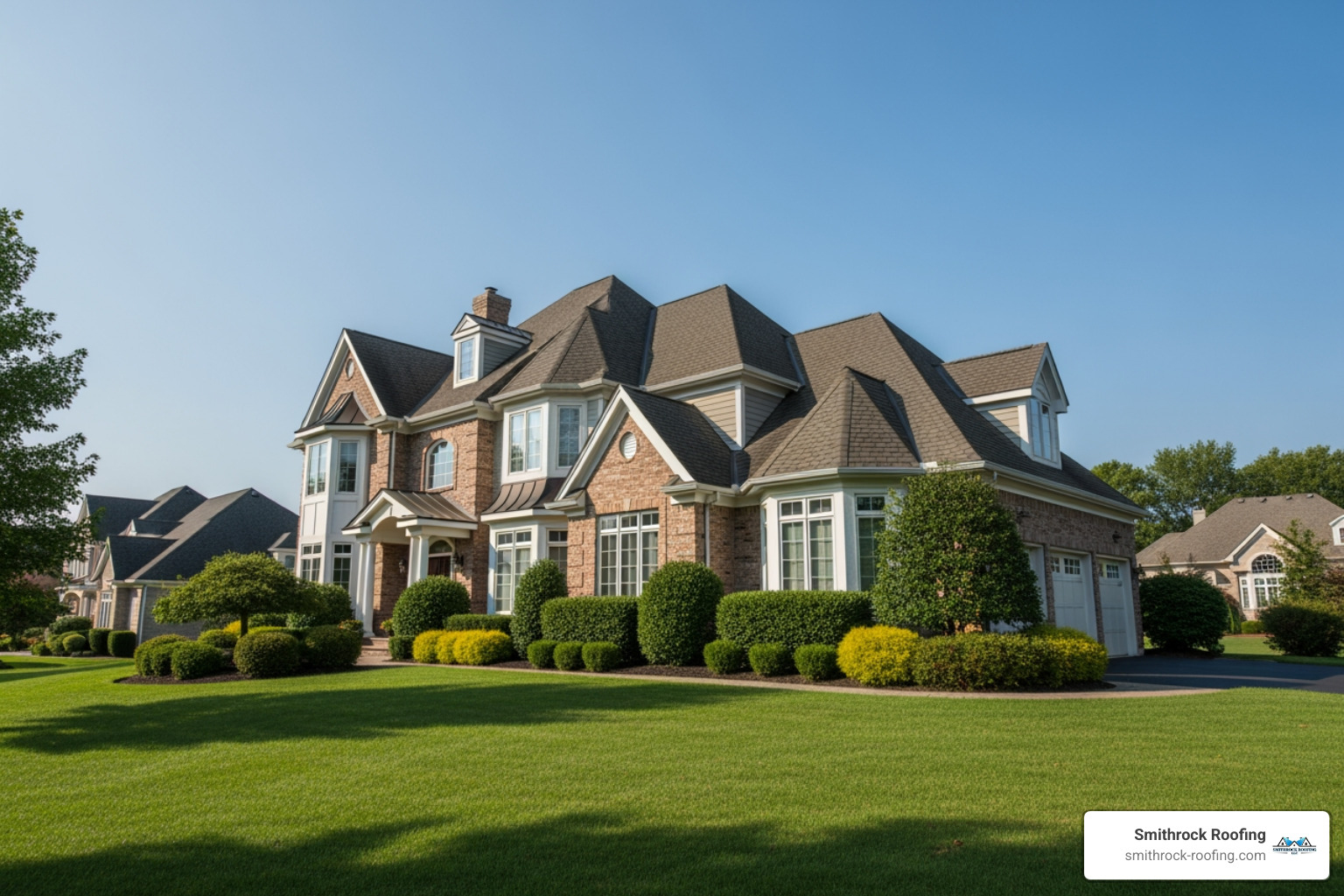
Home Size (Linear Feet): The primary cost driver is the total length of gutters needed, measured in linear feet. Installers calculate this by measuring the perimeter of your roof along all edges where gutters will be installed, not just the footprint of your house. Most single-family homes require between 100 and 200 linear feet of guttering.
Number of Stories: A two-story or three-story house presents a greater challenge and risk than a single-story ranch. Working at height requires taller ladders, scaffolding, or even mechanical lifts, which increases labor time. More crew members may be needed to work safely, and the contractor’s insurance costs are higher for multi-story work, all of which is reflected in the price.
Roof Complexity: A simple rectangular roof is straightforward. However, a complex roof with multiple gables, dormers, valleys, and inside or outside corners requires significantly more labor. Each corner needs a custom-cut miter, which must be precisely fitted and sealed. This intricate work slows down the installation process and increases the potential for material waste, adding to the overall cost.
Accessibility: The ease with which installers can access your roofline matters. If your home is surrounded by dense landscaping, mature trees, fences, decks, or sits on a steeply sloped lot, it complicates the job. Workers may need to take extra time to protect your property or use specialized equipment to work around these obstructions.
Fascia and Soffit Condition: Gutters are mounted to the fascia board. If years of water overflow from old, clogged gutters have caused the fascia to rot, it cannot securely hold the new system. Rotted fascia or soffit must be repaired or replaced before new gutter installation, adding material and labor costs to the project.
Local Rainfall and Gutter Sizing: Your geographic location and local weather patterns are crucial. Areas with intense rainstorms, like many parts of North Carolina, may require larger gutters to handle the volume of water. The standard residential gutter size is 5 inches (K-style), but 6-inch gutters are increasingly common. A 6-inch gutter can handle nearly 40% more water than a 5-inch one, making it ideal for homes with large or steep roof surfaces. Upgrading to larger gutters also necessitates larger downspouts (e.g., 3×4 inches instead of the standard 2×3 inches) to ensure the water can drain away quickly, adding to the material cost.
More about our exterior gutters and custom solutions.
Labor is a significant portion of the total cost and covers much more than just hanging the gutters. It includes site preparation, the careful removal and disposal of the existing system, precise measuring and marking, on-site fabrication, installation with correct pitch, sealing all joints, and final cleanup. Regional differences in the cost of living, local market demand, licensing requirements, and safety regulations all significantly impact labor rates. For broad wage insights, the U.S. Bureau of Labor Statistics provides data on construction trades. See Occupational Employment and Wage Statistics.
The decision between repairing existing gutters or full replacement requires considering long-term financial implications. While repairs cost less upfront for minor issues like small leaks or loose hangers, widespread deterioration makes replacement more cost-effective.
If gutters are over 20 years old with recurring problems, replacement is likely the better choice. Failing gutter systems can lead to foundation damage, basement flooding, siding rot, and landscape erosion—expenses far exceeding replacement costs.
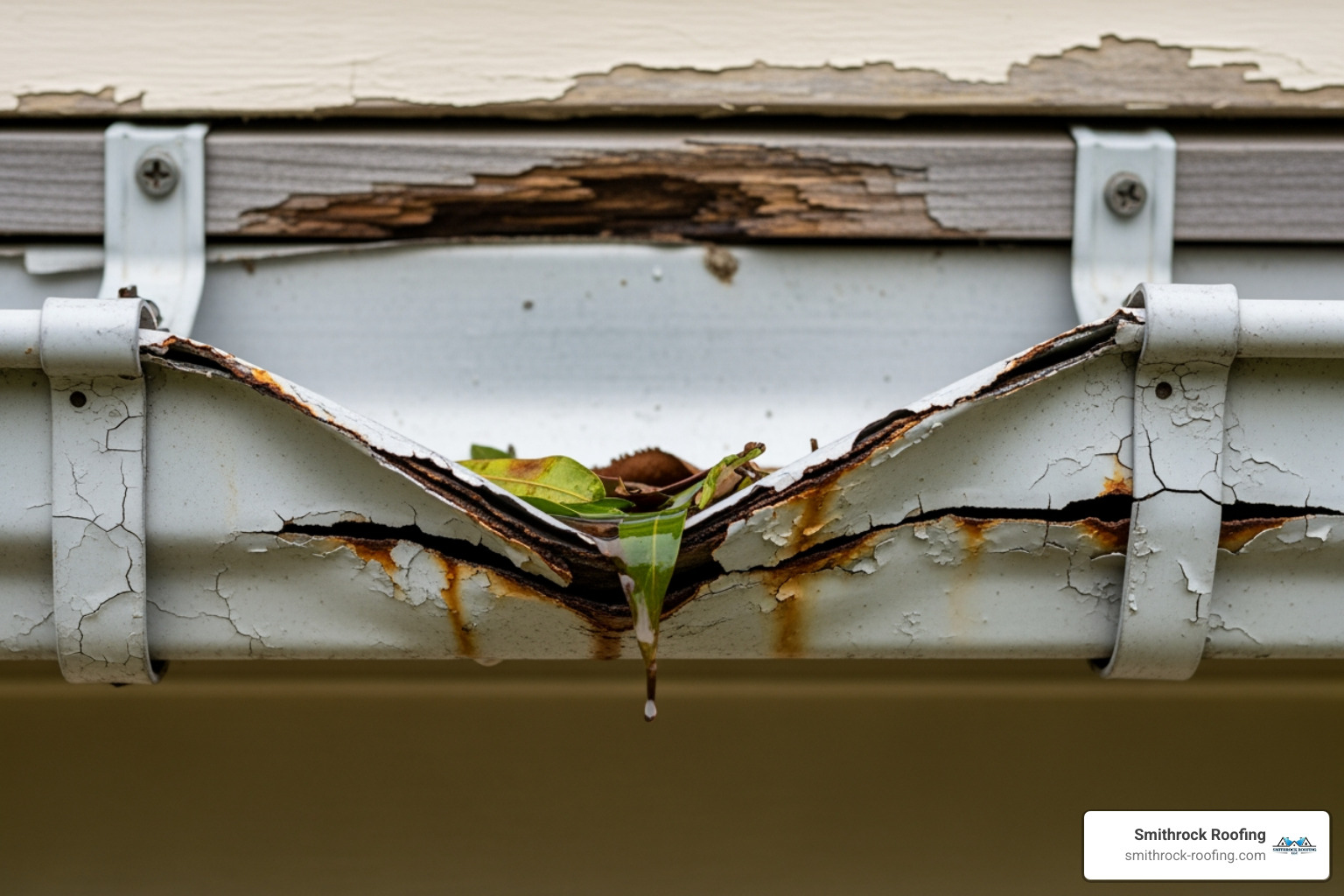
Five key signs indicate replacement is necessary:
Check out our gutter repair guide for more information.
While new gutters may not provide the same direct financial bump as kitchen renovations, they offer significant long-term value by preventing expensive water damage. Quality gutters protect your foundation, roof, siding, and landscaping from deterioration.
New gutters increase home value by:
Properly functioning gutters provide essential protection:
The EPA emphasizes proper moisture control in building maintenance. See Moisture Control Guidance for Building Design, Construction and Maintenance.
Replacing gutters is a significant investment that requires careful planning. One crucial decision is whether to tackle installation yourself or hire professionals.
DIY Gutter Installation Considerations:
Benefits of Professional Installation:
Why to hire a gutter installation contractor explains these benefits in detail.
Key considerations when selecting contractors:
Questions to ask your gutter installer can guide this process.
Gutter lifespan depends heavily on the material, local climate, and how well they are maintained. As a general guide:
Proper professional installation and regular cleaning are the most important factors in maximizing the lifespan of any gutter system.
While you might find some contractors willing to offer a discount during the slow winter months, it’s not always the ideal time for installation due to weather. The cheapest and often best time to schedule a gutter replacement is during the contractor’s shoulder seasons, typically late spring or early summer. Demand often slows after the initial spring rush, potentially leading to more competitive pricing and better scheduling availability. Prices tend to increase in late summer and fall as homeowners prepare for autumn leaves and winter weather.
In almost all cases, yes. We strongly recommend installing gutters around the entire perimeter of your home. Every section of your roof sheds a significant amount of water, and without a gutter to collect and divert it, that water will fall directly against your foundation, siding, and landscaping. The cost of repairing water damage almost always exceeds the cost of installing gutters. The only exceptions might be for specific architectural designs, like a desert modern home with large overhangs and graded landscapes designed to manage water flow naturally, or on a small, detached shed or garage where foundation protection is less critical.
The two most common gutter styles are K-style and half-round.
For sizing, the most common options are 5-inch and 6-inch widths.
Gutter guards, also known as leaf guards or gutter screens, are an excellent investment for many homeowners, but their value depends on your specific situation. If your home is surrounded by mature trees, especially pine trees that shed needles, gutter guards can save you significant time and money on frequent cleanings. They work by covering the gutter to allow water in while keeping leaves, twigs, and other debris out. This prevents the clogs that lead to water overflow, ice dams, and damage. While they add to the upfront cost of your gutter replacement project, they provide long-term value by protecting your investment and reducing maintenance. It’s important to note that no guard is 100% maintenance-free; they may still require occasional brushing off, but they eliminate the dangerous and dirty task of scooping muck from inside the gutters.
Understanding the factors that influence gutter replacement costs is the first step toward making an informed decision for your home. We’ve explored how material choice, gutter style, home size, roof complexity, and labor rates all play a significant role in your final investment. We’ve also highlighted the importance of budgeting for additional components like downspouts, gutter guards, and essential fascia repairs.
Replacing your gutters is more than just a home improvement project; it’s a vital investment in your home’s long-term health and value. Quality gutters prevent costly water damage to your foundation, siding, and landscaping, protecting your property from issues that would far exceed the cost of the new system. Choosing professional installation ensures safety, precision, and the peace of mind that comes with a reliable, warranted system designed to last.
At Smithrock Roofing, we pride ourselves on providing high-quality gutter solutions customized to the specific needs of homes in Winston-Salem, King, Clemmons, and throughout our North Carolina service areas. We’re here to help you steer the options, understand the costs, and choose the best gutter system to protect your most valuable asset.
Ready to secure your home against the elements? Explore our comprehensive gutter services and let us help you make a smart investment in your home’s future.

Smithrock Roofing © Copyright 2025 • All Rights Reserved • Privacy Policy • Maintained by Mongoose Digital Marketing