A damaged roof doesn’t always announce itself with a dramatic crash or a gushing leak. Often, the warning signs are subtle—a few missing granules here, a dark spot on your ceiling there—but ignoring them can turn a simple repair into a costly emergency that threatens your home’s structure, your family’s health, and your wallet. In the humid and often volatile climate of North Carolina, a small vulnerability in your roofing system can escalate into a full-scale disaster in a matter of weeks. Whether you are in Winston-Salem, Greensboro, or the surrounding Piedmont Triad, understanding the anatomy of roof failure is the first step in protecting your most significant investment.
Quick Answer: Common Signs of a Damaged Roof
Your roof is your home’s first line of defense against North Carolina’s unpredictable weather—from sudden hailstorms that caused over 3,700 major events nationwide in 2021, to the wind-driven rain that can turn a small crack into a cascade of problems. According to recent data, economic losses from severe storms surged 90% from 2022 to 2023, with the average hail damage claim reaching $9,000. In our local region, we see a unique mix of high humidity, intense summer heat, and occasional winter ice storms, all of which place immense stress on asphalt shingles and metal roofing alike.
The challenge? Most homeowners don’t realize their roof is compromised until water is dripping onto their hardwood floors or their energy bills mysteriously spike. By then, what could have been a straightforward shingle replacement has escalated into structural damage, mold remediation, or even a full roof replacement averaging $11,500. The “silent” nature of roof damage is what makes it so dangerous; water can travel along rafters and pool in areas far from the original entry point, making the source difficult to track without professional equipment.
Whether you’re concerned about high utility bills that might signal air leaks through damaged roofing, or you simply want to protect your investment before the next storm season hits, learning to spot the early warning signs is essential. The good news is that you don’t need to be a roofing expert or risk climbing a ladder to identify many of these red flags. By performing regular visual checks and understanding the physics of how water interacts with your home, you can catch issues while they are still in the “repairable” stage.
This guide will walk you through exactly what to look for—from ground-level inspections using just a pair of binoculars, to subtle interior clues hiding in your attic. You’ll learn how different types of storm damage appear on various roofing materials, when a repair is sufficient versus when replacement becomes necessary, and how to navigate insurance claims while avoiding the “storm chasers” who prey on homeowners after severe weather. We will also delve into the long-term consequences of neglect, including the impact on your home’s resale value and the health risks associated with trapped moisture.
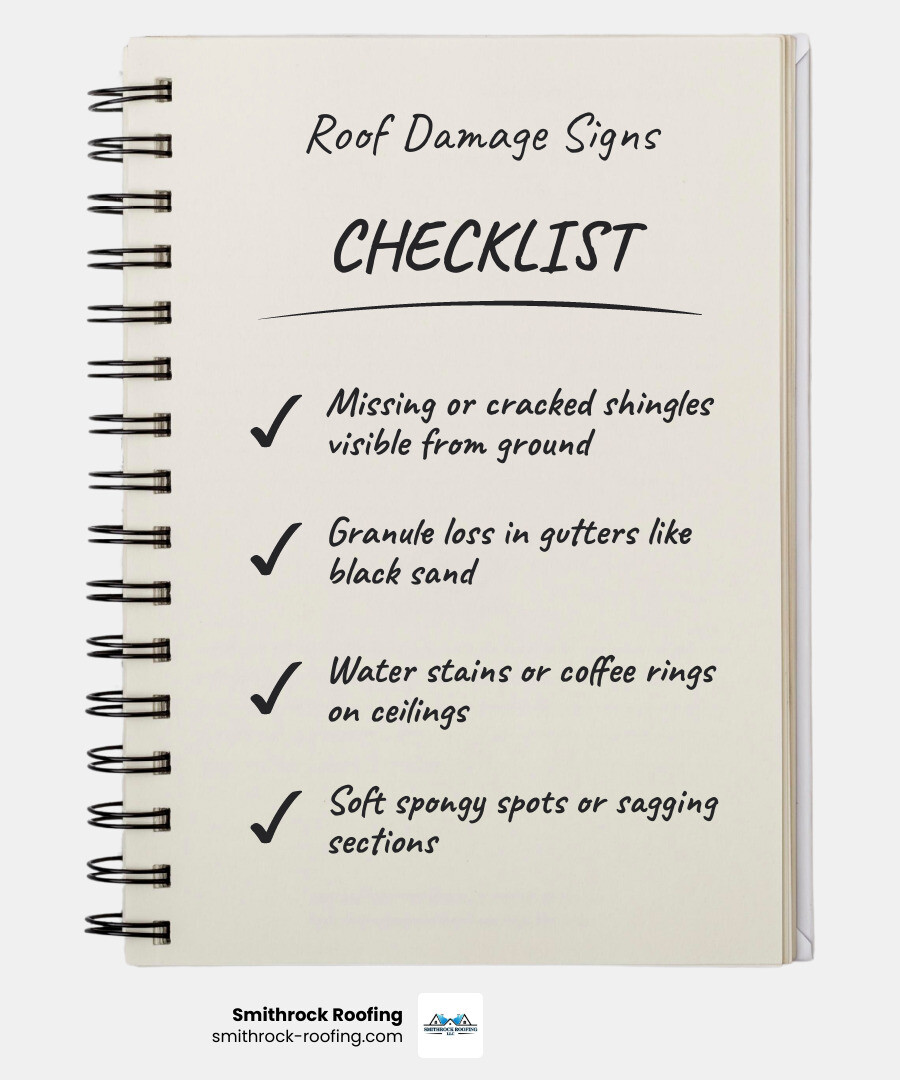
Damaged roof definitions:
When we suspect a damaged roof, our first instinct might be to grab a ladder and climb up for a closer look. However, we always advise homeowners in Winston-Salem and Greensboro to prioritize safety first. Roofs can be incredibly dangerous, especially after a storm when shingles may be loose or slippery. Furthermore, the pitch of many modern homes is too steep for an untrained individual to navigate safely without fall-protection gear. You can actually perform a very thorough initial inspection without ever leaving the ground, saving yourself from potential injury while still gathering the evidence needed for a professional consultation.
Safety protocols are paramount. If you must use a ladder, ensure it is on level ground, extends at least three feet past the roof edge, and that you have a spotter. Never attempt to walk on a roof that is wet, covered in debris, or shows signs of sagging. But for the most part, we recommend a “ground-up” approach. By combining a street-view check with a detailed attic crawl, you can often find enough evidence to determine if you need professional roof leak repair services. This systematic approach ensures that no detail is missed, from the outermost shingle to the innermost rafter.
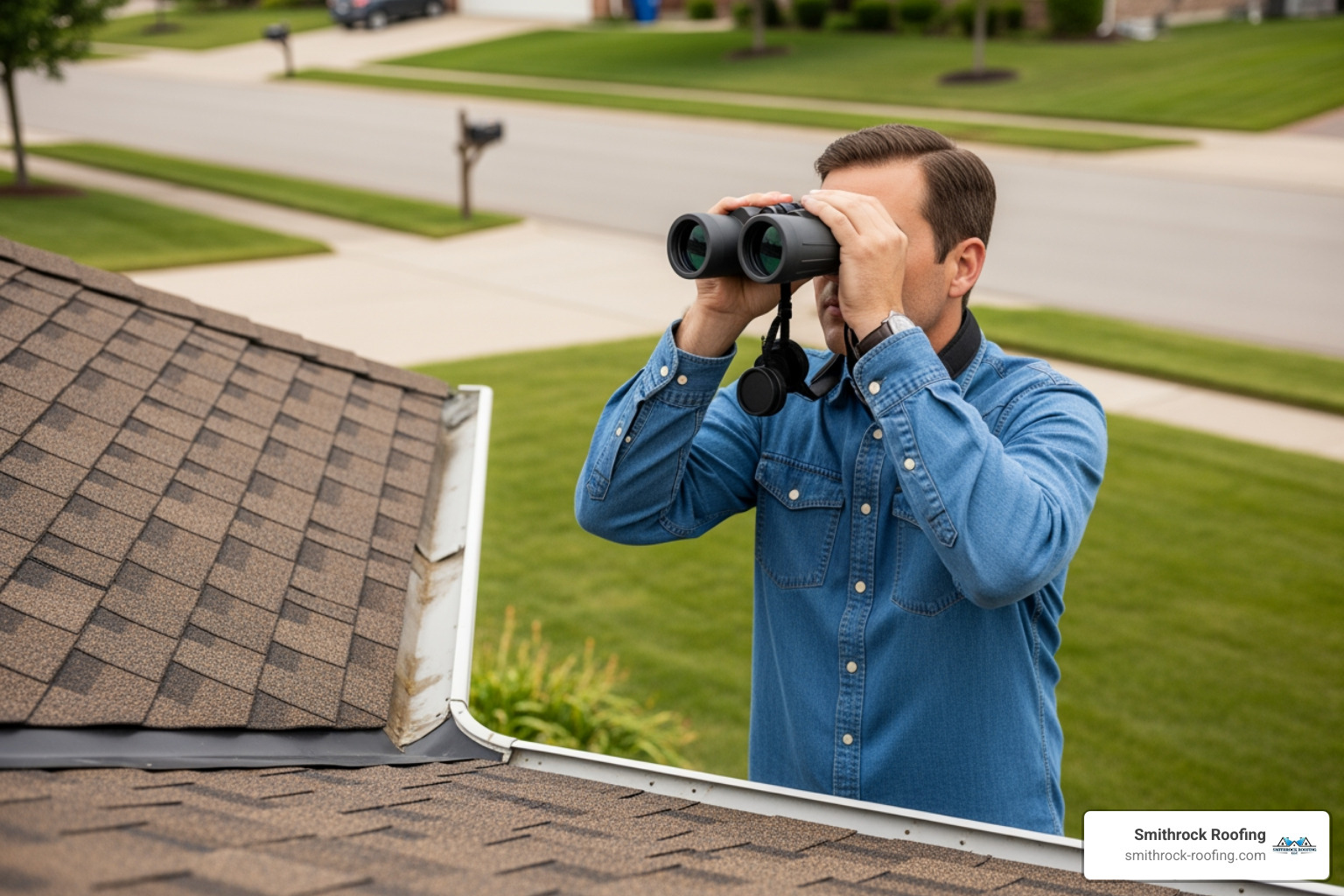
The best tool for a DIY roof inspection isn’t a ladder—it’s a pair of binoculars. From the safety of your lawn or the street, you can zoom in on specific areas that are prone to failure. We suggest walking slowly around the entire perimeter of your home, looking for the following indicators of a damaged roof:
According to 8 Signs of Storm Damage to a Roof, even subtle irregularities in how the shingles lay can indicate underlying structural shifts or moisture trapped in the decking. If you see a “shadow line” that looks uneven, it could mean the wood underneath is swelling from moisture.
If the exterior looks okay, don’t assume you’re in the clear. Sometimes the most telling signs of a damaged roof are found inside. We recommend checking your attic at least twice a year, especially after heavy North Carolina rains or the first snowmelt of the season. Bring a high-powered flashlight and look for these red flags:
For those living in our local service areas, we have compiled specific Roof Leaks in Winston-Salem: Prevention Tips to help you manage these interior risks before they become catastrophic. Remember, the attic is the “lungs” of your home; if it isn’t breathing correctly, the roof will fail prematurely.
In the Central Plains and even here in the Southeast, convective storms are a leading cause of residential property loss. These storms bring a “triple threat” of hail, high winds, and torrential rain. Identifying which one has affected your home is key to filing an accurate insurance claim and ensuring that the right repairs are performed. A damaged roof from hail requires a different approach than one damaged by wind, and understanding these nuances can save you from a denied claim.
Hail damage is notoriously difficult to spot from the ground because it doesn’t always “break” the roof. Instead, it causes functional damage that shortens the roof’s lifespan by compromising the protective layers. The impact of a hailstone, which can travel at speeds over 100 mph, creates a micro-fracture in the shingle’s fiberglass mat.
If you live in a hail-prone area, we often recommend upgrading to impact-resistant shingles. You can find a comprehensive list of impact-resistant shingles to see which products offer the best protection against future storms. Also, keep in mind that Wind Damage to Roof Shingles often accompanies hail, creating a “one-two punch” that can devastate an older roof. The combination of wind lifting the shingle and hail striking the exposed underside is a recipe for immediate failure.
Wind damage isn’t just about shingles blowing off into your yard. It’s often about the “lifting” effect. Gale-force winds (39–54 mph) can create a vacuum effect that lifts shingles just enough to break the sealant strip. Once that seal is broken, wind-driven rain can be pushed underneath, leading to hidden rot that may not be discovered for years.
If you notice your shingles looking “ruffled” or uneven, you likely need Wind Damage Repair to restore the integrity of the roofing system. Wind damage is often progressive; once the first few shingles are compromised, the wind can get a “grip” on the rest of the roof, leading to a cascading failure during the next storm event.
Sometimes a damaged roof doesn’t look damaged at all. Some of the most dangerous issues are the ones that develop slowly over time, hidden from plain sight. These “silent killers” of roofing systems can exist for years, slowly eroding the structural integrity of your home while you remain blissfully unaware. Understanding these subtle red flags is the difference between a $500 repair and a $50,000 structural overhaul.
Ignoring a small leak or a few missing shingles is a gamble that rarely pays off. The risks extend far beyond a simple drip into a bucket; they affect the very core of your home’s safety and value:
For homeowners in our region, we provide specialized Roof Leak Repair Winston-Salem services to catch these issues before they escalate into health or safety hazards. We use thermal imaging to find moisture that isn’t yet visible to the naked eye.
We often tell our clients to look for “silt” in their gutters. Shingle granules are essentially the sunscreen for your roof. They are made of crushed stone and ceramic coating, designed to protect the asphalt from the sun’s harsh UV rays. When these granules wash away, the asphalt becomes brittle, cracks, and eventually fails. If you can see the “shiny” fiberglass mat through the shingles, your roof is in the final stages of its life.
Another subtle sign is the “bouncy” or “spongy” feel. If you are cleaning your gutters and notice the roof feels soft under your feet, the decking underneath is likely rotting. This is often caused by Ponding and Vegetation on Roof, where leaves trap moisture against the shingles for weeks at a time. This trapped moisture creates a micro-climate that accelerates rot and encourages the growth of wood-destroying organisms.
Finally, keep an eye out for “nail pops.” This happens when the wood decking expands and contracts due to temperature swings, pushing nails up through the shingle. This creates a perfect “straw” for water to be sucked directly into your attic via capillary action. If you’re wondering whether your roof has reached its limit, check out GAF’s guide on How to Identify Roof Damage for more professional indicators. A single nail pop might seem minor, but it can allow gallons of water into your home over the course of a rainy season.
One of the most common questions we get is: “Do I really need a whole new roof, or can we just fix the bad spots?” The answer depends on the age of your roof, the extent of the damage, and the requirements of your insurance provider. A damaged roof is a complex puzzle, and the right solution requires balancing immediate costs with long-term protection. In many cases, a repair is a temporary bandage on a terminal problem, while in others, it is a perfectly viable way to get another five years out of your system.
In the roofing industry, we often use the “8 hits per square” rule for hail damage. A “square” is a 10×10 foot area (100 square feet). If a professional inspector finds more than eight significant hail hits in a single square, the structural integrity of the roof is usually considered compromised enough to warrant a full replacement. This is because the cumulative damage to the fiberglass mat makes the roof likely to fail across the entire slope, not just in the hit spots.
| Feature | Minor Repair | Full Replacement |
|---|---|---|
| Cost | Lower upfront cost ($300-$1,500) | Higher upfront investment ($8k-$20k) |
| Lifespan | Extends current roof by 1-5 years | New 20-50 year warranty |
| Aesthetics | Shingle colors may not match perfectly | Uniform, beautiful appearance |
| Home Value | Minimal impact | Significantly increases resale value |
| Energy Efficiency | No change | Improved insulation and ventilation |
| Insurance | Often paid out of pocket | Often covered by storm claims |
If you’re unsure which path to take, our guide on Roof Repair vs Replacement in Winston-Salem breaks down the decision-making process for local weather conditions. We consider factors like the “brittleness test”—if we lift a shingle to repair a leak and it cracks, the roof is too old to be repaired.
Navigating an insurance claim for a damaged roof can be stressful. Most homeowners insurance policies cover “sudden and accidental” damage from wind or hail, but they often exclude damage caused by neglect, age, or lack of maintenance. This is why documentation is so critical.
According to Angie’s List Hail damage repair costs, the average repair can vary wildly, which is why having a professional estimate before meeting with your insurance adjuster is crucial. Your contractor should be present during the adjuster’s inspection to ensure all damage is noted.
If a storm just rolled through East Bend or Mt. Airy, here is your checklist to manage a damaged roof:
Yes, most standard homeowners policies cover damage from “perils” like wind, hail, and fallen trees. However, they do not cover “wear and tear.” If your roof is 30 years old and leaking because the shingles are brittle and the sealant has failed due to age, insurance likely won’t pay. It is important to have a professional distinguish between storm damage and maintenance issues before filing a claim, as a denied claim still stays on your insurance record. For a deeper dive, read our guide on Navigating Residential Roof Storm Damage.
Look at your surroundings! If your mailbox is dented, your car has “pings,” or your window screens are torn, your roof almost certainly took a hit too. Check your outdoor AC unit; the soft aluminum fins will show clear indentations from hail. Also, check your flower beds—heavy granule loss often looks like piles of black sand at the base of your downspouts. If you see “splatter marks” on your fence or deck (areas where the oxidation has been knocked off by hail), it’s a sign of a high-impact event. Our Hail Damage Home Repair resource has more tips for ground-level detection.
If you find yourself calling for repairs every time it rains, or if more than 25% of the roof is damaged, replacement is usually the more cost-effective choice. Age is also a major factor; asphalt shingles generally last 20–25 years in the North Carolina climate. If your shingles are shedding granules excessively or if they break when bent slightly, the chemical oils have evaporated, and the roof can no longer protect your home. You can learn more about the variables in our breakdown of Roof Repair Cost factors.
Absolutely. A damaged roof that allows moisture into the attic or wall cavities can lead to mold growth. Mold spores are easily pulled into the living areas of the home through the “stack effect,” where warm air rises and escapes through the top of the house, pulling air from the attic and crawlspace with it. This can lead to unexplained allergies, asthma flare-ups, and other respiratory issues. Fixing the roof is the first step in any mold remediation process.
For an average-sized residential home, a professional crew can usually complete a full replacement in 1 to 2 days. However, the process involves more than just laying shingles; it includes removing the old materials, inspecting the decking for rot, installing new underlayment and flashing, and a thorough cleanup. Weather conditions in the Piedmont Triad can sometimes cause delays, but a local contractor will monitor the forecast to ensure your home is never left exposed to the elements overnight.
A damaged roof is a problem that only gets more expensive with time. Whether you’re in Winston-Salem, High Point, or anywhere in the surrounding North Carolina areas, staying vigilant after a storm can save you thousands of dollars and protect your home’s structural integrity. Your roof is more than just a collection of shingles; it is a complex system of ventilation, insulation, and moisture barriers that must work in harmony to keep your family safe.
At Smithrock Roofing, we specialize in more than just shingles. We offer a holistic approach to home protection, including high-quality window replacement services, gutters, siding, and chimney caps. We understand that a damaged roof often goes hand-in-hand with other exterior issues, and we are equipped to handle the entire restoration process. We are proud to offer industry-leading products like Norandex eXtreme 3000S windows, which provide superior energy efficiency and storm resistance, perfectly complementing a new, high-performance roofing system.
We also emphasize the benefits of seasonal replacements. Scheduling your roof or window work during the off-season can often lead to faster project timelines and ensures your home is ready before the peak storm seasons of spring and late summer arrive. Don’t wait for the next heavy rain to find out if your roof is failing. A proactive inspection today can provide peace of mind for years to come, ensuring that your home remains the safe, dry haven it was meant to be.
Is your roof crying for help? Don’t let a small leak turn into a major disaster. Let our family take care of yours with the honesty, integrity, and craftsmanship you deserve. Contact us for a professional roof inspection today, and let’s ensure your home remains protected against whatever the North Carolina sky throws your way.
Smithrock Roofing © Copyright 2026 • All Rights Reserved • Privacy Policy • Maintained by Mongoose Digital Marketing