Vinyl siding options styles have become the go-to choice for American homeowners looking to transform their exterior without breaking the bank. Since its introduction in the late 1950s as a replacement for aluminum siding, vinyl has undergone a technological revolution. Today, it is a sophisticated exterior cladding system that accounts for over 30% of the new home market. With over 290 different products available and styles ranging from traditional horizontal lap to rustic cedar shake, choosing the right vinyl siding can dramatically boost your home’s curb appeal while slashing your energy bills.
Quick Answer: Most Popular Vinyl Siding Styles
Your home’s exterior is the first thing visitors notice, and if it looks tired or outdated, vinyl siding offers a practical solution. Unlike wood that rots, warps, and requires painting every five years, or fiber cement that can be heavy and prone to moisture absorption if not sealed correctly, vinyl delivers the authentic look of natural materials while resisting moisture, insects, and harsh weather. The average lifespan sits between 25 and 40 years with minimal maintenance—just occasional washing with a garden hose.
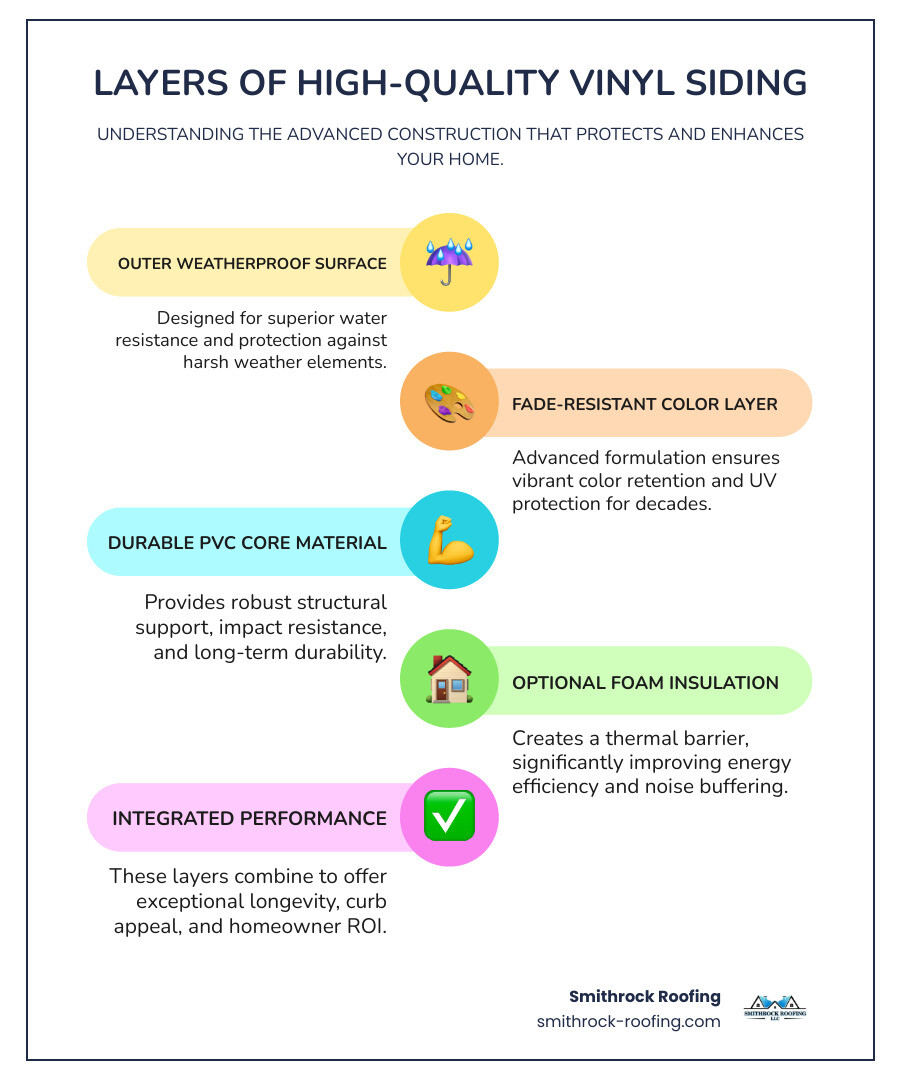
What makes vinyl particularly appealing right now is the technology behind it. Modern vinyl siding can replicate wood grain textures so realistically that most people can’t tell the difference from ten feet away. Manufacturers now use advanced polymers and acrylic formulations that prevent the “plastic” look of the past. Better yet, manufacturers like CertainTeed and Norandex now offer the industry’s largest color palette with fade-resistant options that stay vibrant through decades of sun exposure. This is achieved through the infusion of titanium dioxide and other UV-inhibitors directly into the PVC material, ensuring the color isn’t just on the surface, but runs all the way through the panel.
The investment makes sense from a financial perspective as well. According to the “Cost vs. Value” report, siding replacement consistently ranks as one of the top home improvement projects for return on investment (ROI). Whether you’re planning to sell soon or settling in for the long haul, the right siding choice protects your home from the elements while cutting heating and cooling costs through improved insulation and reduced air infiltration.
Vinyl siding options styles terms at a glance:
When we talk to homeowners in Winston-Salem, Greensboro, and High Point, the conversation almost always turns to durability. In North Carolina, our homes have to withstand everything from humid summer afternoons and torrential downpours to the occasional winter ice storm. That is where vinyl truly shines. It is the most popular house siding option in the United States for a reason: it balances cost, beauty, and brawn.
One of the biggest perks we see is the “set it and forget it” nature of the material. Unlike wood, which can swell, rot, or become a buffet for termites and carpenter bees, vinyl is essentially impervious to these biological threats. It is also a champion of fade resistance. Modern manufacturing processes, such as co-extrusion, fuse two layers of material: a weather-resistant outer layer (capstock) and a high-strength inner layer (substrate). This ensures that those vibrant blues, deep grays, or forest greens stay that way for decades without the need for repainting.
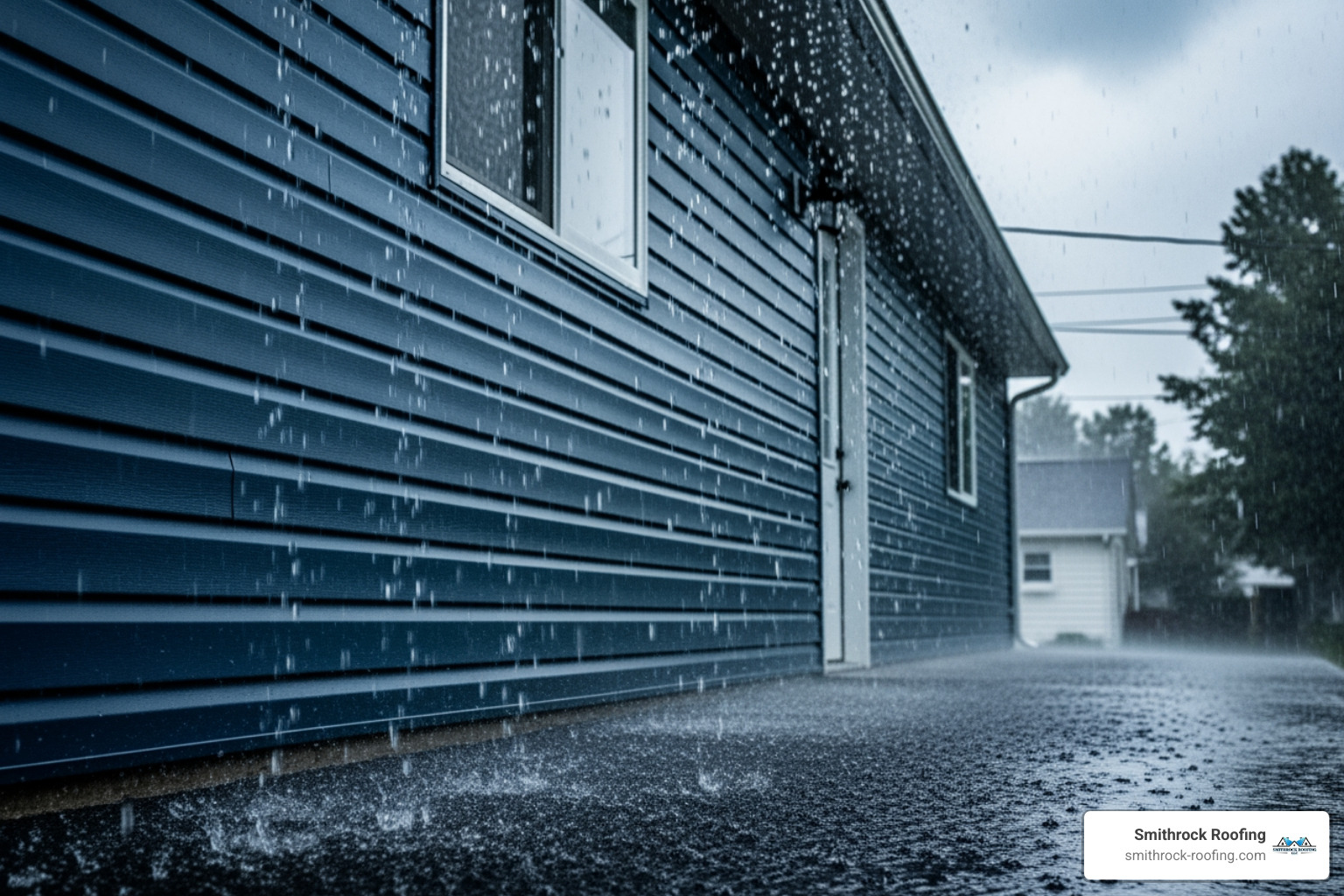
Beyond aesthetics, vinyl acts as a protective shield for your home’s structural integrity. It is highly water-resistant, shedding rain and preventing moisture from seeping into your home’s structural sheathing, which can lead to mold and wood rot. For those living near busy roads in Kernersville or Clemmons, vinyl also offers surprising noise buffering benefits. When installed with a high-quality underlayment or as an insulated product, it can reduce exterior noise by up to 45%, creating a quieter, more peaceful indoor environment. If you are curious about how these benefits stack up against other materials, check out this Siding Buying Guide or explore our specific Vinyl Siding Options.
If you are looking to take your home’s performance to the next level, we often recommend looking at insulated vinyl siding. While standard vinyl is a great budget-friendly choice, insulated versions feature a rigid foam-core backing (usually expanded polystyrene or EPS) that is permanently bonded to the exterior panel.
Think of it as wrapping your home in a high-tech thermal blanket. This foam backing provides a “thermal break” that reduces heat transmission through the wall studs—a process called thermal bridging. In a standard home, heat escapes through the wooden studs even if there is insulation between them. Insulated siding covers those studs, significantly increasing the R-value of your exterior walls. This keeps your AC from working overtime during those sweltering North Carolina Julys and keeps your furnace from burning through cash in January.
Furthermore, the foam backing adds incredible impact resistance. Standard vinyl can sometimes feel “hollow” or flexible. The foam core fills the gap between the siding and the wall, creating a solid, rigid surface. If a stray hailstone, a poorly aimed baseball, or a rock thrown by a lawnmower hits your siding, the foam acts as a shock absorber, preventing the vinyl from denting, cracking, or rattling. It also creates a more effective moisture barrier and helps prevent mold growth by keeping the wall cavity warmer and drier, which prevents condensation. You can learn more about how this integrates with your overall home envelope in our guide on Vinyl Siding and Roofing.
We are often asked, “How long will this really last?” On average, you can expect a 25 to 40-year lifespan for high-quality vinyl siding. Some premium products even come with limited lifetime warranties. However, reaching that 40-year mark requires just a little bit of love and attention.
Maintenance is refreshingly simple compared to other materials:
If you do run into trouble, such as a panel melted by a nearby grill or a crack from a fallen branch, don’t worry. Vinyl is modular, meaning it is relatively easy to patch or replace in sections without having to redo the entire wall. For more details on keeping your exterior in top shape, see our tips on Siding Repair.
Choosing your vinyl siding options styles is the fun part! This is where you get to play architect and define the personality of your home. Whether you want a stately colonial look, a rugged mountain retreat vibe, or a sleek modern farmhouse aesthetic, there is a profile designed specifically for that vision.
When selecting, it helps to think about the “profile”—this refers to the shape and width of the panels. From the width of the “lap” to the texture of the grain, every detail contributes to the final look. You can find a comprehensive overview of these choices on our main Siding page.
The “Old Reliable” of the siding world, traditional horizontal lap (also known as clapboard) is the most common style you’ll see in neighborhoods from Winston-Salem to Greensboro. It features long, horizontal boards that overlap each other to shed water effectively.
This style is a chameleon. It looks just as home on a sprawling ranch as it does on a formal Colonial. The overlapping panels create subtle shadow lines that give the house a clean, structured appearance. You can choose different “reveals” (the width of the board showing), with 4-inch and 5-inch being the standard favorites. Some homeowners opt for a “Triple 3” profile, which features three narrow 3-inch laps on a single panel, providing a more intricate, historic look. It mimics the look of freshly painted wood perfectly, without you ever having to pick up a paintbrush.
If you like the look of horizontal siding but want a bit more “pop,” Dutch lap is a fantastic choice. The key difference is a decorative groove or beveled edge at the top of each board. This creates a deeper shadow line and a more pronounced “hand-carved” look that was popular in the Mid-Atlantic colonies during the 18th century.
Dutch lap offers a historic charm that feels a bit more upscale than standard lap. It adds dimension and texture to large, flat walls, making the home look more substantial and architecturally interesting. It is a great way to give a modern home a touch of traditional character without going overboard. Because of the deeper shadows, Dutch lap is particularly effective at hiding minor imperfections in the wall’s flatness.
Sometimes called “barn siding,” Board and Batten has exploded in popularity recently thanks to the modern farmhouse trend popularized by home renovation shows. This style uses wide vertical boards (the boards) with narrow strips (the battens) covering the seams.
We love using Board and Batten on gables or entryways to create a visual accent. Because the lines run vertically, it can actually make a one-story home look taller and more grand. It is a bold choice that pairs beautifully with stone accents or traditional horizontal siding on the lower levels. It brings a rustic yet sophisticated edge to any NC home. Modern vinyl Board and Batten is engineered to be extra rigid to prevent the panels from bowing over long vertical spans.
Do you love the look of a coastal cottage or a rustic mountain cabin? Vinyl cedar shakes and shingles provide that warm, textured appearance without the nightmare of wood maintenance. Real cedar shakes rot, warp, and turn gray over time; vinyl versions stay beautiful forever.
You can choose from several varieties:
If you are considering these for your home, our Shingle Siding Repair Complete Guide can help you understand the long-term care for these more intricate profiles. These panels are typically thicker than standard lap siding, providing superior durability and wind resistance.
For homeowners who want the look of a log cabin without the constant staining, caulking, and pest issues associated with real logs, log vinyl siding is a game-changer. These panels are molded to mimic the rounded contour of a log, complete with realistic wood grain and knots. When paired with foam backing, they provide excellent insulation and the rugged aesthetic of a mountain retreat. It is an excellent choice for vacation homes or properties in wooded areas like Pilot Mountain.
The “standard” look is just the beginning. Today’s vinyl siding options styles allow for deep customization:
To truly appreciate why vinyl is the king of the market, it helps to see how it stacks up against the competition. While every material has its place, vinyl often wins on the balance of cost, convenience, and long-term performance.
| Feature | Vinyl Siding | Natural Wood | Fiber Cement (Hardie) | Aluminum Siding |
|---|---|---|---|---|
| Durability | High (25-40 years) | Moderate (Needs care) | Very High (50+ years) | Moderate (Dents easily) |
| Maintenance | Low (Soap & Water) | High (Paint/Stain) | Moderate (Repainting) | Low (Fades over time) |
| Pest Resistance | Excellent | Poor (Termites/Birds) | Excellent | Excellent |
| Upfront Cost | Low to Moderate | High | Moderate to High | Moderate |
| Installation | Fast & Easy | Labor Intensive | Heavy & Specialized | Moderate |
For some, nothing beats the “authenticity” of real wood. However, that authenticity comes with a heavy price tag in the form of weekend chores. Wood is susceptible to rot, moisture damage, and woodpeckers. In our humid North Carolina climate, wood siding requires staining or painting every 3 to 5 years to stay protected. If the paint peels, the wood underneath is exposed to the elements and can rot within a single season. Vinyl gives you that same look—even the grain—with zero painting required. Furthermore, vinyl is not a food source for termites, which are a significant concern in the Triad area.
Fiber cement, like Hardie Board, is incredibly durable and fire-resistant. It is a fantastic product made from a mix of sand, cement, and cellulose fibers. However, it is also very heavy and requires specialized tools and more labor for installation, which drives up the cost. It also needs to be repainted every 10 to 15 years as the factory finish eventually wears down. Vinyl is much lighter, making it easier (and often cheaper) to install, and the color is baked in, so it never peels or flakes. For a deeper dive into this specific matchup, check out our comparison of Vinyl vs Hardie Board Siding.
Aluminum was the king of the 1960s, but it has largely been supplanted by vinyl. While aluminum is fireproof and holds paint well, it is very prone to denting and scratching. A single hailstone or a stray frisbee can leave a permanent mark. Additionally, the paint on aluminum can “chalk” over time, leaving a white residue that runs down the side of the house. Vinyl is resilient; it bounces back from impacts and maintains its color throughout the entire thickness of the panel.
Many people are surprised to learn that vinyl siding is an environmentally friendly choice. Because it lasts so long and requires no paints, stains, or solvents for maintenance, its lifetime environmental footprint is lower than many other materials. Most vinyl siding is also recyclable, and many manufacturers use recycled content in the substrate layer of the panels. Its lightweight nature also means less fuel is required for transportation compared to heavy stone or fiber cement products.
Before you pull the trigger on a specific style, there are a few practical things we recommend considering. Siding is a long-term investment, and you want to make sure it fits your home’s unique needs, your budget, and your local regulations.
For a step-by-step walkthrough of the entire process, our Siding Installation Complete Guide is an invaluable resource.
We cannot stress this enough: The best siding in the world will fail if it is installed poorly. Vinyl is a unique material because it is designed to “float” on your walls. Because it is made of PVC, it expands and contracts significantly as the temperature changes. If a contractor nails it too tightly to the house, the siding will buckle, warp, and “oil-can” when the summer sun hits it.
A professional installation includes several critical steps:
When looking for a team, we recommend checking the PEPA website for certified installers or reading our guide on finding the Best Siding Contractors in the Triad area. A certified installer has undergone training to ensure they understand the physics of vinyl expansion and the latest waterproofing techniques.
In our experience around North Carolina, you can expect 25 to 40 years. The main factors affecting this are the quality (thickness) of the vinyl—measured in mils, with .042″ to .046″ being high quality—and whether it was installed with room to expand and contract. Thicker panels are more rigid and resist sagging over time.
Yes, you can! However, you must use a “vinyl-safe” paint. Standard dark paints can absorb too much heat, causing the vinyl underneath to warp or melt because it wasn’t designed for those temperatures. Generally, we recommend choosing a color you’ll love for a long time to avoid the need for painting, as the low-maintenance aspect is one of vinyl’s biggest selling points.
Insulated vinyl siding continues to be the gold standard for durability and energy efficiency. For 2025, we are seeing a huge trend toward “darker, bolder colors” like charcoal, navy, and deep forest green that use advanced UV-protection technology to prevent fading. We are also seeing more “mixed-texture” exteriors that combine shakes with vertical panels for a custom designer look.
Vinyl siding is made from PVC, which is inherently flame-retardant. It has a high ignition temperature (about 730°F) and will not support combustion on its own once the flame source is removed. However, like most exterior materials, it will melt if exposed to extreme heat, such as a nearby structure fire or a grill.
Absolutely. According to Remodeling Magazine’s annual report, homeowners typically recoup 75-80% of the cost of a siding replacement in increased home value. When you factor in the energy savings from insulated options and the lack of maintenance costs, it is one of the smartest investments you can make.
At Smithrock Roofing, we know that your home is your most significant investment. Choosing between the many vinyl siding options styles can feel overwhelming, but it is also an incredible opportunity to redefine your home’s character and protect its future. Whether you are in Winston-Salem, Pilot Mountain, or Greensboro, our goal is to provide the expert consultation and quality craftsmanship you deserve.
We specialize in more than just siding—from roofing and gutters to our high-performance Norandex eXtreme 3000S windows and chimney caps, we offer a comprehensive approach to home improvement. We understand the local climate and the specific challenges North Carolina homes face. There are often seasonal benefits to scheduling your replacement, such as avoiding the peak summer heat or preparing for the winter chill, so don’t wait until your old siding is falling off to start the conversation.
Ready to give your home the facelift it deserves? Our team is here to walk you through every sample, color, and profile to ensure you are 100% confident in your choice. Explore our Siding services today and let us help you find the perfect style for your North Carolina home. Contact us for a free estimate and let’s start building your home’s new look together.
Smithrock Roofing © Copyright 2026 • All Rights Reserved • Privacy Policy • Maintained by Mongoose Digital Marketing