Choosing a metal roof is one of the more significant decisions a homeowner can make. Done right, it’s a long-term investment that protects your home for decades and can meaningfully improve energy efficiency and curb appeal. Done wrong, or done with a contractor who cuts corners on materials, fastening systems, or underlayment, and that impressive warranty becomes a lot harder to collect on than the brochure suggested.
Here in the NC Triad, homeowners in Winston-Salem, Greensboro, High Point, Kernersville, Clemmons, Rural Hall, King, and the surrounding communities are dealing with a real mix of weather conditions: humid summers that push attic temperatures to extremes, freeze-thaw cycles in winter, and storm seasons that can include serious hail. A metal roof that performs well here has to be specified and installed with all of that in mind, not just selected from a catalog and dropped on your deck.
At Smithrock Roofing, we’ve been serving this region for years with 60+ combined years of experience across our team. We’ve seen what separates a metal roof that genuinely lasts from one that starts causing problems well before its warranty period ends. This guide walks you through the technical realities that most companies don’t bother to explain, because we think homeowners who understand what they’re buying make better decisions, and better decisions lead to better outcomes for everyone.
Before getting into installation specifics, it helps to understand what metal roofing actually is, and what it isn’t.
Metal roofing is not one product. It’s a category that includes several distinct panel profiles, gauges, coating systems, and substrate materials, each with different performance characteristics. When a contractor says “we install metal roofs,” that statement covers an enormous range of quality levels and product types. The specifics matter far more than the category label.
Standing Seam Metal Roofing
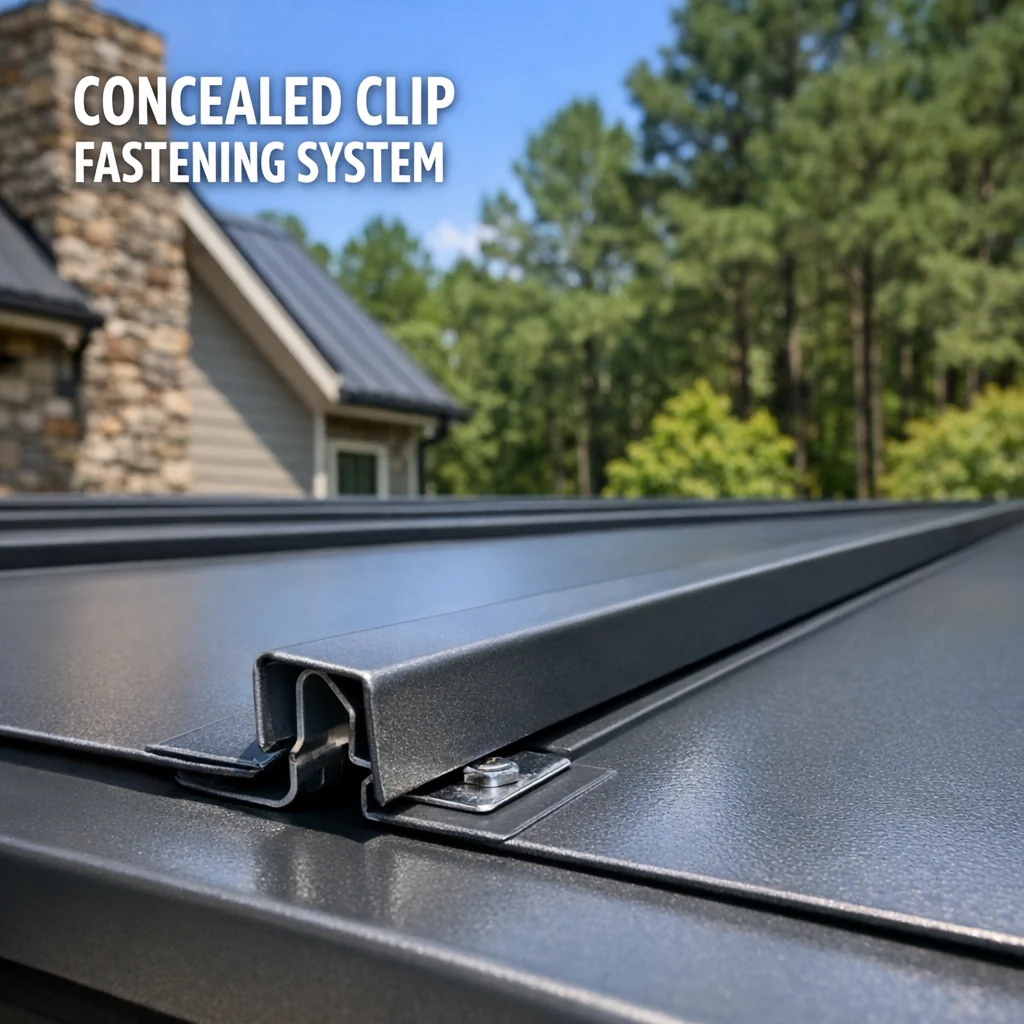
Standing seam panels run vertically from ridge to eave and lock together at raised seams. The fastening system is concealed beneath the panels, which means there are no exposed screws on the face of the roof. This is important for two reasons: it eliminates the primary water entry point created by exposed fasteners, and it allows the panels to move freely with thermal expansion and contraction. Standing seam is widely considered the most performance-oriented metal roofing system for residential applications.
Exposed Fastener Metal Panels (AG Panels, R-Panels)
These are the corrugated or ribbed panels commonly seen on agricultural buildings and increasingly on residential structures. They install faster and are less expensive to produce, but the exposed screws that hold them in place are a maintenance point over time. The rubber washers beneath those screws compress and degrade, and if they’re over-torqued during installation, the stress fractures around the fastener holes can create entry points for water. These systems work well when installed correctly, but they require more periodic inspection than concealed-fastener systems.
Metal Shingles, Shake, and Slate Profiles
These are metal panels formed to mimic the appearance of traditional asphalt shingles, wood shake, or slate. They offer the aesthetic of those materials with metal’s durability advantages. Installation method varies by manufacturer, but most use an interlocking system with hidden fasteners.
Need a hand with this in Winston-Salem, Greensboro and the NC Triad? Call (336) 971-0464 or request a free estimate. Honest answers, no pressure.
This is where the real difference between a knowledgeable metal roof installation company and a generalist contractor shows up. The following factors determine whether your metal roof performs the way the marketing materials promise.
Steel gauge is one of the most commonly misunderstood specifications in the roofing industry, and some contractors take advantage of that confusion.
Gauge numbers work in reverse. A lower number means thicker steel. This is counterintuitive, but it’s critical to understand when comparing quotes.
| Gauge | Approximate Thickness | Typical Application | Hail Resistance |
|---|---|---|---|
| 22-gauge | 0.030 inches (~0.76mm) | Premium residential, high-wind zones | Typically qualifies for FM 4473 Class 4 |
| 24-gauge | 0.024 inches (~0.61mm) | Standard residential standing seam | Good impact resistance |
| 26-gauge | 0.018 inches (~0.46mm) | Residential and light commercial | Moderate impact resistance |
| 29-gauge | 0.014 inches (~0.36mm) | Budget residential, light-duty | Lower hail and dent resistance |
The difference in real-world performance between 22-gauge and 29-gauge steel is not subtle. When a hailstorm moves through our area, a 22-gauge panel shrugs off stones that will visibly dent a 29-gauge panel. More importantly, 22-gauge steel typically achieves an FM 4473 Class 4 hail impact rating, which is the highest available and can qualify some homeowners for insurance discounts. Thinner gauges often do not reach that rating. If you’ve recently experienced storm damage, our article on hail damage roof repair covers what to look for after a significant hail event.
When you’re reviewing quotes from metal roof installation companies, the gauge should be specified in writing. If a quote says “metal roofing” without specifying gauge, that’s worth asking about directly.
Gauge alone doesn’t determine how long a metal panel lasts. The coating system applied to the steel matters just as much, particularly for corrosion resistance.
Galvanization refers to the zinc coating applied to steel to protect it from rust. The two most common grades are:
G90 galvanization offers meaningfully better corrosion resistance, particularly in humid climates. The NC Triad’s warm, humid summers create conditions where this difference shows up over time. G90 is the appropriate specification for residential roofing in this region.
Paint and Finish Systems add another layer of protection and affect both appearance and long-term color stability. The two most common paint systems are:
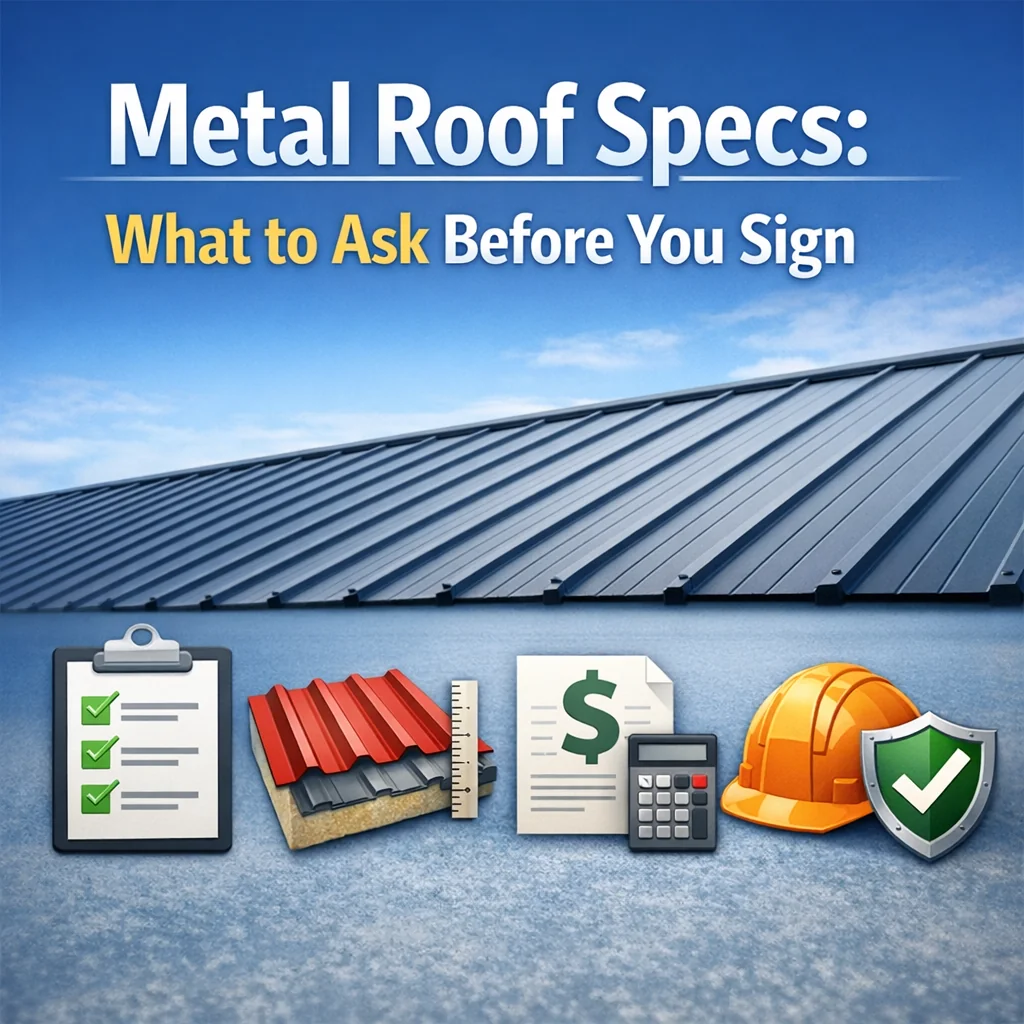
If a contractor describes their panels as having a “premium paint system” without naming the specific product, ask whether it’s Kynar 500 / PVDF or polyester. That answer tells you a great deal about the actual quality level of what’s being proposed.
If you asked ten homeowners what goes under a metal roof, most would guess either nothing or “some kind of foam.” The reality is more technical than that, and more consequential.
Underlayment is the layer installed directly on the roof deck, beneath the metal panels. It serves several functions: it’s a secondary water barrier, it manages condensation, it reduces noise from rain, and in some systems it acts as a thermal break. What most companies don’t mention is that the wrong underlayment can void your manufacturer warranty.
Standard asphalt-saturated felt (the traditional “tar paper” in 15-lb or 30-lb weight) is chemically problematic under metal panels over time. The off-gassing from these products can accelerate corrosion on cut edges of steel panels and at fastener penetrations, exactly the points where corrosion would be most damaging.
The better-performing underlayment categories for metal roofing include:
Every major metal panel manufacturer publishes an approved underlayment list. If the underlayment installed on your roof isn’t on that list for your specific panel product, the manufacturer has grounds to deny warranty claims, even if the panels themselves are defect-free.
When you’re comparing quotes, ask for the underlayment brand and product name. “We use premium underlayment” is not a specification. An experienced metal roof installation company will name the product without hesitation.
Metal expands and contracts with temperature changes. This is a basic physical property, and it’s also one of the most common sources of long-term problems in metal roofing, particularly when a contractor doesn’t account for it during installation.
Steel moves approximately one inch for every 100 linear feet for every 100°F of temperature change. In North Carolina, where summer roof surface temperatures can exceed 140°F on dark-colored materials and drop into the 30s on winter nights, that’s a meaningful amount of movement over the course of a year, repeated for decades.
What happens when that movement isn’t accommodated properly?
Fastener back-outOn exposed-fastener systems, screws that were installed too tightly create a stress concentration point. As the panel tries to move and can’t, it works the screw back and forth until the fastener backs out or the hole elongates. Either outcome creates a potential water entry point.
Oil-canningThis is the waviness or rippling sometimes seen on flat areas of metal panels. While it’s partly an aesthetic issue, severe oil-canning can indicate that the panel is under stress from being fastened too rigidly against natural thermal movement.
Seam fatigueOn standing seam systems, the seam that locks panels together undergoes the most stress from thermal cycling. Seams that weren’t rolled correctly during installation can begin to open at the edges over years of movement.
Concealed clip systems on standing seam are specifically engineered to allow panels to slide slightly within the clip as they expand and contract. The clip holds the panel down while permitting the longitudinal movement that temperature changes require. This is one of the primary structural advantages of standing seam over exposed-fastener systems for long-run applications.
Proper fastener torque on exposed-fastener systems matters more than most homeowners realize. A screw installed with too much torque compresses the neoprene washer beyond its designed range and creates a rigid point that fights thermal movement. The correct installation leaves the washer slightly compressed but not flattened, snug enough to seal, flexible enough to move.
Panel length planning affects how much total expansion and contraction occurs in a single run. An experienced installer considers this when planning panel layout, particularly on long roof sections.
This is the kind of knowledge that separates a company that has genuinely mastered metal roof installation from one that learned the basics and moved on. For a deeper look at how these installation decisions play out in practice, our article on how to install metal roofing and avoid costly mistakes walks through the critical steps. Ask a potential contractor how they manage thermal expansion. The quality of their answer tells you quite a bit.
Several metal roofing contractors advertise the ability to install metal directly over existing asphalt shingles as a selling point. In some situations, this is a legitimate and practical option. In others, it’s a shortcut that creates problems down the road. A trustworthy metal roof installation company explains both sides.
When overlay can work:
– The existing roof deck is structurally sound and free of rot or soft spots
– The existing shingles are a single layer (most building codes limit total roof layers)
– The home’s structural load capacity can support the combined weight
– Local building codes in your municipality permit the overlay
The risks that don’t get mentioned:
– Existing moisture trapped between the old shingles and the new metal panels has nowhere to go and can accelerate deck deterioration from below
– Any existing deck damage that wasn’t caught during inspection will continue to worsen beneath the new roof, invisible until it becomes a structural problem
– Airflow beneath the metal panels can be compromised by the old shingle profile, affecting thermal performance
– Some manufacturers void their warranty on installations over existing roofing material, or require specific installation protocols that add complexity
The honest answer is that overlay is worth evaluating on a case-by-case basis with a proper deck inspection, not assumed to be fine because it saves the cost of a tear-off. Any contractor recommending overlay without first assessing the condition of your existing deck is making an assumption that may cost you significantly more in the long run.
The “50-year warranty” framing that appears in metal roofing marketing is real, and genuinely misleading if you don’t understand what it means in practice.
A comprehensive metal roofing warranty is actually a combination of several separate warranties with different terms, different coverage scopes, and different conditions that must be met for claims to be valid.
Manufacturer Material Warranty
This covers defects in the panel material itself, typically corrosion through the substrate under normal conditions. This is the warranty most often cited in marketing. Key conditions: installation must typically be performed by a certified contractor, using approved components, and the project must be registered with the manufacturer within a specified window after installation.
Paint and Coating Warranty
This is a separate warranty from the material warranty and covers color fade, chalking, and film integrity of the finish coating. Duration and coverage limits vary by manufacturer and coating system. Kynar 500-coated panels typically carry longer and more comprehensive paint warranties than polyester-coated products.
Contractor Workmanship Warranty
This is the contractor’s own warranty covering the quality of the installation, how the panels were fastened, how the flashing was installed, how the penetrations were sealed. This is entirely separate from anything the manufacturer provides. Duration ranges from one year to ten or more years depending on the company. At Smithrock Roofing, we back our work with a 5-year labor warranty in addition to the manufacturer’s material warranty, you can review the full details of our warranty coverage on our website.
What voids a manufacturer warranty:
– Using non-approved underlayments or fasteners
– Failure to register the project within the required timeframe
– Installation performed by a non-certified contractor
– Modifications to the roof after installation (adding skylights, penetrations, etc.) without following manufacturer protocols
– Maintenance neglect where required maintenance was specified as a warranty condition
Understanding this structure before you sign a contract is important. Ask your contractor to walk you through each warranty separately, what it covers, what it excludes, how long it lasts, and what the registration process looks like. A company that can answer those questions clearly is a company that understands the product they’re installing.
Nearly every metal roofing company describes itself as using “certified installers.” That phrase is only meaningful if you know who did the certifying and what the certification required.
Certification programs vary widely:
When a contractor says their installers are certified, ask specifically: certified by which manufacturer, for which products, and when the certification was last renewed. Certifications that haven’t been maintained or were obtained for a different product line don’t necessarily apply to the work being proposed on your home.
Metal roofing performance is affected by climate, and the NC Triad has a climate that rewards experience. Contractors who work primarily in other regions may bring general metal roofing knowledge without understanding the specific conditions your roof will face here.
Relevant local considerations include:
HumidityWarm, humid summers in our area create condensation risk in the panel-deck interface that a properly designed underlayment and ventilation system must manage. Corrosion risk is higher in humid climates, which is exactly why G90 galvanization and Kynar 500 coatings are the appropriate specifications here rather than the budget alternatives.
Storm and Hail ExposureThe region experiences periodic severe weather seasons with hail capable of damaging roofing materials. Gauge selection matters here, 22 to 24-gauge panels with Class 4 hail ratings offer meaningful protection that thinner panels don’t.
Thermal RangeWhile not as extreme as northern climates, seasonal temperature swings in our area are still significant enough that thermal expansion management is a real installation consideration, particularly on longer panel runs.
A contractor who has been working in Winston-Salem, Greensboro, High Point, Kernersville, and the surrounding communities for years has seen how materials perform in these specific conditions, not in a showroom or a test lab, but on actual roofs through actual weather cycles.
Use this list when you’re evaluating contractors. The quality of the answers tells you more than any marketing material will.
A contractor who answers all of these questions clearly and without hesitation is a contractor who understands what they’re doing. Evasive or vague answers to technical questions are information too.
With 60+ combined years of experience and a team that has served the NC Triad through multiple storm seasons, we approach metal roof installation the same way we approach every project: with attention to what actually protects your home, not just what looks good on a proposal.
We specify materials that are appropriate for this climate, the right gauge, the right coating system, the right underlayment, and we install them according to manufacturer requirements so that the warranty we hand you at the end of the job is genuinely collectible, not just a piece of paper. Our A+ BBB rating and 312+ five-star reviews reflect the kind of work we do consistently, not occasionally.
If you’re considering a metal roof for your Winston-Salem, Greensboro, High Point, Kernersville, Clemmons, Rural Hall, or King home, we’d be glad to walk through your specific situation honestly, what makes sense for your roof’s geometry, your home’s architectural style, and the conditions your roof actually faces in this part of North Carolina.
A properly installed metal roof using quality materials is generally rated for 40 to 70 years depending on the product, while standard architectural asphalt shingles are typically rated for 25 to 30 years under ideal conditions. In the NC Triad’s climate, where UV exposure, humidity, and periodic severe weather all accelerate shingle degradation, the longevity gap between the two systems tends to be meaningful. The actual lifespan of any roof, however, depends significantly on installation quality, material specifications, and how well the manufacturer’s requirements were followed during the job.
In many cases, metal roofing can be installed over existing shingles, a process called an overlay, which eliminates tear-off costs and keeps old material out of the landfill. Whether this is appropriate for your specific roof depends on local building code, the condition of your existing deck, how many shingle layers are already present, and the panel profile being considered. A legitimate contractor will inspect your current roof before recommending either approach rather than defaulting to one without looking.
This is one of the most common concerns homeowners raise, and the short answer is: not significantly, when installed correctly. Metal roofing installed over solid decking with a proper underlayment performs very similarly to other roofing materials in terms of interior sound. The image of a loud metal roof typically comes from exposed-fastener panels installed over open framing, like agricultural buildings, rather than residential systems installed with appropriate underlayment and decking beneath them.
Focus on three separate documents: the material warranty from the manufacturer, the coating warranty that covers the paint or finish system, and the workmanship warranty from your contractor. On the material and coating side, look carefully at what conditions void the warranty, installation errors, unapproved underlayments, or failure to register the project with the manufacturer can all eliminate coverage. On the workmanship side, ask specifically what the contractor covers, for how long, and whether that coverage is backed by anything beyond their own continued existence as a business. A warranty that requires manufacturer registration is only valid if someone actually submits that registration, confirm who handles it and get it in writing.
Choosing a metal roof is a long-term decision, and the contractor you choose to install it matters as much as the material itself. Smithrock Roofing has spent decades earning the trust of homeowners across Winston-Salem and Greensboro by doing the work correctly the first time, with the right materials, the right installation practices, and the honesty to tell you what your roof actually needs rather than what’s easiest to sell. If you’re ready to talk through your specific situation with a team that knows this region and stands behind its work, Contact Smithrock Roofing today and let’s start with a conversation.
Need a local pro? Learn more about our metal roofing in Greensboro.
See also: Flat Roof Installation Contractor | Smithrock Roofing
See also: Expert Roof Installation Services | Smithrock Roofing

Smithrock Roofing © Copyright 2026 • All Rights Reserved • Privacy Policy • Maintained by Mongoose Digital Marketing