Ice dams are thick ridges of solid ice that build up along the eaves of your roof. While they might create picturesque icicles, they are far more than a simple winter nuisance. In reality, they are a flashing red light on your home’s dashboard, signaling a significant and costly problem: your house is losing a massive amount of heat, and you are losing money.
What You Need to Know About Ice Dams:
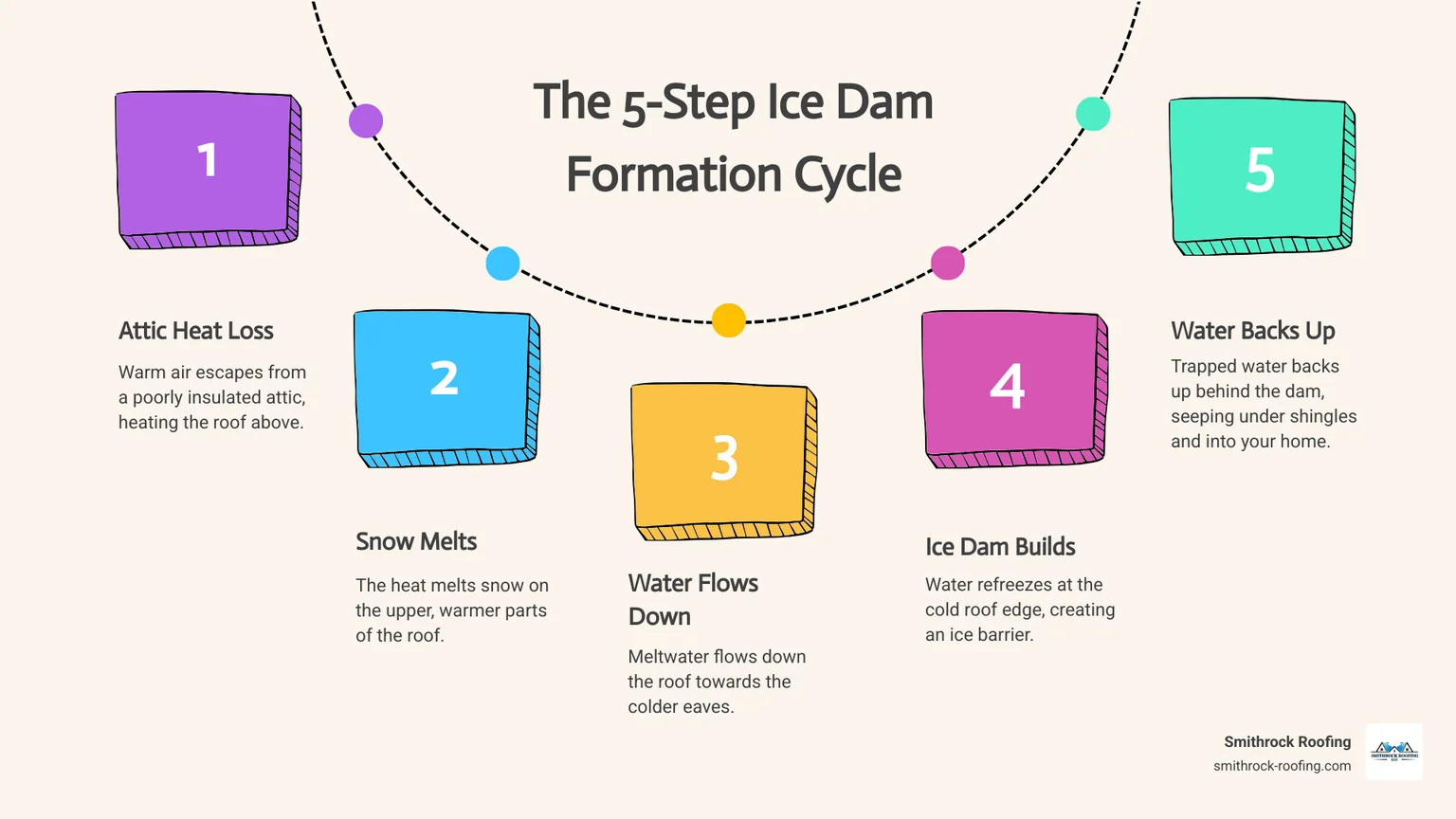
When heat from your living areas escapes into the attic, it warms the underside of the roof deck, melting the blanket of snow on top. Gravity pulls that meltwater down toward the gutters. However, the eaves and gutters are not warmed by escaping heat, so they remain at or below freezing temperature. When the water reaches this cold zone, it refreezes, slowly building up into a dam. As more snow melts, a pool of water forms behind this dam. This standing water has nowhere to go but up and under the shingles, which are designed to shed falling water, not to waterproof a swimming pool. This infiltration is the start of a cascade of damage that can impact your home from the roof to the foundation.
Ice dams are a visible manifestation of a much larger, invisible problem: chronic heat loss that inflates your heating bills all winter long. According to industry research, a staggering 90% of homes in the U.S. are under-insulated. If you see ice dams on your roof, your home is almost certainly one of them. The good news is that correcting the conditions that cause ice dams doesn’t just protect your home from water damage; it also makes your home more comfortable, lowers your carbon footprint, and delivers year-round savings on your utility bills.
Similar topics to ice dams:
When ice dams form, they prevent melting snow from draining off your roof, creating a serious threat to your home’s structural integrity and your family’s health. The water that pools behind the dam has nowhere to go but inward. Through a process of capillary action, the water wicks its way uphill, defying gravity to seep under shingles and into your attic, ceilings, and walls. This infiltration initiates a cascade of problems that can range from cosmetic annoyances to catastrophic structural failures.
At Smithrock Roofing, we have seen the full spectrum of damage caused by persistent ice dams. The most immediate and obvious sign of trouble is a roof leak. Water seeping under shingles saturates the roof deck, compromises the underlayment, and can lift, tear, or dislodge the shingles themselves. This not only damages the roofing system but also creates pathways for future leaks long after the ice has melted.
The sheer weight of an ice dam can be immense, placing enormous stress on your roofline. This weight can bend, warp, or even tear gutters completely off the house. Depending on the material—whether lightweight aluminum or heavier steel—the damage can vary, but the result is often destroyed gutters and damaged fascia and soffit boards, leading to more complex and expensive repairs.
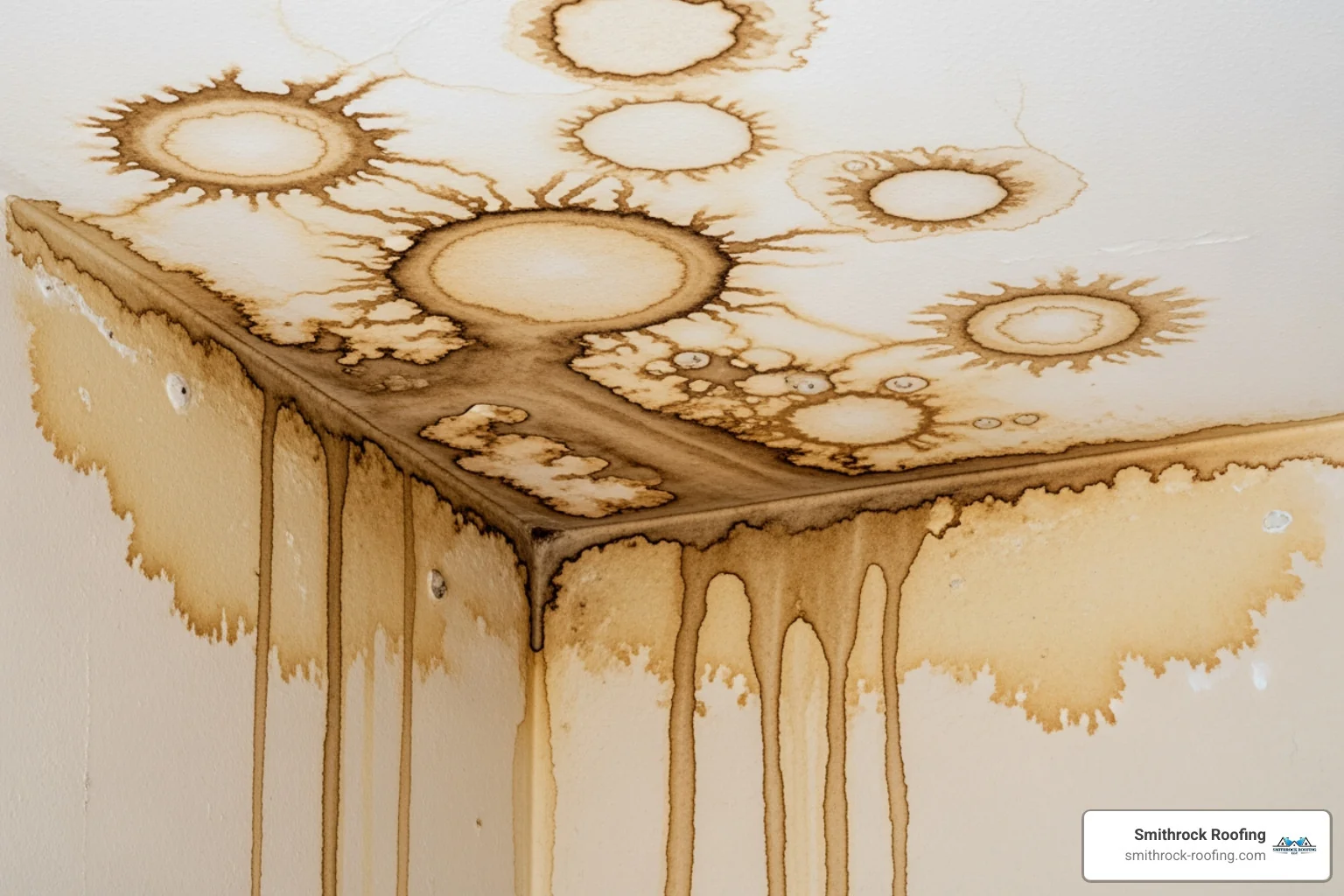
Once water breaches the roof’s defenses, the damage moves indoors. Homeowners may first notice subtle water stains on ceilings or bubbling paint on walls. Over time, this moisture can ruin plaster and drywall, cause hardwood floors to buckle, and saturate carpets and padding, leading to persistent musty odors. It is incredibly frustrating to repeatedly repair this cosmetic damage without addressing the root cause of the leaks. For more information on addressing active roof leaks, explore our roof leak repair services.
Ice dams are not just a superficial problem; they pose a direct threat to your home’s structural framework. Constant exposure to moisture creates the perfect conditions for wood rot, which can decay critical structural components and weaken the integrity of your entire roof.
The weight of large ice dams is a significant and often underestimated danger. A single cubic foot of ice weighs approximately 57 pounds, and a large dam spanning the length of a roof can easily weigh thousands of pounds. This enormous load can cause serious structural damage, including:
Perhaps the most insidious danger of ice dams is the potential for hidden damage and serious health risks. When water infiltrates your attic and walls, it saturates the insulation, compressing it and rendering it ineffective. This not only accelerates heat loss and drives up your energy bills but also creates a damp, dark environment—a perfect breeding ground for mold and mildew.
Mold, including toxic varieties like Stachybotrys chartarum (black mold), can proliferate unseen within your attic, behind walls, and under floors. Mold spores become airborne and circulate throughout your home, degrading indoor air quality and triggering a host of health problems. According to one of our sources, even if ice dams don’t cause visible damage, they can lead to invisible mold and mildew issues, which in turn can cause respiratory problems, allergic reactions, sinus infections, headaches, and fatigue 2.
These unseen issues can be far more difficult and costly to remediate than visible water stains. Professional mold removal is often required to ensure the contamination is fully eradicated, adding significant expense and disruption to your life. If you suspect any water damage or need immediate assistance, our emergency roof repair services are available to help protect your home and family.
The fundamental cause of ice dams is a simple thermal imbalance: the upper part of your roof is above 32°F, while the lower edge (the eaves) is below 32°F. This temperature differential turns your roof into an ice dam factory, melting snow on the warmer upper sections and refreezing it at the colder edges.
This imbalance is almost always created by heat escaping from your heated living space and warming the attic. The single most significant contributor to this is air leakage. Warm, buoyant air from your home flows into the attic through countless unsealed gaps and cracks. These bypasses can include openings around recessed light fixtures (can lights), plumbing stacks, furnace flues, bathroom exhaust fans, attic hatches, and wiring penetrations. This warm air rises, heating the underside of your roof deck and creating the perfect conditions for snow to melt, even when the outside temperature is well below freezing.
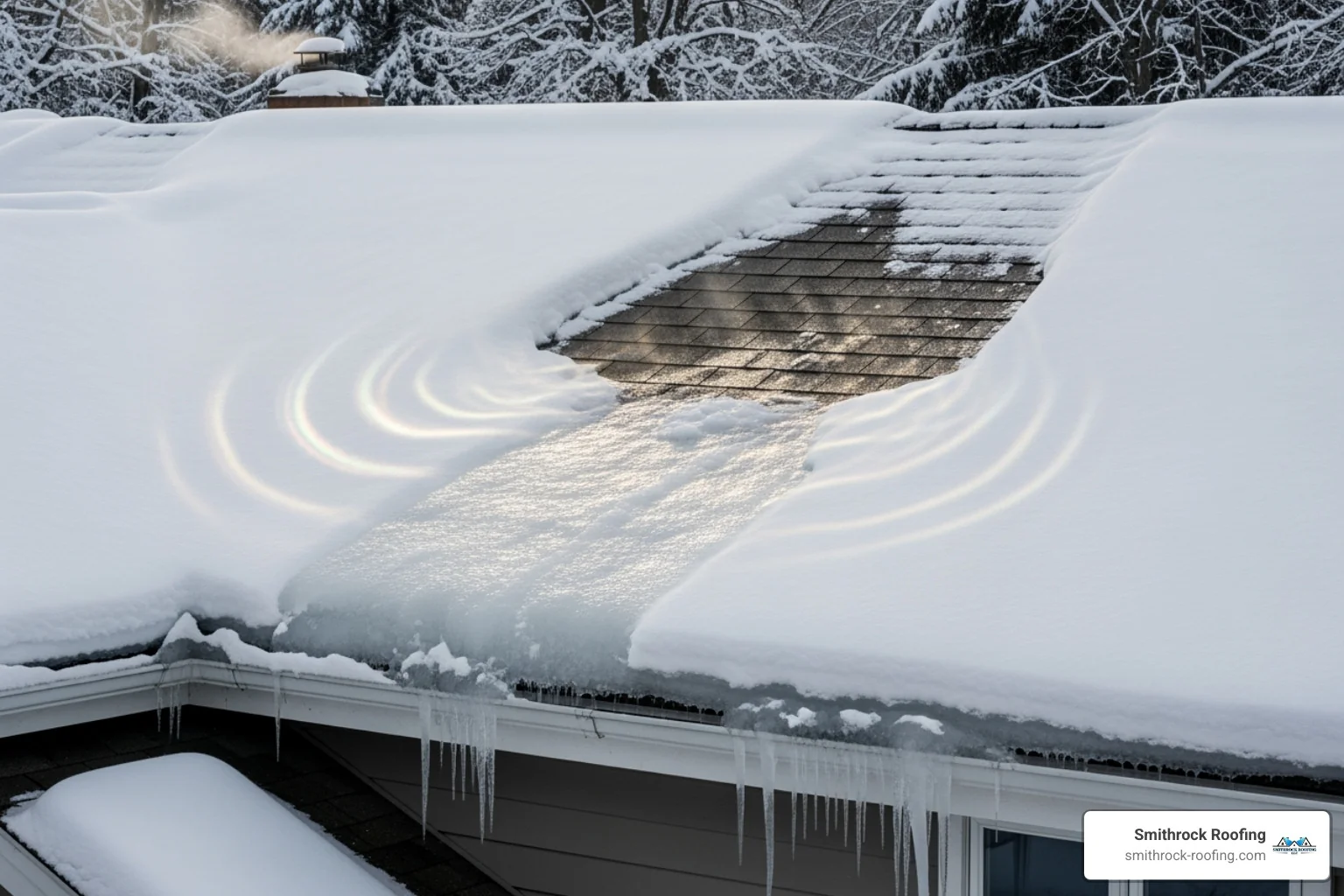
This uncontrolled heat loss isn’t just about ice dams; it’s a major source of energy waste. Every bit of heat that escapes into your attic is heat your furnace must replace, leading to unnecessarily high utility bills. By addressing these underlying issues through strategic energy efficient upgrades, you can solve your ice dam problem and reduce your energy consumption at the same time.
Insufficient or improperly installed attic insulation is a primary driver of the heat loss that leads to ice dam formation. Insulation is meant to act as a thermal barrier, slowing the transfer of heat from your living space into the unconditioned attic. If your insulation is too thin, compressed, water-damaged, or has gaps, it cannot perform its job effectively.
Heat from your home will easily pass through these weak spots in your ceiling, warming the roof sheathing above and melting the snow. This meltwater then flows down to the cold, uninsulated eaves, where it refreezes and builds into an ice dam.
The effectiveness of insulation is measured by its R-value, which indicates its resistance to heat flow—a higher R-value means better insulation. Think of it as the SPF rating of your home against heat loss. Many older homes in Winston-Salem and Greensboro were built when energy codes were less stringent and may have insulation that no longer meets modern standards for our climate zone. The statistic that 90% of homes in the U.S. are under-insulated strongly suggests that your home’s insulation may be a key part of the problem.
Upgrading your attic insulation is one of the most effective long-term solutions for preventing ice dams. However, it’s crucial that this is done after air sealing the attic floor. Simply adding more insulation over air leaks can be ineffective and, in some cases, can even trap moisture. For more insights, we offer information on better home insulation and insulated windows.
Even with excellent insulation, poor attic ventilation can still lead to ice dams. A properly designed ventilation system is essential for maintaining a “cold roof,” which means keeping the attic’s air temperature and the roof deck’s surface temperature as close to the outdoor temperature as possible.
If warm air gets trapped in the attic—either from air leaks or heat radiating through the insulation—it will heat the roof deck and melt the snow, restarting the melt-and-refreeze cycle. This is where the concept of the “stack effect” comes into play: warm air naturally rises, and if it has no clear exit path, it will accumulate at the highest point of the attic, right under the roof peak.
A balanced attic ventilation system provides a continuous flow of cold, outdoor air to flush out this trapped heat. It relies on two key components:
This flow of air from low to high continuously washes the underside of the roof deck with cold air, preventing snow from melting. The system fails if either component is missing or blocked. Blocked soffit vents are a very common problem, often covered by insulation or debris, which chokes off the supply of cool intake air and renders the exhaust vents useless. Learn more about the critical function of soffit vents and their importance in maintaining a healthy, ice-free roof.
Dealing with ice dams effectively requires a two-pronged approach: immediate, short-term removal to prevent ongoing damage, and a strategic, long-term plan to prevent them from ever forming again. While quick fixes can mitigate an emergency, they are merely a band-aid that doesn’t solve the underlying problem. For lasting protection and peace of mind for your home in Winston-Salem and Greensboro, a permanent solution that addresses the root cause is the only sensible investment.
Here’s a quick comparison of the two approaches:
| Feature | Short-Term Fixes (Removal) | Long-Term Solutions (Prevention) |
|---|---|---|
| Cost | Varies (DIY low, professional higher) | Moderate to High initial investment |
| Effort | Often strenuous, potentially dangerous DIY; Professional service convenient | One-time major effort (installation); Minimal ongoing maintenance |
| Effectiveness | Addresses existing dam; Prevents immediate leaks; Temporary | Eliminates root cause; Prevents future dams; Permanent home improvement |
| Duration | Temporary (until next freeze-thaw cycle) | Permanent (for the lifespan of the improvement) |
| Safety | High risk for DIY; Safe with professionals | Low risk (once installed); Safer home environment |
| Underlying Issue | Does not address heat loss or ventilation issues | Directly addresses heat loss, air leakage, and ventilation |
If an ice dam has formed and water is backing up, you need to act quickly to prevent or stop water intrusion. However, DIY removal is fraught with danger due to slippery roofs, extreme heights, and the unpredictable nature of falling ice. Safety must always be your number one priority.
Always work from the ground. Never use a ladder on icy ground or climb onto a snowy or icy roof. A fall can be fatal.
Dangers of DIY Removal – What Not to Do:
To truly stop ice dams, you must eliminate the conditions that allow them to form. This means creating a “cold roof” by addressing the root causes: heat loss and inadequate ventilation. These long-term strategies not only prevent ice dams but also significantly improve your home’s energy efficiency and year-round comfort.
Here are the key long-term prevention strategies, in order of importance:
When an ice dam causes a leak and damages your home, one of the first questions homeowners ask is, “Will my insurance cover this?” The answer is often complex and depends on the specifics of your policy and the nature of the damage.
Typically, a standard homeowners insurance policy (HO-3) covers damage that is “sudden and accidental.” This means that the interior damage resulting from an ice dam—such as water-stained ceilings, ruined drywall, warped floors, and damaged insulation—is often covered. However, most policies draw a line between the resulting damage and the cause of the problem. This means your policy will likely not pay for:
This last point is critical. If you have recurring ice dams year after year and fail to address the known underlying issues (like poor insulation or ventilation), your insurer could deny a future claim. They may argue that the damage was not sudden and accidental but rather the predictable result of a maintenance problem you failed to correct. For example, if a single, massive storm creates an unprecedented ice dam and a leak, your claim for interior repairs is likely to be approved. But if your claim history shows repeated water damage in the same area due to chronic ice damming, you may face a denial.
We always recommend that homeowners in Winston-Salem, Greensboro, and our service areas take these steps:
While some preventative maintenance is DIY-friendly, effectively diagnosing and solving an ice dam problem almost always requires professional expertise. The interplay between heat, air, and moisture in an attic is complex building science.
You should call a professional if:
We get many questions about ice dams from concerned homeowners in Winston-Salem, Greensboro, and our other North Carolina service areas. Here are detailed answers to the most common ones:
Not always, but they are a significant warning sign that should not be ignored. Small, thin, and scattered icicles can form on a healthy roof simply from the sun melting a bit of snow on a cold day. However, you should be concerned if you see large, thick clusters of icicles forming along the roof edge or, more importantly, if you see icicles forming behind the gutter or on the siding below the soffit. This is a definitive sign that an ice dam is present and that water has already overflowed the gutter and is backing up.
Absolutely, yes. This is one of the most common and frustrating misconceptions. An ice dam is not a roofing problem; it’s a heat loss and ventilation problem. A brand-new, perfectly installed roof will do nothing to prevent ice dams if the underlying issues within the attic are not addressed. You can install the most expensive shingles on the market, but if your attic is poorly insulated and full of air leaks, warm air will still heat the roof deck, melt the snow, and form an ice dam. The solution lies in the attic system, not the roof covering.
No, gutters do not cause ice dams. The root cause is always heat escaping from the home, which melts snow on the roof. However, gutters can significantly contribute to the problem and make it worse. If gutters are clogged with leaves and debris, they prevent meltwater from draining away properly. This trapped water quickly freezes solid, forming a base that accelerates the growth of a larger ice dam. Even clean gutters can fill with ice and become part of the dam, but clogged gutters guarantee a problem.
Not necessarily. A metal roof’s smooth, low-friction surface can help snow slide off more easily before it has a chance to melt, a phenomenon known as a “roof avalanche.” This can reduce the frequency or severity of ice dams. However, if the underlying heat loss issues are severe, ice dams can still form, particularly on lower-pitched roofs, in valleys, or around skylights. Furthermore, the dam can form at the edge and trap a sheet of ice and snow above it. A metal roof can be part of a solution but is not a substitute for proper air sealing, insulation, and ventilation.
The cost of prevention varies dramatically depending on the condition of your home and the chosen solution. A DIY approach to air sealing some obvious leaks in an accessible attic could cost as little as a few hundred dollars in materials. Professional air sealing and upgrading attic insulation to modern standards is a larger investment, potentially costing several thousand dollars. While this may seem expensive, it’s crucial to weigh it against the cost of inaction. A single major water damage event from an ice dam can easily cost $5,000 to $15,000 or more in repairs, not including the potential for mold remediation. The investment in prevention provides a strong return through energy savings and protecting your property value.
No, you should never do this. Using rock salt (sodium chloride) or salt pucks on your roof is a very bad idea. Salt is extremely corrosive to many building materials. It will accelerate the rusting of metal flashing, gutters, and the nails holding your shingles in place, leading to premature roof failure. The salty runoff will also damage your siding, stain your masonry, and kill your lawn, shrubs, and garden beds below. For melting channels, calcium chloride is a less harmful alternative, but even it should be used sparingly and with caution.
Ice dams are far more than a seasonal inconvenience; they are a clear and urgent message from your home. They signal significant energy waste, an uncomfortable living environment, and the imminent threat of costly structural damage and serious health risks from mold. The message from your roof is clear: it’s time to address the underlying problems before they escalate.
Prevention is always the most effective and economical strategy. While short-term removal methods offer temporary relief from an immediate threat, only a comprehensive, long-term approach provides a permanent solution for your home in Winston-Salem, Greensboro, High Point, and all our service areas. To truly solve the problem, you must focus on the root causes: air leakage, inadequate insulation, and poor attic ventilation.
By investing in these critical home performance upgrades, you’re not just preventing future ice dams and the headaches they cause; you are also making a smart financial decision that pays dividends for years to come. A properly sealed and insulated home is a more resilient and valuable asset. You will be:
At Smithrock Roofing, we understand the unique challenges homeowners face in our North Carolina climate. We are experts not just in roofing, but in the complete building science of a healthy, energy-efficient home, including insulation, ventilation, and water management. Our team has the diagnostic tools and expertise to pinpoint the source of your ice dam problems and implement effective, long-lasting solutions that provide true peace of mind.
Don’t let another winter bring the stress, damage, and expense of ice dams. Take proactive steps today to protect your most important investment.
Contact us for a professional roof leak inspection in Winston Salem today, and let us help you build a safer, more resilient, and energy-efficient home.

Smithrock Roofing © Copyright 2026 • All Rights Reserved • Privacy Policy • Maintained by Mongoose Digital Marketing