A drip stain on your ceiling tells you something is wrong. What it does not tell you is where the water entered, how far it traveled before appearing, what it damaged on the way, or what a proper fix actually involves. Those are the questions that determine what you are really dealing with — and what it will take to make it right.
Homeowners searching for roof leak repair costs are often looking for a number to plan around, which is completely understandable. But the more useful thing to understand first is why those costs vary so widely — not just between different homes, but sometimes between two contractors standing on the same roof. The difference usually comes down to whether a contractor is patching a visible symptom or repairing an actual system failure.
At Smithrock Roofing, we have spent decades serving homeowners across Winston-Salem, Greensboro, High Point, Kernersville, Clemmons, Rural Hall, King, and the surrounding NC Triad communities. What we have learned is that the homeowners who feel burned by roof repairs — the ones who paid for a fix that came back six months later — almost always had the same experience: a contractor who identified a likely spot and sealed it, without working backward through the system to confirm it was the true source. This guide is designed to give you the diagnostic and decision-making framework that separates a lasting repair from a temporary patch.
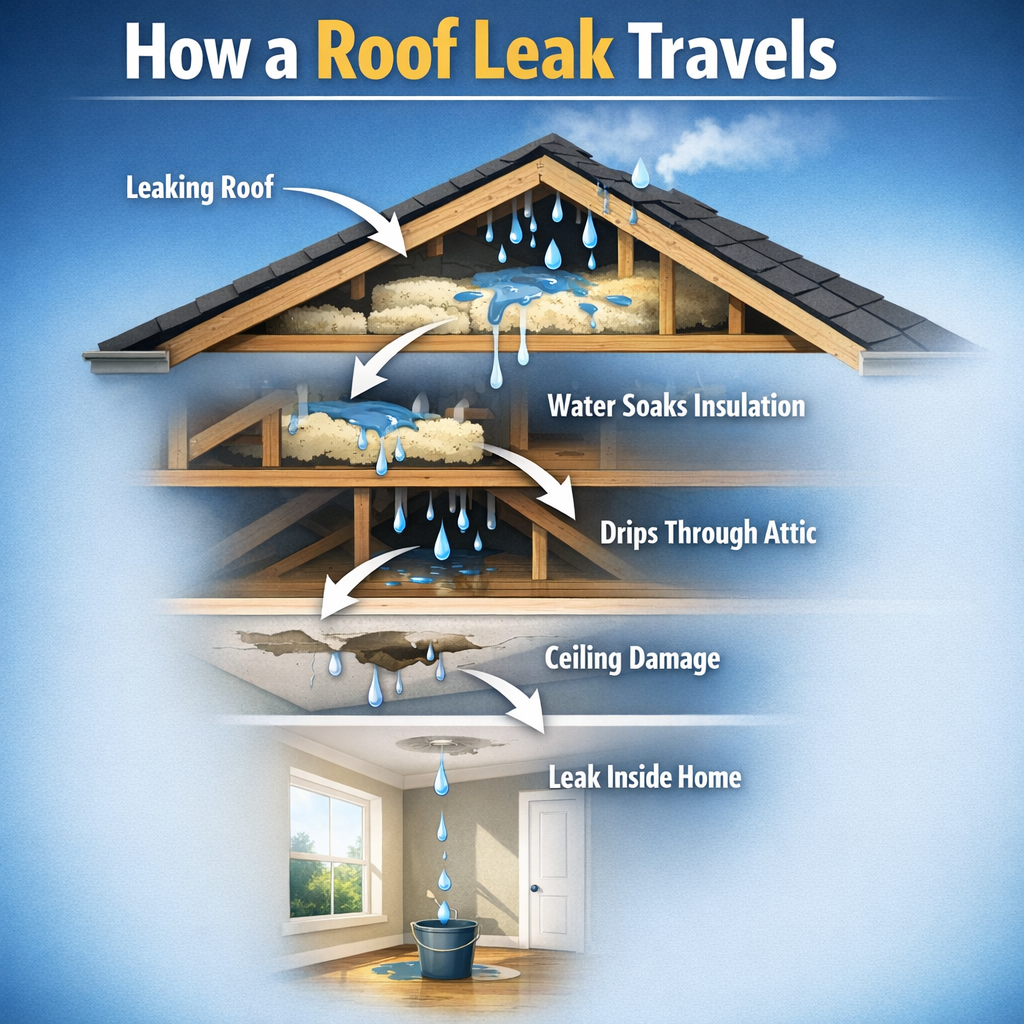
Water does not fall straight down through a roof. It runs along rafters, follows the path of least resistance across sheathing, pools in low spots created by warped decking, and can travel several feet — sometimes more — before it finds an interior gap to drip through. What appears as a stain above your hallway may have entered through a failed pipe boot near your ridge. This is the most important thing to understand before any repair conversation begins.
Every professional roof inspection distinguishes between these two things:
These are often separated by several feet. A contractor who patches the area directly above the stain without tracing the water’s path backward is making an educated guess, not a diagnosis. On a well-executed inspection, the attic comes first. Rust trails on fasteners, moisture gradient patterns in insulation, watermarks on rafters that are dark on one end and fading toward the stain — these are the directional clues that point back toward the true entry point. For a deeper look at what this process involves, the article Ceiling Leak? Find the Real Source Before You Call Anyone walks through how to interpret interior evidence before any contractor arrives.
When a qualified inspector goes into your attic, they are not just looking for wet spots. Specific evidence patterns indicate specific failure types:
Once the source is properly identified, several factors combine to determine what a repair genuinely requires. Understanding these helps you evaluate any proposal you receive — not just compare bottom-line numbers.
Not all leak sources are equal in complexity. Here is a breakdown of common sources and what makes each one straightforward or complicated:
| Leak Source | Complexity Driver | What a Quality Repair Involves |
|---|---|---|
| Pipe boot / plumbing vent | Boot material degradation (rubber vs. lead) | Full boot replacement, not just sealant; collar flashing if needed |
| Step flashing at a wall or dormer | Often requires siding removal to access | Individual step flashing pieces replaced in sequence with roofing; counter-flashing reset |
| Chimney flashing | Multiple failure modes possible simultaneously | See detailed section below |
| Ridge cap shingles | Fastener exposure or improper overlap | Replacement with manufacturer-matched ridge cap; check ventilation beneath |
| Valley flashing or membrane | Open vs. closed valley type determines approach | Full valley re-flashing; underlayment replacement beneath |
| Skylight perimeter | Flashing vs. curb seal vs. glazing seal are distinct issues | Isolation of failure point before repair; curb flashing often replaced rather than resealed |
| Field shingle damage | Granule loss, cracking, or impact damage | Localized replacement; matching challenge on older roofs |
| Deck penetrations (HVAC, vent fans) | Custom flashing often required | Proper collar flashing with integrated waterproofing membrane |
Competitors consistently treat chimney flashing repair as a single line item. In practice, a chimney water intrusion problem can come from four completely different failure modes — each requiring a different repair approach:
Step flashing failure — The individual L-shaped pieces woven between shingles and the chimney’s side have lifted, corroded, or were improperly installed. Repair requires careful shingle removal and flashing replacement in sequence.
Counter-flashing failure — The cap flashing embedded in the mortar joint has pulled free or the mortar has deteriorated. Counter-flashing must be reset and repointed; this is masonry work as much as roofing work.
Missing or undersized cricket — On chimneys wider than 30 inches, building code and manufacturer guidelines call for a cricket (a small peaked structure behind the chimney) to divert water around it. Without one, water ponds against the back of the chimney and forces under flashing under sustained rain. Adding a cricket is a structural repair, not a flashing fix.
Mortar joint deterioration on the chimney cap itself — Water enters through eroded mortar between the bricks and works its way down through the chimney structure, appearing as interior staining that looks exactly like a flashing leak. The repair here is tuckpointing and possibly a new chimney cap — not flashing work at all.
A proper chimney inspection diagnoses which of these is present before any work begins. At Smithrock, our chimney cap solutions are fabricated to fit each chimney precisely — because a cap that does not seat correctly accelerates the very deterioration you are trying to prevent.
This is the factor most homeowners never hear about until they are in the middle of a repair — and it is one of the most significant cost drivers there is.
When OSB or plywood sheathing gets wet and dries, it does not return to its original geometry. It cups, swells along panel edges, and may lose fastener-holding capacity. After multiple wet-dry cycles, the deck develops what experienced roofers call deck memory — permanent deformation in the shape of low spots and ridges.
Here is why this matters to your repair cost and outcome:
A qualified inspector evaluates deck condition by flex-testing suspect panels (sound, solid decking does not flex under foot pressure the way compromised OSB does), checking for visual cupping at panel edges, and assessing nail pull resistance. Skipping this step — or not knowing to do it — is one of the most common reasons repairs fail.
If your roof is more than seven years old and you need shingle replacement in a visible area, honest roofers will tell you directly: a perfect color match is not possible.
Asphalt shingles fade through UV-driven granule oxidation — a process that changes the surface color and reflectivity of shingles over time. It happens at different rates depending on exposure angle, shade coverage, and how well the granule layer was originally applied. After roughly seven years, even shingles from the same original manufacturer lot will look noticeably different from newly installed product.
What a skilled contractor can do:
What no contractor can do is make new shingles look like aged ones. Be cautious of anyone who promises a seamless match on a roof older than a decade — that promise will not survive your first look from the driveway.
When a storm opens up a section of your roof and you need immediate protection before a permanent repair is possible, emergency tarping is the right call. But a tarp job done poorly can cause more damage than the original failure.
Here is what separates a protective tarp installation from a problematic one:
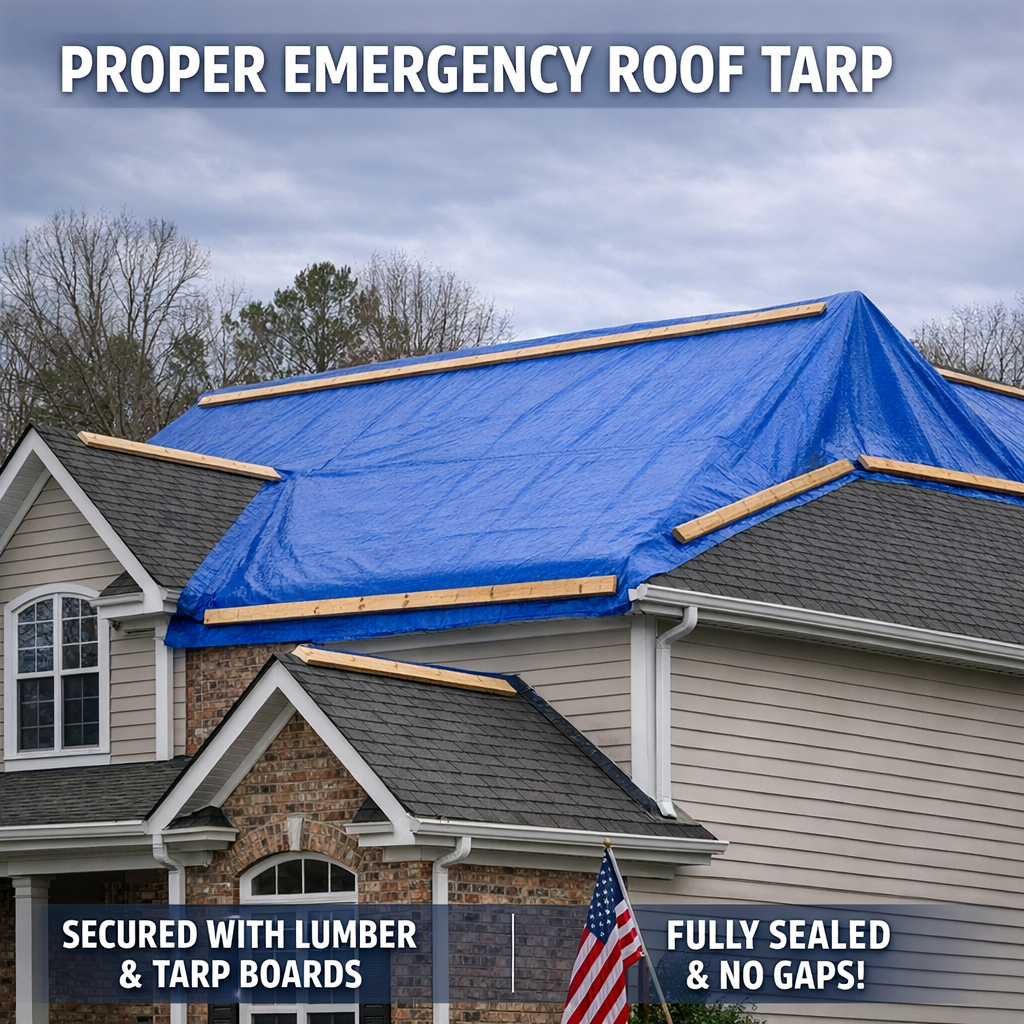
When you call for emergency service after a storm, asking these questions is not unreasonable. A contractor who explains what they are doing and why is giving you a tarp that protects your home. A contractor who just throws plastic over the opening and drives away is giving you a liability.
Every roofing material manufacturer produces sealant products. Used correctly, they are a legitimate part of certain repairs. Used incorrectly — which happens more often than it should — they create a repair that lasts one season and leaves the substrate in worse condition than before.
Roofing sealants rely on adhesion to the substrate — the actual roofing material beneath. When sealant is applied over a surface that is wet, dusty, oxidized, covered in moss or algae, or thermally stressed (hot in direct sun), the sealant bonds to the contamination layer, not to the substrate itself.
The first significant temperature swing — and in the NC Triad, those swings happen from October through March — causes thermal expansion in the roofing material. That movement breaks the bond between the sealant and the contamination layer. Now you have a gap that is coated in failed compound, which makes mechanical cleaning harder and chemical adhesion to the true substrate more difficult than if the sealant had never been applied.
Before any sealant is applied as part of your repair, a professional should be able to answer:
These are not trick questions — they are standard practice for any contractor who does this work correctly. If the answer is “we’ve always done it this way,” that is useful information too.
Thermal imaging has become a marketing point for many roofing companies. Used properly, it is a genuinely powerful diagnostic tool. Used improperly, it produces images that look authoritative and mean very little.
Infrared cameras detect temperature differentials. Wet roof decking retains heat differently than dry decking — but only when there is a meaningful temperature difference between the two to measure.
That window occurs approximately 30 to 90 minutes after sunset, when the surface of the roof is cooling rapidly and wet areas — which retain heat longer than dry ones — show up clearly against the cooling field. A secondary window exists just before sunrise for the same reason.
A thermal scan performed at midday, when the entire roof surface is heated to similar temperatures by direct sun, cannot reliably distinguish wet from dry decking. The differential is not there to measure. A contractor who arrives in the afternoon with an infrared camera and shows you colorful images is not necessarily giving you useful data.
If thermal imaging is used as part of your diagnostic, ask for documentation that includes:
A contractor who can produce this level of documentation is using thermal imaging as a diagnostic tool. One who cannot is using it as a presentation tool.
Most online guidance tells homeowners that a roof more than 20 to 25 years old should be replaced rather than repaired. That benchmark comes from asphalt shingle manufacturer warranty parameters — which assume standard thermal cycling conditions that do not account for real-world regional variation.
In the NC Triad, we have a climate that is genuinely moderate by national standards — lower UV intensity than coastal Southeast markets, meaningful seasonal temperature swings, and moderate annual rainfall. What that means in practice:
Rather than applying an age percentage rule, experienced contractors evaluate repair versus replacement using these actual variables:
| Variable | Repair Favored | Replacement Favored |
|---|---|---|
| Roof age vs. expected remaining life | Significant life remaining | Near or past expected lifespan |
| Deck condition | Sound, minimal deformation | Multiple panels compromised or deformed |
| Number of leak sources | Single, isolated failure | Multiple concurrent failures |
| Shingle condition across field | Granule coverage intact, no widespread cracking | Widespread granule loss, curling, or bare spots |
| Ventilation adequacy | Ridge and soffit ventilation balanced | Inadequate ventilation accelerating degradation |
| Previous repair history | First or second repair | Third repair or more in short window |
| Attic moisture damage | Limited to immediate area | Widespread rafter staining or mold presence |
A contractor who recommends replacement solely because your roof is 22 years old — without walking through this framework — is applying a shortcut, not a diagnosis. A contractor who recommends repair on a roof with four concurrent leak sources and compromised decking is doing the same thing in reverse. For a full breakdown of how these decisions play out in our specific region, the article Roof Repair vs. Replacement in Winston-Salem: Key Criteria covers the local variables in detail.
The sequence in which a repair happens matters as much as the materials used. A common — and expensive — mistake is replacing damaged decking before the leak source is confirmed. If the leak source turns out to be elsewhere, the new decking gets wet again and the repair fails. The correct sequence is:
Skipping step three, or reversing steps four and five, are the most common sequencing failures in the residential repair market. They are also the most common reason homeowners call a second contractor to fix a first contractor’s work.
At Smithrock Roofing, this is the process our crews follow on every repair — backed by 60-plus combined years of experience, CertainTeed PREMIER ShingleMaster certification, and a 5-year labor warranty that reflects our confidence in getting the sequence right the first time. When we recommend CertainTeed Landmark shingles for repair or replacement work, it is because we know how those materials perform in the NC Triad’s specific climate over decades, not just on paper.
If you are dealing with a leak — whether it is actively dripping or just a stain you have been watching for a few months — the right move is an honest inspection before any repair decisions are made. That is exactly what we offer: a straight answer about what your roof actually needs, without pressure in either direction.
A properly completed repair should include documentation of the confirmed leak source (not just the visible symptom), notation of deck condition, and the contractor’s explanation of why the specific repair method was chosen. If your stain returns — especially in a slightly different location — deck deformation is a likely cause and warrants a follow-up inspection.
Single-story, low-pitch sections of roof that are accessible from a ladder may be manageable for a careful homeowner with the right materials. Steep pitches, two-story structures, or damage near the ridge should always be handled by a professional. Improper tarping that creates ponding zones can cause more damage than the storm event itself.
Intermittent leaks — ones triggered only by specific wind and rain combinations — leave moisture in insulation that never fully dries between events. Over time, this creates conditions for mold growth in the insulation and on rafter surfaces without producing a visible ceiling stain. If you notice a persistent musty odor in upper rooms or the attic, a professional inspection is worthwhile even without visible evidence.
Generally yes, because most buyers commission a home inspection that will flag active or suspected leaks, and unresolved roof issues reliably affect both sale price and financing approvals. A documented professional repair is a more credible asset in a sale than an undisclosed known problem.
A repair performed on a correctly diagnosed source, with sound substrate beneath, proper surface preparation, and quality materials, should last the remaining life of the surrounding roofing system. A repair that merely seals a visible gap without addressing deck condition or confirming the true leak source is unlikely to last more than one to two storm seasons.
As roofing materials, inspection technology, and contractor standards continue to evolve, homeowners in the Triad region can take three specific steps to stay ahead of leak-related problems in the coming year.
1. Schedule a Post-Winter Thermal Imaging Inspection
Infrared scanning technology has become more accessible through regional roofing contractors and allows inspectors to detect moisture trapped in roof decks and insulation without removing materials. Spring is the ideal window — temperatures are moderate enough for meaningful thermal contrast, and any moisture introduced by winter freeze-thaw cycles will still be present. Request that the inspection report include annotated images showing suspect zones rather than a simple pass-fail summary.
2. Audit Your Attic Ventilation Before Peak Summer Heat
Inadequate attic ventilation accelerates shingle degradation from the underside, which shortens the effective life of any surface repair. In 2026, several manufacturers are updating warranty language to include ventilation compliance requirements. Before summer heat arrives, have a qualified contractor confirm that your intake-to-exhaust ratio meets current recommendations for your roof geometry. This single step can meaningfully extend the return on any repair investment you have already made.
3. Use a Reputable Local Contractor Verification Service
Following significant storm seasons, contractor fraud and unlicensed work spikes across the Carolinas. Before signing any repair agreement, verify the contractor’s North Carolina licensing status through the NC Licensing Board for General Contractors, confirm active general liability and workers’ compensation coverage, and request references from jobs completed in your specific ZIP code. A contractor familiar with the particular drainage patterns, wind exposure, and material performance characteristics of the Piedmont Triad will consistently outperform a regional storm-chaser on long-term repair durability.
Most structural repairs — including replacement of damaged decking, flashing, or full roof sections — require a permit through your local building authority in North Carolina. Cosmetic sealant applications or minor shingle replacements that do not alter the roof structure often do not. When in doubt, ask your contractor directly whether they will pull a permit for the work and request to see the permit documentation before the job begins. Permitted work is inspected and creates a verifiable record that protects you as a homeowner.
A repair addresses a defined, localized problem area while the surrounding roofing system remains structurally sound and has meaningful remaining service life. A replacement becomes the more practical option when the deck shows widespread deterioration, when the shingle layer is at or beyond its rated lifespan across the majority of the surface, or when multiple independent leak sources have developed. A qualified inspector can assess the percentage of the roof affected and give you an honest recommendation based on deck condition rather than surface appearance alone.
Coverage depends entirely on the cause of the leak. Damage resulting from a sudden, accidental event — such as a storm, fallen tree, or hail strike — is typically covered under standard homeowner’s policies, subject to your deductible and policy terms. Damage attributed to gradual deterioration, deferred maintenance, or age-related wear is generally excluded. Documenting the timeline of the damage and having a contractor provide a written cause-of-loss statement will support your claim regardless of outcome.
Look for contractors who are licensed with the state of North Carolina, carry verifiable insurance, and have an established physical presence in the Triad rather than a temporary post-storm operation. Ask for a written scope of work that identifies the confirmed leak source specifically, not just the repair action. Reading detailed reviews on platforms where contractors cannot self-select which reviews appear — and speaking directly with past customers in your area — will give you a more reliable picture than ratings alone.
When a roof leak appears, the decisions made in the first few days — who you call, how the source is diagnosed, and what repair method is chosen — determine whether you are solving the problem or postponing it. Smithrock Roofing has built its reputation across Winston-Salem and Greensboro by prioritizing accurate diagnosis over quick fixes, and by treating every repair as work that needs to last. If you are dealing with a leak, a suspicious stain, or simply want a professional set of eyes on your roof before the next storm season, the team at Smithrock Roofing is ready to help. Get a Free Estimate and let a local expert give you a clear, honest answer.

Smithrock Roofing © Copyright 2026 • All Rights Reserved • Privacy Policy • Maintained by Mongoose Digital Marketing