The Real Deal: What You’ll Pay for Eavestrough Installation

Understanding What Drives Eavestrough Installation Prices

The investment for a new eavestrough installation can vary widely, a fact that can be frustrating for homeowners seeking a simple answer. The final price depends on a complex interplay of material choice, home complexity, and overall project scope. For most homeowners, a complete system replacement is a significant but absolutely necessary investment in their home’s long-term protection against the persistent threat of water damage.

If you’re staring up at sagging, leaking, or overflowing eavestroughs, you’re witnessing a critical failure of your home’s primary water management system. The consequences extend far beyond aesthetics; uncontrolled rainwater can lead to catastrophic issues such as foundation cracks, basement flooding, siding rot, landscape erosion, and even insect infestations in damp, damaged wood. Understanding what it will take to replace them is the first step toward safeguarding your property’s value and structural integrity.

Quick Overview of Cost Factors:

  • Material Type: The material chosen is a primary cost driver. Options range from economical vinyl and versatile aluminum to robust steel and premium, long-lasting copper. This choice dictates not only the upfront cost but also the system’s durability, maintenance needs, and lifespan.
  • Labor & Complexity: The cost of professional installation is heavily influenced by the difficulty of the job. Factors like your home’s height, roof steepness (pitch), and architectural features (dormers, multiple corners) directly impact the time and safety precautions required.
  • Home Size & Layout: The sheer size of your home determines the total linear footage of materials needed. Multi-story homes and properties with complex, sprawling rooflines require significantly more materials and labor than a simple single-story ranch.
  • Seamless vs. Sectional: The installation method plays a key role. Seamless systems, custom-formed on-site, offer superior leak protection but require specialized machinery and expertise. Pre-cut sectional gutters are less expensive initially but have numerous seams that are prone to failure over time.
  • Add-Ons & Enhancements: The basic system can be augmented with features like gutter guards to block debris, downspout extensions for better drainage, or heat tapes to prevent ice dams. Each addition enhances performance but also adds to the total project cost.
  • Removal of Old System: A complete replacement project includes the labor and disposal costs associated with tearing out and hauling away the old, failing eavestroughs.

Every homeowner faces this decision eventually, and the final quote can often feel like a moving target. One contractor’s estimate may differ significantly from another, leaving you wondering what’s fair and reasonable. The truth is, eavestrough installation isn’t a one-size-fits-all project. Your final investment depends on dozens of variables. This guide breaks down exactly what influences eavestrough installation projects, giving you the knowledge to budget accurately, ask contractors the right questions, and make confident decisions about protecting your home’s foundation, walls, and landscaping from water damage.

For additional background on how gutters (also called eavestroughs) function as an integral part of a building’s drainage system, you can review the general overview of rain gutters before diving into the specifics for your home.
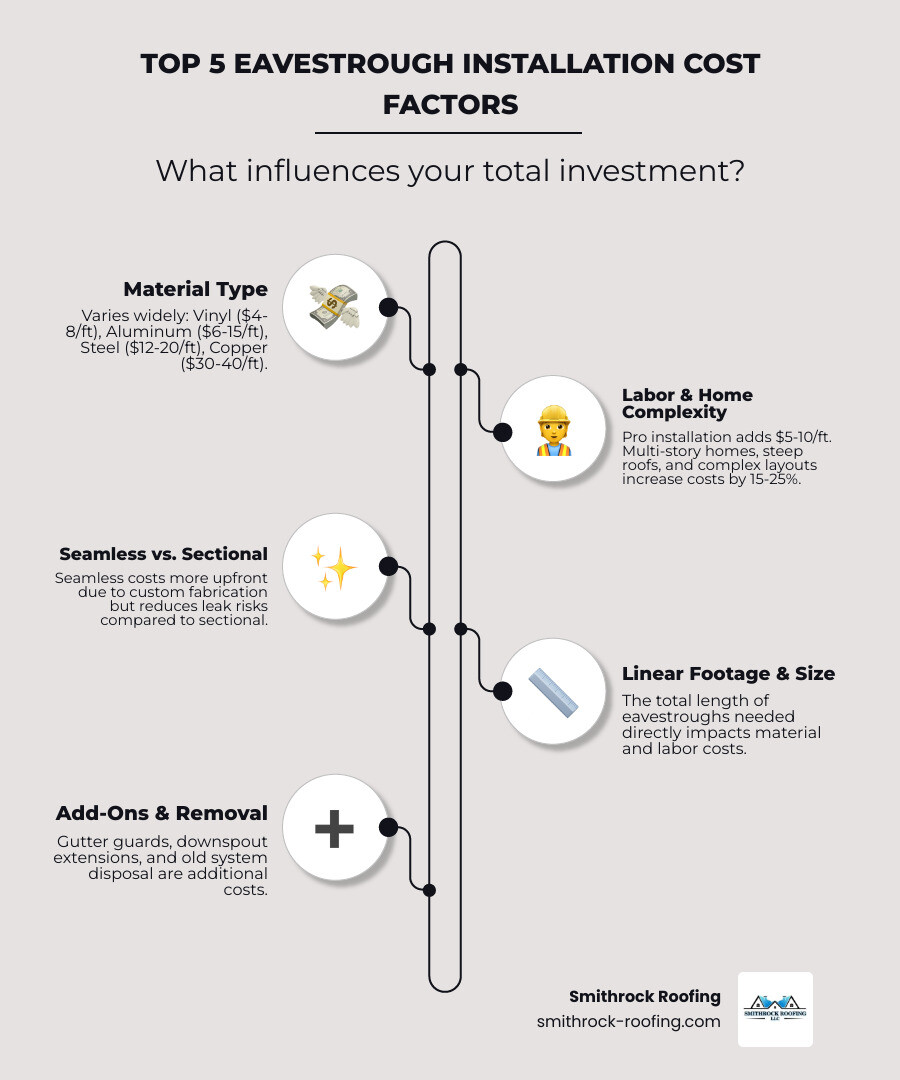
infographic showing the top 5 cost factors for eavestrough installation: material type with price ranges, linear footage needed based on home size, labor complexity including roof pitch and stories, seamless vs sectional installation methods, and additional components like gutter guards and downspouts - eavestrough installation prices infographic infographic-line-5-steps-elegant_beige

Eavestrough installation prices terms simplified:

Key Factors That Influence Eavestrough Installation Projects

Understanding the core components that make up your eavestrough installation quote is crucial for making an informed decision. The price isn’t just about the length of your roofline; it’s a detailed calculation based on material choices, the specific architectural challenges of your home, and the chosen installation method. By exploring these factors in depth, we can explain the variations in project scope and help you select the best system for your home in Winston-Salem and the surrounding areas.

Material Choice: From Functional to Foundational

The material you choose for your eavestroughs is one of the most significant factors influencing the overall investment, durability, and lifespan of your system. Different materials offer varying levels of strength, aesthetic appeal, and resistance to local weather conditions, from intense sun to heavy snow.

  • Vinyl Eavestroughs: Often considered the most budget-conscious option, vinyl is a lightweight PVC plastic that is inexpensive and won’t rust or corrode. Its primary appeal is its low cost and ease of installation for DIYers, as it’s sold in sections at most home improvement stores. However, its lifespan is the shortest of all materials. In regions with significant temperature fluctuations, vinyl can become brittle and crack. It is also susceptible to fading and degradation from UV exposure and can sag over time.

  • Aluminum Eavestroughs: Aluminum is the most popular choice in North America, striking an excellent balance between cost, durability, and versatility. It’s lightweight, rust-proof, and available in a wide array of factory-applied colors to match your home’s exterior trim. Professional installers typically use aluminum with a thickness (gauge) of .027 or, for superior dent resistance, .032 inches. It offers a respectable lifespan with proper maintenance and is the standard material for seamless gutter installations.

  • Steel Eavestroughs (Galvanized, Galvalume, or Stainless): Steel offers superior strength and rigidity compared to aluminum, making it a robust choice for areas prone to heavy snow, ice, or strong winds.

    • Galvanized steel is coated in zinc to prevent rust, but any deep scratches can compromise this coating and lead to corrosion.
    • Galvalume steel is coated with a zinc-aluminum alloy, offering even better corrosion resistance.
    • Stainless steel is the most durable and corrosion-resistant option but comes at a significantly higher price point. Steel is heavier than aluminum and requires more robust hangers and careful installation.
  • Copper Eavestroughs: Copper sits at the premium end of the spectrum, known for its exceptional longevity (often over 100 years) and distinctive, timeless aesthetic. It will not rust and arrives with a brilliant shine that gradually develops a beautiful blue-green patina (verdigris) over time, adding a classic, high-end look to historic or luxury homes. The initial investment is high due to the material cost and the specialized labor required, as copper joints must be expertly soldered, not just sealed with caulk.

  • Zinc Eavestroughs: Less common but highly durable, zinc is another premium option prized for its corrosion resistance and ability to self-heal minor scratches over time. It has a modern, matte-gray finish that eventually develops its own protective patina. Zinc offers a lifespan comparable to copper and is popular in contemporary and European-style architecture. Like copper, zinc requires specialized craftsmanship for soldering and installation, contributing to its high cost.

  • Wood Eavestroughs: Historically common on older homes, wood eavestroughs (typically made from cedar or fir) offer a unique, natural aesthetic. However, they are the most maintenance-intensive option, requiring regular sealing, oiling, or painting to prevent rot, splitting, and insect damage. Installation is complex and labor-intensive, making them a niche, specialized choice for historic restorations.

MaterialDurabilityAestheticsMaintenance NeedsTypical Lifespan (Years)
VinylModerateBasicLow10-20
AluminumGoodVersatile (colors)Low20+
SteelExcellentSturdyModerate20-40+
CopperExceptionalPremium, PatinaLow50-100+
ZincExceptionalModern, PatinaLow80+
WoodModerateRustic, NaturalHigh15-25 (with upkeep)

Labor, Complexity, and Your Home’s Unique Layout

Beyond materials, the labor involved and the complexity of your home’s structure significantly influence the project’s cost. Professional installers bring specialized tools, safety equipment, and experience to ensure a correct and efficient job.

Factors that increase labor time and difficulty will naturally drive up the project’s scale:

  • Home Accessibility: Difficult access to the roofline will slow down the installation. Obstacles like dense landscaping, steep-sloped yards, fences, pools, or close proximity to a neighbor’s property may require more time, careful maneuvering, or specialized equipment like articulating boom lifts.
  • Roof Pitch and Height: A steep roof pitch (e.g., greater than 6/12) and multi-story homes are more challenging and dangerous to work on. Installers must use advanced safety equipment like harnesses and roof jacks, and the work proceeds more slowly and deliberately, increasing labor hours.
  • Architectural Complexity: A simple rectangular roofline is straightforward. A home with multiple gables, dormers, bay windows, and numerous inside and outside corners is far more complex. Each corner requires precise, custom mitering (cutting) and meticulous sealing, which adds significant labor time and introduces more potential points of failure if not done perfectly.
  • Old Eavestrough Removal and Disposal: If you’re replacing an existing system, the old eavestroughs must be carefully detached without damaging the fascia or roof edge. This includes removing old hangers, spikes, and brackets. The old material must then be properly cut down and transported for disposal or recycling. This is often a separate line item in a quote and is more labor-intensive if the old gutters are heavy or securely fastened.
  • Fascia and Soffit Condition: During removal, a professional may discover that the fascia board (the board the gutter attaches to) or soffit (the underside of the roof overhang) is rotted or damaged. Repairing or replacing this wood is essential for a secure installation and will add to the project’s scope and cost.

When considering the comprehensive nature of our Gutter Installation Services, we account for all these variables to provide an accurate and transparent estimate.

Seamless vs. Sectional: A Critical Decision

The choice between seamless and sectional eavestroughs impacts the initial project cost, long-term performance, and maintenance requirements of your system.

  • Sectional Eavestroughs: These are made from pre-cut 10-foot sections available at big-box hardware stores. They are joined together using connectors, and each joint is sealed with caulk. While they are cheaper in terms of material cost and are manageable for a DIY project, their primary drawback is the seams. Every 10 feet, there is a potential point of failure where leaks can develop as the sealant degrades over time.

  • Seamless Eavestroughs: Custom-fabricated on-site, seamless eavestroughs are the standard for professional installations. A specialized machine on the contractor’s truck takes a roll of flat aluminum (or other metal) and extrudes a continuous eavestrough to the exact length of each roof section. This means a 60-foot roof run has one solid piece of gutter, with factory-mitered corners and downspout outlets being the only sealed joints. This drastically reduces the potential for leaks, provides a cleaner, more professional appearance, and enhances the system’s overall strength. While the initial investment is higher due to the specialized equipment and skilled labor, their superior durability and reduced maintenance make them the preferred choice for long-term value. Our Seamless Gutter Installation services focus on providing this durable and aesthetically pleasing solution for your home.

Understanding the Scope of Your Eavestrough Project

When you begin to research eavestrough installation, you’ll quickly find that every project is unique. The final scope and investment are a direct result of the specific factors we’ve discussed. Our goal is to provide a clear picture of what to expect for projects in our service areas of Winston-Salem, Greensboro, and beyond, moving from general concepts to concrete examples.

Breaking Down the Eavestrough Installation Project

An eavestrough installation is priced primarily by the linear foot, but this single metric encompasses a wide range of variables. The price per foot includes the material itself, the labor for custom fabrication and installation, hangers, fasteners, sealant, and the contractor’s overhead and warranty. For a typical American home, which may have between 150 to 250 linear feet of eavestroughs, the overall investment can vary significantly.

The installation of a new gutter system is a crucial investment in your home’s long-term health. We encourage homeowners to consider the immense value of preventing water damage when evaluating the Cost of Guttering Replacement. The material type, labor intensity, home configuration, and any additional features will all contribute to the final project plan and cost.

Gutter Sizing: 5-Inch vs. 6-Inch Systems

Another critical factor in the project’s scope is the size (width) of the eavestroughs themselves. The two most common residential sizes are 5-inch and 6-inch K-style gutters.

  • 5-Inch K-Style Gutters: This is the standard size for many homes and is sufficient for most small-to-medium-sized roof areas with a standard pitch. They are typically paired with 2×3-inch downspouts.
  • 6-Inch K-Style Gutters: This oversized option is becoming increasingly popular and is necessary in certain situations. A 6-inch gutter can handle approximately 40% more water volume than a 5-inch gutter. You should strongly consider 6-inch gutters if:
    • You have a large or steep roof that collects a high volume of water quickly.
    • Your area experiences frequent, intense downpours.
    • Your roof has long runs of gutter with few locations for downspouts.

Opting for 6-inch gutters increases the material cost and typically requires larger 3×4-inch downspouts to handle the increased water flow, further affecting the total project scope.

Example Scenarios: How Project Scope Varies

To give you a better idea of how these factors translate into real-world projects, let’s consider two hypothetical scenarios:

  • Scenario A: Standard Single-Story Ranch Home

    • Home: A 1,600 sq. ft. single-story home with a simple hip roof.
    • Measurements: 160 linear feet of roofline.
    • Material Choice: Standard .027 gauge aluminum seamless eavestroughs.
    • Scope: The project would involve installing 160 feet of 5-inch seamless gutters, four 2×3-inch downspouts (one for every ~40 feet), and removal/disposal of the old system. Labor is straightforward due to the single-story height and simple layout with only four corners to miter. The overall project scope is relatively small and predictable.
  • Scenario B: Larger, Two-Story Home with Complex Roof

    • Home: A 3,200 sq. ft. two-story residence with multiple gables, dormers, and a covered porch.
    • Measurements: 280 linear feet of roofline.
    • Material Choice: Premium .032 gauge aluminum seamless eavestroughs with gutter guards.
    • Scope: This project is significantly larger. It requires 280 feet of 6-inch gutters to handle the larger roof surface area. It needs at least six or seven larger 3×4-inch downspouts to manage water flow effectively from different roof sections. Labor is far more intensive due to the two-story height, requiring extensive ladder work and safety precautions. The 12+ corners and multiple short sections for dormers demand intricate, time-consuming mitering. The addition of gutter guards to all 280 feet also adds significant material and labor cost. The total project scope would be substantially larger than Scenario A.

These examples highlight that the total project is a comprehensive assessment that factors in every aspect of your home and chosen system. We understand that adding gutters is a significant decision, and our team is ready to help you understand the Cost to Add Gutters to a House for your specific property.

Add-Ons and Accessories: Enhancing Your Eavestrough System

Beyond the basic channels and downspouts, a variety of add-ons and accessories can dramatically improve the performance, reduce maintenance, and extend the lifespan of your eavestrough system. While these features will increase your initial investment, they often provide significant long-term value and peace of mind by preventing clogs and water damage.

Gutter Guards and Protective Screens

One of the most beneficial and popular additions to any eavestrough system is the installation of gutter guards. These devices are designed to prevent leaves, twigs, pine needles, and other debris from entering and clogging your eavestroughs, ensuring water can flow freely.
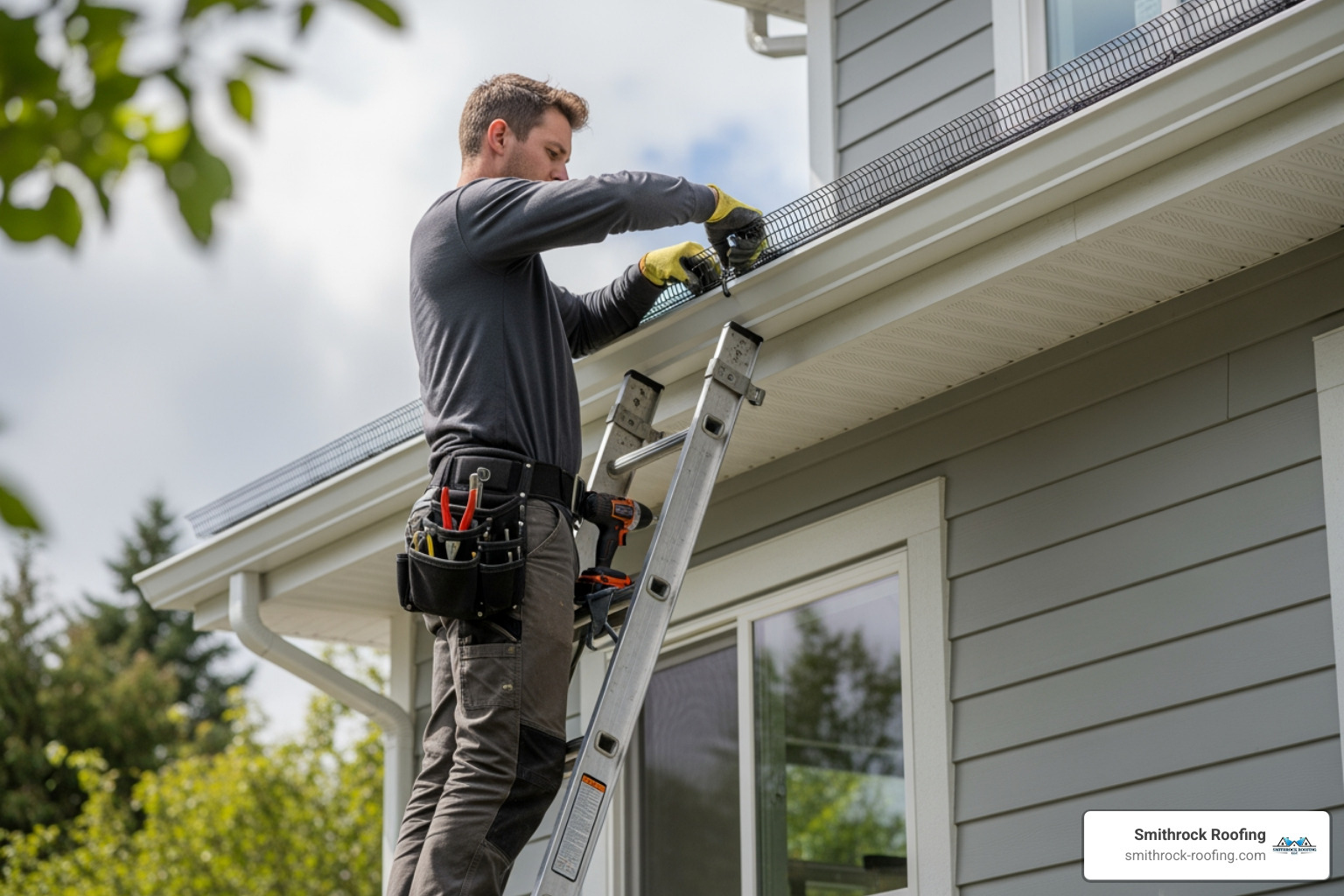
gutter guard being installed on an eavestrough - eavestrough installation prices

  • Debris Prevention: Gutter guards act as a physical barrier, allowing rainwater to pass through while deflecting solid debris. This is particularly valuable in our service areas where deciduous trees cause significant leaf buildup in the fall.
  • Reduced Cleaning: With effective gutter guards, the dangerous and unpleasant task of climbing a ladder to clean your eavestroughs is drastically reduced, from a semi-annual chore to an occasional inspection.
  • Clog Prevention and Damage Mitigation: Clogged eavestroughs are a primary cause of water overflowing and damaging your siding, foundation, and landscaping. By keeping the channels clear, gutter guards mitigate this risk and prevent the formation of ice dams in the winter.

There are several types of gutter guards, each with its own pros, cons, and price point:

  • Mesh Screens: These are simple metal or plastic screens that sit on top of the gutter. They are inexpensive but can allow smaller debris like pine needles and shingle grit to pass through. Heavy leaf buildup on top can also block water flow.
  • Foam Inserts: These are triangular foam blocks that slide into the gutter. They are porous, allowing water to seep through while blocking leaves. However, they can degrade over time, and seeds can sometimes germinate on their surface.
  • Brush Guards: These resemble large pipe cleaners that sit inside the gutter. The bristles block large leaves, but smaller debris can get trapped, and they may require periodic removal and cleaning.
  • Reverse Curve (Surface Tension) Guards: These solid hoods cover the gutter, allowing water to follow the curved edge into a small slot while leaves and debris are washed over the side. They can be ineffective in torrential downpours where water may overshoot the gutter entirely.
  • Micromesh Guards: Often considered the most effective type, these feature a very fine stainless steel mesh that blocks nearly all debris, including shingle grit. They are typically the most expensive option but offer the highest level of protection and lowest maintenance. We can help you navigate the Cost to Install Leaf Guard Gutters and find the best solution for your property.

Downspouts, Extensions, and Proper Drainage

Downspouts are the critical vertical components that channel water from the eavestroughs safely to the ground. Proper sizing, placement, and extensions are vital for protecting your home’s foundation.

  • Downspout Sizing and Installation: Downspouts are typically made from the same material as your eavestroughs. Standard 5-inch gutters use 2×3-inch downspouts, while larger 6-inch gutters require oversized 3×4-inch downspouts to prevent backups. The number and placement of downspouts depend on your roof size and local rainfall intensity, with a general rule being one downspout for every 30-40 feet of gutter. Our team specializes in comprehensive Gutter and Downspout Installation to ensure optimal performance.
  • Downspout Extensions: A downspout that terminates right next to the foundation is a common mistake. It dumps all the collected roof water directly into the soil that supports your home, leading to erosion, settlement, and basement leaks. Extensions are crucial for directing water at least 4-6 feet away from the foundation. Options range from simple plastic splash blocks to flexible or rigid pipe extensions laid on the ground, or more permanent underground drainage systems connected to pop-up emitters or dry wells.
  • Other Features:
    • Rain Barrels: For eco-conscious homeowners, a diverter can be installed in a downspout to channel rainwater into a barrel for later use in gardening, reducing water bills.
    • Heat Cables: In climates with freezing temperatures, self-regulating heat cables can be installed inside eavestroughs and downspouts to prevent the formation of ice dams and ensure water can drain even in winter.

Investing in a proper drainage configuration is vital. We can help you understand the Cost to Install Gutter Drainage that best suits your property’s needs.

Do New Eavestroughs Increase Home Value?

While new eavestroughs might not offer the same direct, flashy return on investment (ROI) as a kitchen or bathroom renovation, they contribute significantly to a home’s value and marketability in crucial ways.

  • Preventing Value Loss: A well-functioning eavestrough system is a form of insurance. It prevents water from causing tens of thousands of dollars in damage to your foundation, roof, and siding. By preventing these issues, new eavestroughs protect your home from massive potential repair bills, preserving its structural integrity and existing value.
  • Enhancing Curb Appeal: Old, sagging, dented, or peeling eavestroughs make a home look neglected and run-down. New, crisp, well-maintained eavestroughs (especially seamless ones) provide clean lines that improve overall curb appeal, signaling that a home is well-cared for.
  • Buyer Perception and Home Inspections: Potential homebuyers and their home inspectors pay close attention to water management systems. A new, functional system is a major green flag, suggesting the property has been well-maintained and is less likely to have hidden water-related problems. Failing gutters are a red flag that can derail a sale or lead to demands for costly credits or repairs.

New eavestroughs don’t just add value; they protect existing value. They are an essential part of a well-maintained home, contributing to its longevity, safety, and desirability on the market. Explore our Exterior Gutters to see how we can improve your home’s protection and appearance.

DIY vs. Professional: A Cost-Benefit Analysis

When considering an eavestrough installation, many homeowners weigh the option of tackling the project themselves (DIY) versus hiring a professional contractor. This decision involves a careful balance of potential upfront savings against significant risks, the quality of the final product, and long-term performance benefits.

The Pros and Cons of a DIY Approach

The allure of saving on labor costs often makes DIY eavestrough installation seem appealing. With sectional gutters and accessories readily available at local hardware stores, some homeowners feel equipped to handle the job over a weekend.

  • Pros of DIY:
    • Reduced Labor Expense: This is the primary and most significant motivation for any DIYer. By performing the work yourself, you eliminate the cost of professional installers, which can be a substantial portion of the total project price.
    • Project Control: You have direct control over the timeline, material selection (within the confines of what’s available at retail), and the pace of the work.
  • Cons of DIY:
    • Severe Safety Risks: This is the most critical drawback. Working on ladders at heights, often while handling long, unwieldy pieces of metal, carries a significant risk of falls and serious injury. According to the Occupational Safety and Health Administration (OSHA), falls are a leading cause of injury and death in construction, a risk that extends to home projects. Professionals are trained in safety protocols and use proper equipment like harnesses and stabilizers.
    • Lack of Specialized Tools: Professional installation requires specific tools that homeowners do not own, most notably the seamless gutter machine. Beyond that, specialized crimpers, miter saws for precise angle cuts, and appropriate fasteners are needed. Improper tools lead to poor-quality cuts and connections.
    • Improper Pitch and Installation: Eavestroughs are not installed level. They must be installed with a precise, gentle slope (typically 1/4 inch of drop for every 10 feet) to ensure water flows toward the downspouts. An improper pitch leads to standing water, which breeds mosquitoes, accelerates corrosion, and adds weight that causes sagging. Too much pitch can cause water to overshoot the downspouts in heavy rain.
    • Guaranteed Leaks: Sectional eavestroughs, the only option for DIY, have multiple seams that are sealed with caulk. These seams are weak points that will inevitably fail and leak over time as the sealant dries, cracks, and pulls away due to thermal expansion and contraction.
    • Hidden Damage: A DIYer may not recognize or know how to properly repair underlying issues like rotted fascia or soffit boards. Attaching a new gutter to compromised wood is a recipe for premature failure.
    • Voiding Warranties: Improper DIY installation could void any warranties on the materials, leaving you fully responsible for future defects or failures.

For any repair needs or guidance, our Gutter Repair Winston Salem Guide offers valuable insights, but for a full installation, the complexities and risks often far outweigh the perceived savings of a DIY approach.

Getting the Best Value on Your Eavestrough Installation

Hiring a professional for your eavestrough installation is an investment that pays dividends in performance, durability, and peace of mind. Getting the best value isn’t about finding the cheapest price, but about choosing the right contractor who delivers a high-quality, lasting result.
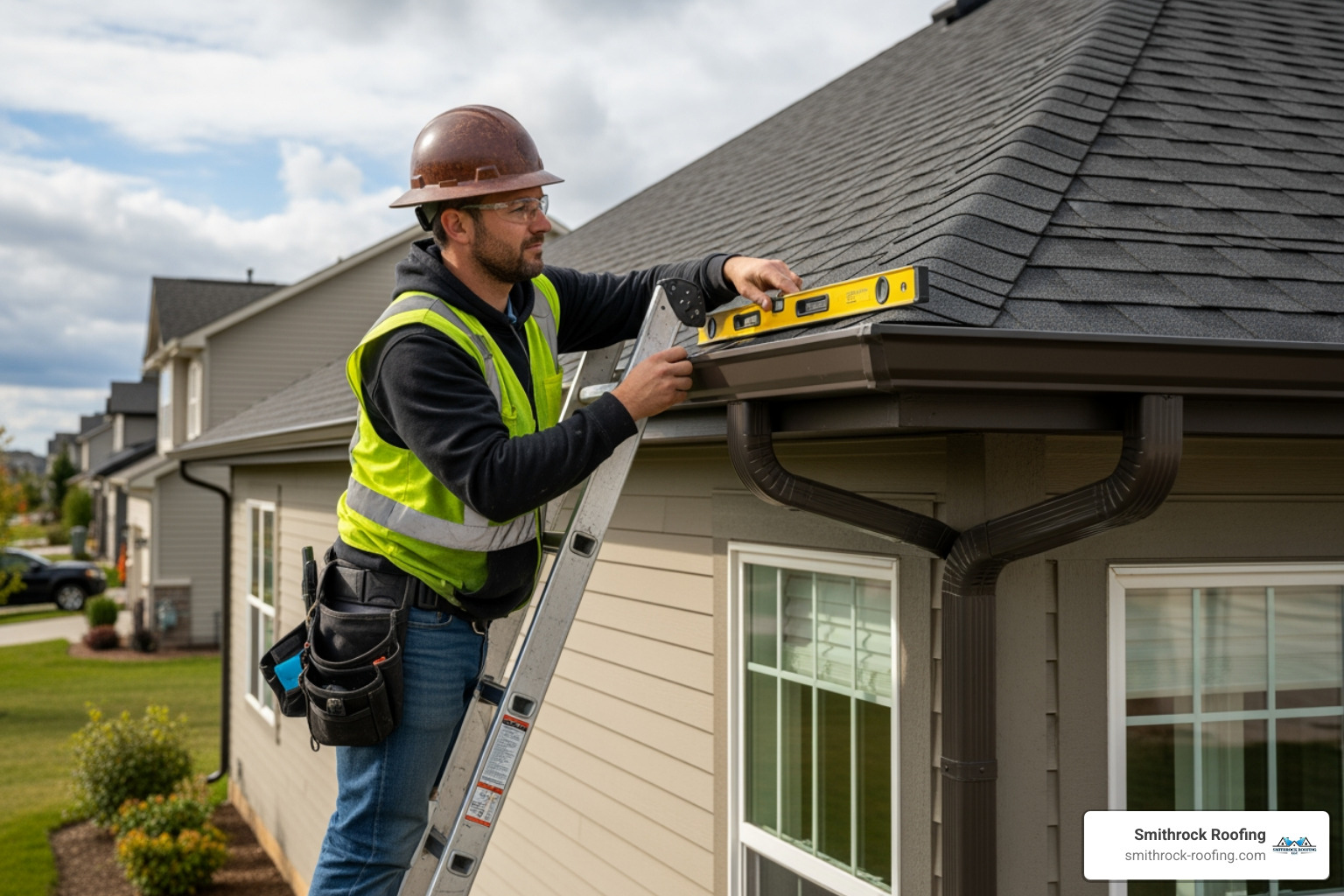
professional gutter installer using a level to ensure correct pitch - eavestrough installation prices

  • Expertise and Experience: Professionals possess the knowledge to correctly assess your home’s specific needs, recommend the best materials and sizing, and execute the installation with precision gained from years of experience.
  • Efficiency and Safety: A professional crew can typically complete an installation on an average-sized home in a single day. They are trained in safety protocols and carry the necessary liability insurance and workers’ compensation, protecting you from financial risk in case of an accident.
  • Superior Materials and Warranties: Professionals provide seamless eavestroughs, a far superior product to sectional gutters. A significant advantage of professional installation is the warranty offered on both the materials and, crucially, the workmanship, which covers any installation errors or leaks.
  • Problem Identification: A professional can identify and address related issues with your roof edge, flashing, fascia, or soffits that could compromise the new eavestrough system.
  • Proper Removal and Disposal: Professionals handle the safe removal and responsible disposal or recycling of your old eavestroughs, saving you the hassle.

To ensure you get the best value when hiring a Gutter Installation Contractor:

  1. Get Multiple, Detailed Quotes: Obtain estimates from at least three reputable contractors. A good quote will be a written, itemized document breaking down the cost of materials (linear feet, gutter size, material type), labor, removal/disposal fees, and any add-ons. Be wary of vague, lump-sum quotes or verbal agreements.
  2. Check References and Reviews: Look for contractors with a strong, long-standing track record and consistently positive customer feedback on platforms like Google, Yelp, or the Better Business Bureau.
  3. Verify Insurance and Licensing: This is non-negotiable. Ask for proof of general liability insurance and workers’ compensation. This protects you and your property from liability in the event of an accident or damage.
  4. Inquire About Warranties: Understand the warranties offered. There should be a manufacturer’s warranty on the material itself (e.g., against rusting or fading) and a separate workmanship warranty from the installer that covers leaks or installation defects for a specified period.

By taking these steps, you can confidently invest in a professional eavestrough installation that provides lasting protection and value for your home.

Frequently Asked Questions about Eavestrough Projects

We often receive common questions from homeowners in Winston-Salem, Greensboro, and surrounding areas about the process and investment involved in eavestrough installation. Here, we address some of the most frequent inquiries to provide further clarity.

How does the season affect eavestrough installation projects?

Yes, seasonal factors can influence project timelines, pricing, and contractor availability.

  • Peak Season (Late Spring, Summer, and Fall): This is the busiest time for all exterior home improvement projects. Demand is high, especially after spring rains reveal leaks or in the fall as homeowners prepare for winter. Contractor schedules fill up quickly, and you may face longer wait times.
  • Off-Season (Winter and Early Spring): You might find greater flexibility in scheduling and potentially more competitive pricing during these slower periods. However, installation is weather-dependent. Freezing temperatures can make materials brittle and sealants difficult to apply, while snow and ice create unsafe working conditions, leading to potential delays.
  • Best Time to Schedule: The best time is as soon as you notice a problem. If your eavestroughs are severely damaged, immediate replacement is crucial to prevent water damage, regardless of the season. If the need is not urgent, scheduling for the shoulder seasons (like early spring or late fall) can be a good strategy.

What is the typical lifespan of different eavestrough materials?

The lifespan of your eavestrough system is largely determined by the material chosen, the quality of the installation, local climate, and how well it is maintained.

  • Vinyl: Typically lasts 10 to 20 years. It is prone to cracking from impacts or cold weather and can sag over time.
  • Aluminum: The most common material, it generally lasts 20 years or more. The baked-on enamel finish can last for decades without peeling or fading.
  • Steel: Can last from 20 to 40 years or more, depending on the type and climate. Galvanized steel’s lifespan depends on its coating remaining intact.
  • Copper and Zinc: These premium materials are lifetime products. They can easily last 50 to 100 years, or even longer, often outlasting the roof itself.

Regular cleaning and maintenance are key to achieving the maximum possible lifespan for any eavestrough material.

What is involved in removing and disposing of old eavestroughs?

The removal and disposal of your old eavestroughs is an integral part of a replacement project and will be included in the overall scope and cost.

  • A Key Project Component: This task is typically outlined as a specific line item in your contractor’s estimate. It covers the labor required to carefully pry off the old system without damaging the fascia or shingles, as well as the logistics of cutting up, transporting, and disposing of the old materials in a responsible manner, often by recycling the metal.
  • Clarity in Your Quote: Always confirm with your contractor how this part of the project is detailed in the quote. The cost can vary based on the amount and type of material being removed (heavy steel vs. light aluminum) and the ease of access to the roofline.

We ensure transparency in our estimates, clearly outlining all aspects of the project, including the details related to the Gutter Replacement Cost Per Foot and the removal of existing systems.

How long does a typical installation take?

For a professional crew, a standard eavestrough installation on an average-sized single-family home (e.g., 150-250 linear feet) can usually be completed in one full day. Larger or more complex projects, such as those on multi-story homes with intricate rooflines, may take two days. Weather can also cause delays.

Can my old gutters be repaired instead of replaced?

Sometimes, yes. If your system is relatively new and has an isolated issue, a repair can be a cost-effective solution. This includes re-sealing a leaking corner, re-attaching a loose section, or replacing a single damaged piece. However, if your eavestroughs are showing signs of widespread failure—such as multiple leaks, extensive rust or corrosion, sagging along long sections, or are dented and bent—replacement is almost always the better long-term investment. Patching up an old, failing system is often a temporary fix that will lead to more problems down the road.

Conclusion: Making an Informed Investment in Your Home

Navigating an eavestrough installation project can seem daunting, but by understanding the key factors that influence the scope and cost, you empower yourself to make confident, informed decisions. We’ve explored how material choice, home size and complexity, system type (seamless vs. sectional), and performance-enhancing accessories all play a critical role in the final project.

Installing a high-quality eavestrough system is not merely an expense; it is a critical investment in the long-term health, integrity, and value of your home. This system is your property’s frontline defense against the relentless threat of water damage. It works tirelessly to protect your foundation from cracking, your basement from flooding, your siding from rot, and your landscaping from erosion. By preventing these catastrophic and costly issues, a properly installed system preserves your home’s value and provides invaluable peace of mind.

Furthermore, a new system enhances curb appeal, replacing old, sagging gutters with clean, crisp lines that signal a well-maintained property. This not only improves your enjoyment of your home but also reassures potential buyers of its structural integrity, making it a more attractive and valuable asset on the market.

When you’re ready to protect your home with a new eavestrough system, we encourage you to seek a detailed, professional assessment. Our team at Smithrock Roofing is committed to providing transparent estimates, superior materials, and expert installation, ensuring your home receives the durable, efficient water management system it deserves. We pride ourselves on our meticulous approach and our commitment to quality, ensuring lasting protection for homeowners in Winston-Salem, Greensboro, and throughout our service areas.

For a detailed assessment and professional installation of your home’s most crucial water management system, explore our Gutter Services.
Share:

Categories

Follow us

You can find us on Facebook, Instagram, and Google.
Smithrock Roofing LLC logo featuring stylized rooftops with chimneys and arched windows
Smithrock Roofing proudly services the cities of Winston-Salem, King, Clemmons, Lewisville, Pilot Mountain, East Bend, Mt. Airy, Kernersville, Siloam, Danbury, High Point, Trinity, Pfafftown, Tobaccoville, Greensboro, Walnut Cove, Belews Creek, Rural Hall, Pinnacle, Bethania, Advance, Wallburg, Horneytown, Union Cross, and Midway, NC.

Newsletter

Sign up to receive important tips, special offers, and discounts.

Smithrock Roofing © Copyright 2025 • All Rights Reserved • Privacy Policy • Maintained by Mongoose Digital Marketing